
GST 101 Past Questions And Answers
Title: GST 101 Past Questions And Answers URL: https://studentsdash.com/gst-101-past-questions-and-answers-2/ -------------------------------------------------- Hey, as you may know the Ebonyi State University(Ebsu) year one exam is CBT BASED which means it will be written with computer, and today we will be drop only 11 Past Questions here to practice more use our STUDENTSDASH Practice code to Practice more on STUDENTSDASH APP . GST 101 QUESTIONS AND ANSWERS 1: Language and communication differs from each other? True False ANS – True 2: Language is used in two forms: spoken and written True False ANS – True 3: The following are characteristics of language Productivity Duality Arbitrariness Discreteness All of the above Advertisement ANS All of the above 4: A characteristics that shows plant human language is patterned in levels or strata is called Creativity Duality Arbitrariness Discreteness Flexibility ANS – Duality 5: ——— Is a fundamental properly of language Functions Characteristics Types Demerits ANS – Functions 6: The following are following of language Phallic function Sonic function Ludic function Communicative function All of the above ANS – All of the above 7: The function of language in promoting social interaction and relationships is: Phallic Sonic Ludic Communicative ANS – Phallic 8: Human communication is mainly done through language True False ANS – True 9: The use of language to identity things we see, we do and what we conceive in the world is Phallic function Sonic function Identifying function Ludic function ANS – Identifying function 10: The use of language for amusement purpose as it is done in some came plays is Phallic function Sonic function Ludic function None of the above ANS – Ludic function 11: The use of language for recording facts and speech for future reference and use is Phallic function Sonic function Ludic function Preservative functions ANS – Preservative functions VIEW MORE
GST 102 Past Questions And Answers
Title: GST 102 Past Questions And Answers URL: https://studentsdash.com/gst-102-past-questions-and-answers-2/ -------------------------------------------------- Hey, as you may know the Ebonyi State University(Ebsu) year one exam is CBT BASED which means it will be written with computer, and today we will be drop only 11 Past Questions here to practice more use our STUDENTSDASH Practice code to Practice more on STUDENTSDASH APP . GST 102 QUESTIONS AND ANSWERS 1: Attempts to get a concise and universally accepted definition of philosophy leads to except Confusion Frustration Solidarity Absurdity ANS – Solidarity 2: Philosophy covers one of the following scope Science Technology Art Astrology ANS – Science Advertisement 3: The following pair is the scope covered by philosophy Astrology & technology Technology & Art Science & Humanity Humanity & art ANS – Science & Humanity 4: Philosophy is derived from the word Latin Greek Roman Spanish ANS- Greek 5: The meanings of the words that used to derived philosophy include To love and knowledge Knowledge to love Knowledge & wisdom To love and wisdom Advertisement ANS – To love and wisdom 6: Who viewed philosophers as a man whose passion is to seek the truth or a man whose heart is fixed on reality Plato Socrates Uduma John Hospers ANS – Plato 7: Who described definition of philosophy as numerous confusion and pitfalls to which every reader will fall action of he is not cleared about some of the basic principles and the problems of summations Socrates John Hospers Plato Uduma ANS – John Hospers 8: The department of knowledge which deals with ultimate reality or with the most general cause & principle of this was defined in which text? Oxford dictionary Philosophy Global handbook Plato’s ledger Uduma’s research ANS – Oxford dictionary 9: The only science which is the science itself and of other science as well was defined by Plato Socrates Uduma Hospers ANS – Plato 10: The advection of knowledge is a describe of philosophy in Phaedo Euthvdemus Plato’s ledger Oxford dictionary ANS – Euthvdemus 1. Attempts to get a concise and universally accepted definition of philosophy leads to _________ except A. Confusion B. Frustration C. Solidarity D. Absurdity Answer: C 2. Philosophy covers one of the following scope A. Science B. Technology C. Art D. Astrology Answer: A 3. The following pair is the scope covered by philosophy A. Astrology & technology B. Technology & Art C. Science & Humanity D. Humanity & art Answer: C 4. Philosophy is derived from the ______word A. Latin B. Greek C. Roman D. Spanish Answer: B 5. The meanings of the words that used to derived philosophy include A. To love and knowledge B. Knowledge to love C. Knowledge & wisdom D. To love and wisdom Answer: D 6. Who viewed philosophers as a man whose passion is to seek the truth or a man whose heart is fixed on reality A. Plato B. Socrates C. Uduma D. John Hospers Answer: A 7. Who described definition of philosophy as numerous confusion and pitfalls to which every reader will fall action of he is not cleared about some of the basic principles and the problems of summations A. Socrates B. John Hospers C. Plato D. Uduma Answer: B 8. The department of knowledge which deals with ultimate reality or with the most general cause & principle of this was defined in which text ______? A. Oxford dictionary B. Philosophy Global handbook C. Plato’s ledger D. Uduma’s research Answer: A 9. The only science which is the science itself and of other science as well was defined by __________ A. Plato B. Socrates C. Uduma D. Hospers Answer: A 10. The advection of knowledge is a describe of philosophy in ____ A. Phaedo B. Euthydemus C. Plato’s ledger D. Oxford dictionary Answer: B The Noblest & greatest of Art is a description of philosophy in __ A. Phaedo B. Euthydemus C. Plato’s ledger D. Oxford dictionary Answer: A Philosophy asks _ number of question A. 1 B. 2 C. 3 D. 4 Answer: D One of the following is not a question asked by philosophy A. What can I know? B. What can I hope for? C. What is man’s desire? D. What is man? Answer: C Attempts to answer philosophy question leads to A. Philosophizing B. Soloquising C. Confusion D. Absurdity Answer: A One of the following is a question asked by philosophy A. What hope has man? B. What ought I to do? C. What ought not to do? D. What is can’t man know ? Answer: B Which philosophy found and the question philosophy asks A. Immanuel Kant B. Eze Nwokereke C. Plato D. Socrates Answer: A Philosophy is fundamentally a reflection into the affairs of life was described by __ A. Plato B. Joseph Omoregbe C. Eze Nwokereke D. Immanuel Kant Answer: C Philosophy is a rational search for the answers to the questions that arise in the mind when we reflect on human experience A. Plato B. Socrates C. Eze Nwokereke D. Joseph Omoregbe Answer: D Who defined philosophy as rational search for answers to basic questions about the ultimate meaning of reality A. Jim Una B. Socrates C. Joseph Omoregbe D. Immanuel Kant Answer: C philosophy is the giant discipline, it is the supreme human activity without which no discipline can acdiverisature & maturity A. Eze Nwokereke B. Jim una C. Socrates D. Immanuel Kant Answer: B Philosophy is a battle against the bewitchment of our intelligence by means of language were in the words of _ ? A. Luding Wittgenstein B. William James C. John Dewey D. Eugene N. Okoro Answer: A _ Described philosophy in the full sense as the only man thinking, thinking about generalities rather than particulars. A. N. Okoro Eugene B. John Dewey C. Ludong Wittgenstein D. Williams James Answer: D The work of philosophers is to think or reason was proposed by _ A. John Dewey B. Williams James C. Socrates D. Plato Answer: B _________Described philosophy as thinking which has become conscious of itself A. Plato B. John Dewey C. Williams James D. Eugene Okoro Answer: B To think is to _ and to exert is to A. Think, Exist B. Live, love C. Exit, think D. Man, survive Answer: C Thinking or reasoning philosophy leads to __ A. Exist B. Philosophizing C. Absurdity D. Humanity Answer: B Socrates believed that through dialogue or discussion we can find truth assort __ A. Humanity B. Man’s existence C. Knowledge D. Everything Answer: D Everybody is intelligent and requires __________to help deliver the knowledge within one A. Wisdom B. Somebody C. Experience D. Nature Answer: B Aristotle defined philosophy as knowledge of __ A. Man B. Existence C. Truth D. Science Answer: C Glen Defined philosophy as science of all things naturally knowable to man’s unaided power in so far as these things are studies in their __ A. Shallowest, cause and reason B. Deepest ; Reason and cause C. Detailed, cause and reason D. Systematic, reason and cause Answer: B Philosophy is a path to systematic discovery of what it means to be and what it means to know A. Glen B. Aristotle C. Paul Tillich D. Paul Glen Tillich Answer: C John Dewey conceived philosophy as a __ A. Social method B. Scientific method C. Natural method D. Mathematical method Answer: A Which text gives us the meaning of philosophy as the theory of a subject matter taken as a whole or organized unity and requiring a certain harmony of theory and practice A. Oxford dictionary B. Plato’s ledger C. Beldam’s dictionary D. Philosophy global handbook Answer: C The following are ways to express philosophy except A. Pedestrian, ordinary or loose sense B. Esoteric or mystic sense C. Academic, professional or technical sense D. Ordinary, mystic, academic sense Answer: D __ refers to a persons way of making speeches, especially dull & uninspired ones A. Mystic, Academic sense B. Ordinary, mystic sense C. Ordinary pedestrian sense D. Esoteric, mystic sense Answer: C One of the following is of correct pair of philosophy expression A. Pedestrian, ordinary sense B. Esoteric, mystic sense C. Ordinary, mystic sense D. Mystic, academic sense Answer: C __ Refers to that which is meant for those who are initiated for a small circle of disciples of something abstruse A. Mystic sense B. Scientific sense C. Ordinary sense D. Academic sense Answer: A Philosophy in _ sense is to connote some kind of hidden things which can only be attained by person with more than ordinary knowledge A. Scientific B. Esoteric C. Pedestrian D. Professional sense Answer: B _ Refers to the sense you understand other academic disciplines A. Academic B. Esoteric C. Mystic D. Ordinary Answer: A _____________Refers to philosophy of critical examination of our views, belief, aspiration and man’s place in it. A. Academic B. Ordinary C. Mystic D. Esoteric Answer: A Professional sense of using philosophy refers to study of fundamental principles of ultimate reality assort men & __ A. Existence B. Universe C. Nature D. Wisdom Answer: B __ Refers to qualities or ingredient which make the activities & study of philosophy possible A. Coherence of philosophy B. Rationality of philosophy C. Characteristic of philosophy D. Consistory of philosophy Answer: C Nation of philosophy includes the following except _ A. Comprehensiveness B. Criticism C. Presuppositionlessness D. Non-rationality Answer: D The scope of philosophy is __ A. Parallels B. Deep C. Indefinite D. Insightful Answer: C Scope of philosophy refers to _ A. Area B. Perspertic C. Criticism D. Human activities Answer: C Philosophy is a living disciple because A. Human activity involves philosophy B. Human life involves philosophy C. No aspect of human life that does not concern philosophy D. Not all aspect of human activity involves philosophy Answer: C Philosophy is related in any field of study as long as such field is focused on __ A. Honesty B. Humanity C. Knowledge D. Wisdom Answer: C Ability of philosophy to relate at any field of study is due to A. Comprehensive nature B. Criticism nature C. Concise nature D. Companionship nature Answer: A __ Entah philosophy exposing every subject, inquiry or knowledge to entailed analysis A. Comprehensiveness B. Criticism C. Rationality D. Coherence Answer: B _ Entails philosophy interested in knowing the while reality by studying it in it’s totality A. Comprehensiveness B. Criticism C. Coherence D. Presuppositionlessness Answer: A VIEW MORE
GST 102 Past Questions and Answers 2025
Title: GST 102 Past Questions and Answers 2025 URL: https://studentsdash.com/gst-102-past-questions-and-answers-2025/ -------------------------------------------------- GST 102 (Carryover) Past Questions and Answers – GST102 Reincarnation and Witchcraft is a topic which usually appears under which of the following Philosophy A. Nigerian Philosophy B. European Philosophy C. American Philosophy D. African Philosophy Correct Answer: D. African Philosophy Explanation: Reincarnation and witchcraft are topics commonly associated with African belief systems and cultural practices, making them fitting subjects of African Philosophy. The Rule of correct thinking is A. Philosophy B. Logic C. Epistemology D. Empiricism Correct Answer: B. Logic Explanation: Logic provides the principles and methods for correct reasoning and deduction. The Law of Contradiction stated that A. Two statements can both be true B. No statement can both be true and false C. All statements made are false D. No answer Correct Answer: B. No statement can both be true and false Explanation: This law holds that a proposition cannot be both true and false at the same time without contradiction. The Definitions of Philosophy can be exhausted A. True B. False Correct Answer: B. False Explanation: Philosophy is a dynamic field with evolving ideas; its definitions cannot be fully exhausted. Speculative philosophers uses logic to make their systems A. Intelligible and persuasive B. Strong and beautiful C. No answer D. Peace and unity Correct Answer: A. Intelligible and persuasive Explanation: Speculative philosophers aim for clarity (intelligibility) and convincing argumentation (persuasiveness). The critical philosophers uses logic to A. Subject viewpoints to critical decisions B. Subject viewpoints C. Subject debates on an issue D. To make the nation stable Correct Answer: A. Subject viewpoints to critical decisions Explanation: They apply logic to scrutinize perspectives in order to arrive at well-reasoned decisions. The Western Philosophy is divided into the following periods A. Ancient, Medieval, Modern B. Ancient, Modern, Classical C. Modern, Ancient, Classical D. Modern, Ancient, Medieval Correct Answer: A. Ancient, Medieval, Modern Explanation: Western Philosophy is conventionally categorized into Ancient, Medieval, and Modern eras. The two main divisions of Metaphysics are A. Idealism and Materialism B. Physical and Standard C. Ontology and Cosmology D. Psychology and Theology Correct Answer: A. Idealism and Materialism Explanation: Metaphysics splits primarily into Idealism (reality is mental) and Materialism (reality is physical). The Rationalism School is of the view that A. Knowledge involves thinking and reasoning B. Knowledge involves praying to God C. Knowledge involves the use of senses D. Knowledge is light Correct Answer: A. Knowledge involves thinking and reasoning Explanation: Rationalists emphasize a priori reasoning as the source of valid knowledge. The best way to define philosophy is A. To look at the various ways in which philosophers have presented philosophy B. To look at the origin of philosophers C. To call on professional philosophers D. Not to define philosophy Correct Answer: A. To look at the various ways in which philosophers have presented philosophy Explanation: Examining diverse philosophical presentations captures its multifaceted nature. The Law of Identity stated that A. If any statement is true, then it is true B. If any statement is false then it is true C. If any statement is true then it is false D. No statement can both be true Correct Answer: A. If any statement is true, then it is true Explanation: The Law of Identity asserts that each thing is identical to itself. The Western Philosophy is basically divided into how many parts A. 3 B. 5 C. 2 D. 1 Correct Answer: A. 3 Explanation: Ancient, Medieval, and Modern constitute the three main parts. In recorded History Thales believed that the Unity of things comes from A. Water B. Air C. Apeiron D. Fire Correct Answer: A. Water Explanation: Thales held that water is the primary substance unifying all things. Existentialism postulated that A. Existence precedes Essence B. Man existed and then dies C. God created man to worship him D. Essence comes before Existence Correct Answer: A. Existence precedes Essence Explanation: Existentialist thought holds that individuals define their essence through existence. Sultan: All men are mortal Deji: Ife is a man Oyin: Ife is mortal Who made the major premiss? A. Sultan B. Deji C. Oyin D. Ife Correct Answer: A. Sultan Explanation: “All men are mortal” is the major premise, stated by Sultan. Ignoratio Elenchi means A. Irrelevant Conclusion B. Complex Question C. Fallacy of Accident D. Love of Fallacy Correct Answer: A. Irrelevant Conclusion Explanation: It refers to arguing a point that misses the issue’s actual conclusion. The following are types of Fallacy of Ambiguity EXCEPT A. Fallacy of Equivocation B. Fallacy of Amphiboly C. Fallacy of Composition D. Argumentum ad Baculum Correct Answer: D. Argumentum ad Baculum Explanation: Argumentum ad Baculum is a relevance fallacy, not ambiguity. Fallacy can be categorized basically into A. Fallacy of Ambiguity, Fallacy of Relevance B. Fallacy of Ambiguity and Fallacy of Equivocation C. Fallacy of Relevance and Ignoratio Elenchi D. Fallacy of Ambiguity only Correct Answer: A. Fallacy of Ambiguity, Fallacy of Relevance Explanation: These are the two broad categories of fallacious argument. In Symbolic Logic, OR/EITHER is represented by A. V B. . C. / D. No answer Correct Answer: A. V Explanation: The disjunction “or” is denoted by the symbol ∨ (V). The way a philosopher perceives philosophy is often coloured by A. All answers are correct B. His peculiar experience C. His orientation D. His circumstances and environment Correct Answer: A. All answers are correct Explanation: Experience, orientation, and environment all shape philosophical outlooks. Philosophy is coined from two GREEK words, which are A. Philien Sophia B. Philien Sophie C. Philosophia D. Filosofi Correct Answer: A. Philien Sophia Explanation: Philo- (love) + -sophia (wisdom) form “philosophy.” Who founded the SOCRATIC DIALOGUE A. Plato B. Hegel C. Thales D. Anaximander Correct Answer: A. Plato Explanation: Plato developed and recorded Socratic dialogue in his writings. One of the reply against the Modernist argument on African Philosophy is A. African Philosophy is the Cultural part of the Western Philosophy B. African too should stay alone C. African needs to be independent of Philosophy D. No answer Correct Answer: A. African Philosophy is the Cultural part of the Western Philosophy Explanation: This counters the view that African Philosophy is entirely separate or inferior. The term Metaphysics was coined by A. Andronicus B. Heraclitus C. Thales D. Aristotle Correct Answer: A. Andronicus Explanation: Andronicus of Rhodes first labeled Aristotle’s post-Physics works “Metaphysics.” Honcho: “Marvellous has not been to London before. She does not know London exists, therefore London does not exist.” What type of Fallacy is this? A. Argumentum ad Ignorantiam B. Argumentum ad Hominem C. Argumentum ad Populum D. Ignoratio Elenchi Correct Answer: A. Argumentum ad Ignorantiam Explanation: Concluding nonexistence from ignorance exemplifies appeal to ignorance. If the truth is demonstrable or practicable then, the truth is A. Pragmatic B. Disclosure C. Correspondence D. Coherence Correct Answer: A. Pragmatic Explanation: Pragmatic theory ties truth to practical demonstrability. Peter Bodunrin holds the view that A. Philosophy is basically Western Philosophy B. African Philosophy is a good philosophy C. African should not be a philosopher D. African Philosophy should not be trusted Correct Answer: A. Philosophy is basically Western Philosophy Explanation: Bodunrin argues that philosophy’s core methods stem from Western traditions. The scope of Logic is said to include all the following except A. French B. Dialectics C. Sophistry D. Mathematics Correct Answer: A. French Explanation: “French” is not a subfield of logic, whereas the others pertain to reasoning forms. The Empiricism postulated that A. Knowledge involves the use of the senses B. Knowledge is acquired by studying C. Knowledge is light D. No one can know anything for certain Correct Answer: A. Knowledge involves the use of the senses Explanation: Empiricism asserts that sensory experience grounds all knowledge. During the Medieval Period, which Philosophy was Introduced A. The Christianity Philosophy B. The Muslim Philosophy C. The Traditional Philosophy D. No answer Correct Answer: A. The Christianity Philosophy Explanation: Christian theology shaped Medieval philosophical inquiry. The definition “Philosophy as a reflection on human experience” is broadly based because of the followings except A. Wealth B. Circumstances C. Age D. Environment Correct Answer: A. Wealth Explanation: Wealth is not typically cited as a broadening factor for human experience in this definition. One of the following is associated with “Deductive Reasoning” A. Validity B. True C. Probability D. Sound Correct Answer: A. Validity Explanation: Deductive arguments are evaluated primarily for validity (and then soundness). The “Apeiron” means A. The boundless B. The unboundless C. The beyonce D. Material World Correct Answer: A. The boundless Explanation: Apeiron denotes the infinite, limitless “boundless.” Which of the following movements was popularly known as Vienna Circle A. Logical Positivism B. Logical Atomism C. Language Philosophy D. Pragmatism Correct Answer: A. Logical Positivism Explanation: The Vienna Circle championed Logical Positivism in the early 20th century. Which of the following philosophers is in the Medieval Period A. No answer B. Thales C. Anaximander D. Hegel Correct Answer: A. No answer Explanation: None of the listed figures belong to the Medieval era. Philosophy as the Construction of “Epistemologies” is related to one of the Following Definitions of Philosophy A. The search for the Truth B. The search for the best form of life C. The rational study of Nature D. The Love of Wisdom Correct Answer: A. The search for the Truth Explanation: Constructing epistemologies is fundamentally about seeking truth. Which of the following relates a general (universal) truth to a specific (particular) truth A. Deductive Arguments B. Inductive Arguments C. Deductive Relation D. Inductive Relation Correct Answer: A. Deductive Arguments Explanation: Deduction applies universal premises to reach particular conclusions. Quyum: “That lightning caused this thunder.” What type of Fallacy is this? A. Fallacy of Equivocation B. False Cause C. Ignoratio Elenchi D. Argumentum ad Populum Correct Answer: B. False Cause Explanation: Mistaking correlation (lightning & thunder) for causation is the False Cause fallacy. If it is bringing what is obscure into limelight then the truth is A. Disclosure B. Pragmatic C. Correspondence D. Coherence Correct Answer: A. Disclosure Explanation: Disclosure refers to revealing or making clear what was hidden. In this new millennium what should consist of African Philosophy is A. Intersubjective consensus B. Politics C. Education D. Witchcraft Correct Answer: A. Intersubjective consensus Explanation: Emphasizing shared, communal understanding advances contemporary African Philosophy. The Quantification Theory was discovered by ________ Correct Answer: Frege Explanation: Gottlob Frege is credited with founding modern quantification theory. The Universal Quantification is represented by A. (x) B. (f) C. (u) D. (U) Correct Answer: A. (x) Explanation: Universal quantification uses the variable binding notation (x). Which of the following is not a movement in the 20th Century A. Epistemology B. Logical Positivism C. Philosophy of Analysis D. Existentialism Correct Answer: A. Epistemology Explanation: Epistemology is a branch of philosophy, not a distinct 20th century movement. ___________ was said to relate to experience but not derived from experience A. Synthetic A priori Knowledge B. A priori Knowledge C. Positivism D. Synthetic Knowledge Correct Answer: A. Synthetic A priori Knowledge Explanation: Kant’s “synthetic a priori” denotes truths about experience not learned from it. The Socratic dialogue was developed into a philosophy of the Absolute by A. Hegel B. Plato C. Peter Bodunrin D. Pauline Hountondji Correct Answer: A. Hegel Explanation: Hegel expanded Socratic method into his Absolute Idealism. One of the following is the African Logical Neo-Positivism argument against African Philosophy A. The term African in Philosophy debased Philosophy B. African Philosophy is full of Corruption C. African should not participate in defining Philosophy D. None of the above Correct Answer: A. The term African in Philosophy debased Philosophy Explanation: Neo-Positivists argue that labeling it “African” undermines its universality. One of the following is not a member of the Modernist School A. Campbell Momoh B. Kwasi Wiredu C. Gene Blocker D. Peter Bodunrin Correct Answer: A. Campbell Momoh Explanation: The others are recognized Modernist African philosophers. The exact and legitimate definition of Philosophy is A. The Love of Wisdom B. The Concern for Human Existence C. No answer D. The Reflection on Human Existence Correct Answer: A. The Love of Wisdom Explanation: Etymologically, philosophy literally means the love ( philo- ) of wisdom ( -sophia ). The idealist dictum; “Esse est percipi,” meaning “to be is to be perceived,” was made by A. Berkeley B. Kant C. Hegel D. Descartes Correct Answer: A. Berkeley Explanation: Bishop George Berkeley originated this foundational Idealist principle.
GST 102 QUESTIONS AND ANSWERS
Title: GST 102 QUESTIONS AND ANSWERS URL: https://studentsdash.com/gst-102-questions-and-answers/ -------------------------------------------------- 1: Attempts to get a concise and universally accepted definition of philosophy leads to except Confusion Frustration Solidarity Absurdity ANS – Solidarity 2: Philosophy covers one of the following scope Science Technology Art Astrology ANS – Science 3: The following pair is the scope covered by philosophy Astrology & technology Technology & Art Science & Humanity Humanity & art ANS – Science & Humanity 4: Philosophy is derived from the word Latin Greek Roman Spanish ANS- Greek 5: The meanings of the words that used to derived philosophy include To love and knowledge Knowledge to love Knowledge & wisdom To love and wisdom Advertisement ANS – To love and wisdom 6: Who viewed philosophers as a man whose passion is to seek the truth or a man whose heart is fixed on reality Plato Socrates Uduma John Hospers ANS – Plato 7: Who described definition of philosophy as numerous confusion and pitfalls to which every reader will fall action of he is not cleared about some of the basic principles and the problems of summations Socrates John Hospers Plato Uduma ANS – John Hospers 8: The department of knowledge which deals with ultimate reality or with the most general cause & principle of this was defined in which text? Oxford dictionary Philosophy Global handbook Plato’s ledger Uduma’s research ANS – Oxford dictionary 9: The only science which is the science itself and of other science as well was defined by Plato Socrates Uduma Hospers ANS – Plato 10: The advection of knowledge is a describe of philosophy in Phaedo Euthvdemus Plato’s ledger Oxford dictionary ANS – Euthvdemus Chat on WhatsApp
GST 103 PAST QUESTIONS AND ANSWERS
Title: GST 103 PAST QUESTIONS AND ANSWERS URL: https://studentsdash.com/gst-103-past-questions-and-answers-3/ -------------------------------------------------- 1: Aside oil, Nigeria has over 50 different minerals deposited in various states of the country True False ANS – True 2: Nigerians have made their marks in the following areas (s) Football Medicine Business Information technology All of the above ANS – All of the above 3: One of the challenges facing Nigeria as a nation state is political leadership which is a product of the nation’s colonial antecedent sparing True False ANS – True 4: The following are defects in the colonial policy of the Nigerian Nation except Independence Lopsidedness of the political geography Unification of people who are diverse in history, culture, and level of economic development All of the above None of the above ANS – Independence 5: The following(s) is/are flash points in the amalgamation of the country Unity in diversity Economics of large scale Large market Psychological advantage of strategic location of Nigeria All of the above ANS – All of the above 6: The amalgation of Nigeria was dated 1964 1914 1960 1963 ANS – 1914 7: Emmy: _ Analysis the Lagos colony and Southern protectorate and the Northern Protectorate in 1914 Shehu Shagari Nnamdi Azikwe Lord Lugard Mohammed Buhari ANS – ~ Lord Lugard 8: In 1914, Lord Lugard created a central legislature called Nigerian council as an advisory and deliberative body. True False ANS – True 9: The constitutional instrument of Nigeria council of 1914 include all except Order-in (1912) Letters patent (1913) Nigerian Protectorate order-in council (1913) Nigerian protectorate letters patent (1914) ANS – Nigerian protectorate letters patent (1914) 10: The Federal republic of Nigeria derived her name from the Ngier river True False ANS – True VIEW MORE
GST 104 Past Questions and Answers
Title: GST 104 Past Questions and Answers URL: https://studentsdash.com/gst-104-past-questions-and-answers-2/ -------------------------------------------------- GST 104 History and Philosophy of Science _ is the systematic study of the structure and behaviour of the physical and natural world through observations and experiment. A. Science B. Art C. Literature D. Economics Answer: A Every physical entity in the terrestrial and extra-terrestrial environment is a component of the nature. A. True B. False Answer: A The following are physical entities of the mother-nature EXCEPT A. Galaxies B. Stars C. Moons D. None of the above Answer: D The methodical manner to our mental skills to satisfy human curiosity is what we call? A. Graphical method B. Structural method C. Scientific method D. Linear method Answer: C Science originates from the Latin word A. Scientia B. Scint C. Dominus D. None of the above Answer: A Science consist of what or things, we can think, believe or hope and things we know A. True B. False Answer: A Science is self-correcting and self-generating human activity A. True B. False Answer: A _________is a mental process which serves as the tool of a scientist with which new discovery are made A. Scientific method B. Graphical method C. Structural method D. Linear method Answer: A Scientific method consists traditionally of A. Observation B. Problem identification C. Hypothesis formulation D. Drawing of conclusion E. All of the above Answer: E Scientists are not in general agreement as to exactly what constitute scientific procedure in reality A. True B. False Answer: A Scientist use inductive and deductive logic in the development and testing of hypothesis A. True B. False Answer: A _ proceeds from the specific and arrives at a generalization A. Deductive logic B. Inductive logic C. Specific logic D. All of the above Answer: B _ proceeds from the general to specific A. Inductive logic B. Deductive logic C. Specific logic D. All of the above Answer: B _ involves arriving at a probable conclusion base on several samplings. A. Inductive logic B. Deductive logic C. Specific logic D. None of the above Answer: A Science progress by interplay of inductive and deductive reasoning A. True B. False Answer: A Inductive generalization never attains absolute certainty. They only attain higher degree of probability. A. True //b/ False Answer: A The following are broad division of science A. Biological science B. Applied science C. Computer science D. All of the above Answer: D _ is the study of living organisms and life. A. Biological science B. Applied science C. Physical science D. None of the above Answer: A _ deals with the theory, experimentation and engineering that form the basis for the design and use of computers. A. Biological science B. Applied science C. Computer science D. None of the above Answer: C __ involves the study of algorithms, that process, store, and communicate digital information. A. Biological science B. Applied science C. Computer science D. None of the above Answer: C __ is the application of existing scientific knowledge to practical application A. Biological science B. Computer science C. Social science D. Applied science Answer: D Applied science deals with application fo scientific knowledge to practical problem solving. A. True B. False Answer: A __ is the branch of science that studies non-living system. A. Primary science B. Physical science C. Health education D. All of the above Answer: B Physical science deals with mater and energy. A. True B. False Answer: A Physical science it concerned with study of inanimate natural objects. A. True B. False Answer: A Biological science is subdivided into the following EXCEPT A. Botany B. Zoology C. Biochemistry D. Computer science Answer: C Physical science is subdivided into A. Physics B. Chemistry C. Geology D. All of the above Answer: D Applied science is subdivided into A. Medicine B. Agriculture C. Engineering D. All of the above Answer: D __ is the science of animals A. Botany B. Zoology C. Microbiology D. Computer science Answer: B Plant anatomy is known as A. Zootomy B. Phytotomy C. Botany D. Zoology Answer: B Botany is the science of plants A. True B. False Answer: A The advancement in science and technology lead to wealth creation, ease of life and so on. A. True B. False Answer: A Advances is science and technology have help in improving human life. A. True B. False Answer: A __ is applying scientific knowledge in practical ways. A. Technology B. Art C. Law D. Literature Answer: A _ is the science of land cultivation and breeding/rearing of animals to provide food, fiber, medicinal plant and other products to enhance and sustain life. A. engineering B. Geology C. Agriculture D. Physics Answer: C __ is the act of conveying meaning from one entity or group to another through the use of mutually understood sign, signs, symbols. A. Communication. B. Agriculture C. Machine D. Technology Answer: A Radar is used to locate objects beyond the range of vision. A. True B. False Answer: A The following are the non-verbal means of conveying messages. A. Music B. Dance C. Drawings D. All of the above Answer: D __ means for communication A. Electronic communication B. Telecommunication C. Frequency D. Modulation Answer: B The following are major telecommunication transmission media or devices. A. Fax B. Telephone C. Television D. All of the above Answer: D _ is sometimes called tele-copying A. Fax B. Internet C. Telephone D. E-mail Answer: A _ provides private two-way voice and data communication between two persons separated by a distance. A. Fax B. Telephone C. Internet D. Agriculture Answer: B Each telephone set has both a transmitter (mouth piece) and a receiver A. True B. False Answer: A Science and technology has provided us with good and bad effects. A. True B. False Answer: A ____________is the science and practice of establishing the diagnosis, prognosis, treatment and prevention of disease A. Medicine B. Machines C. Communication D. Agriculture Answer: A The use of anti-retroviral drugs in the suppression of HIV strands is also a good development in the area of medicine. A. True //b/ False Answer: A Who built the first pendulum clock A. Robert Boyle B. Robert Hooke C. Christian Huygens D. Galileo Answer: C Who discovered electricity A. Robert Boyle B. Robert Hooke C. Isaac Newton D. Micheal Faraday Answer: D Who discovered and first made U of telescope A. Robert Boyle B. Robert Hooke C. Galileo D. William Harvey Answer: C Who observed the effects of the mould penicillium on a bacteria culture A. Galileo B. Albert Einstein C. Alexandre fleming D. Robert Boyle Answer: C __ is a natural condition A. Effects B. Environment C. Chemical D. Water Answer: B _ is a change which is a result of an action. A. Effect B. Chemical C. Pollution D. Land Answer: A __ is a substance produced by chemistry A. Water B. Air C. Chemical D. Food Answer: C _ is a natural science A. Animals B. Plants C. Human D. Chemistry Answer: D The introduction of contaminants into the natural environment is called _ A. Hygiene B. Pollution C. Cleanness D. Neatness Answer: B _ gets introduced into the environment to cause pollution. A. Chemical B. Water C. Pollutants D. Fire. Answer: C Chemical pollutants are classified into? A. Two B. Four C. One D. Tree Answer: A Metal pollutants includes all except A. Chromium B. Lead C. Mercury D. Paracetamol Answer: D ________is one of the heavy metals found in urban street dust. A. Lead B. Chromium C. Zinc D. Hydrogen Answer: B ________Inhalation causes dermatitis and induces lung cancer. A. Lead B. Mercury C. Chromium D. Arsenic Answer: C Chromic acid and its salts have a corrosive action on the __ and mucous membranes. A. Mouth B. Eye C. Nose D. Skin Answer: D __ is used often used as herbicides and insecticides A. Arsenic B. Mercury C. Lead D. Cadmium Answer: A _ is a causative agent of cancer of the larynx, lung, skin and esophagus A. Lead B. Arsenic C. Cadmium D. Chromium Answer: B Cases of loss of teeth and early infertility are traceable to __ A. Lead poisoning B. Food poisoning C. Poisoned drinks D. Arsenic in drinking water Answer: A Lead components are used as stabilizer in plastic pipes. A. True B. False C. None of the above D. All of the above Answer: A _ is one of the raw materials used in the production of batteries A. Cadmium B. Antimonies lead C. Mercury black D. None of the above Answer: B the toxicity of cadmium may depend on the presence of other elements such as zinc and __ A. Magnesium B. Sodium C. Selenium D. Silver Answer: C _ is implicated in causing cortices disease and hypertension. A. Lead B. Mercury C. Magnesium D. Cadmium Answer: D __________is a general protoplasmic poison A. Mercury B. Lead C. Sodium D. Selenium Answer: A What is the full meaning of ADI A. Address – Incomplete signal B. Attitude display indicator C. Anti-detonent infection D. Acceptable daily intake Answer: D __ causes Hogskin’s disease A. Tin B. Iron C. Wilson’s poisoning D. Lead poisoning Answer: C _________industry converts animals skin into leather A. Automobile industry B. Film industry C. Food industry D. Tanning industry Answer: D Tannery can contributed to the problem of health hazard A. False B. True C. All of the above D. None of the above Answer: B Tannery can cause the following except A. High concentration of salts B. Oxygen depletion in water C. Bacteriological pollution D. Good health Answer: D Method of tannery effluents disposal is through? A. Burning B. Recycling C. Water (rivers and streams) D. Incineration Answer: C Most common metals associated with tanneries includes all except. A. Zin B. Tin C. Magnesium D. Potassium Answer: B The following are the major air pollutants except A. Oxides of sulphur B. Formaldehyde C. Carbonmonoxide D. Oxygen. Answer: D Another name for formaldehyde is _ A. Methanal B. Metanol C. Alcohol D. None of the above Answer: A Carbon monoxide is the same as? A. Carbon iv oxide B. Carbon ii oxide C. Carbon and oxide D. All of the above Answer: B Inhalation of CO can damage the liver and _ A. Spleen B. Kidney C. Nerve tissue D. Heart Answer: C _ is the increase in the temperature of the earths atmosphere caused by the buildup of green house gases? A. Tsanami B. Global warming C. Erosion D. Bush burning Answer: B Sources of green house gases are all except A. Burning of forests B. Cattle rearing C. Cooking of food D. Burning of fossil fuels Answer: C __ provides a protective layer which prevents the penetration of the sun. A. Ozone layer B. God C. Clouds D. Sky Answer: A Agricultural activities contribute to lad pollution. A. False B. True C. All of the above D. None of the above Answer: B Water is found by the combination of hydrogen and __ A. Nitrogen B. Sodium C. Oxygen D. Potassium Answer: C Environmental hazard of water are all except A. Pollution B. Flooding C. Erosion D. Cooking Answer: D Benefits of water includes all except A. Domestic use B. Erosion C. Agricultural use D. Medium of transport Answer: B _ is the change in the quality of water A. Water pollution B. Water storage C. Water purification D. Water wastage Answer: A Causes of chemical water pollution are all except A. Domestic activities B. Agricultural activities C. Water purification D. Industrial activities Answer: C industry is the crown jewel of the industrial sector in Nigeria A. Oil B. Brewery C. Tanning D. Bakery Answer: A . Examples of changes that occurs in the environment of man include __ A. Climate B. Culture C. Biodiversity D. All of the above Answer: D Environmental changes that occur around man include _ except A. Human health B. Culture C. Water D. Economy Answer: C Environmental changes that occur around man include A. Biodiversity B. Economy C. All of the above D. None of the above Answer: C Man lives in a world with rapid environmental changes A. True B. False C. All of the above D. None of the above Answer: A The team environment was derived from a French word known as __ A. Viron B. Environia C. Veronica D. Environmental Answer: B The environmental controls life and its activities A. True B. False C. All of the above D. None of the above Answer: A About environmental of man A. Affects man’s activities B. Everything that surrounds man C. All the surrounding conditions and element D. All of the above Answer: D According to Gisbert (2010), the types of environment include __ A. Natural environment B. Social environment C. Psychological environment D. All of the above Answer: D Example of biotic natural environment include:- A. Light B. Store C. Grass D. Wind Answer: C About biotic natural environment except A. Grass B. Lion C. Stone D. Man Answer: C Types of environment according to Gisbert (2010) except A. Natural environment B. Artificial environment C. Social environment D. Break environment Answer: D Natural environment include biotic and abiotic element. A. True B. False C. All of the above D. None of the above Answer: A About example f man-made environment A. Machinery B. Infrastructure C. All of the above D. None of the above Answer: C Natural environment summarizes the whole apparatus of our civilization A. True B. False C. All of the above D. None of the above Answer: B Components of social environment include the following except A. Regulation B. Authorities C. Tradition D. Infrastructure Answer: D Organization, government, power relationship and labour market are component of ______environment A. Social B. Man-made C. Natural D. All of the above Answer: A Non- living component of man’s environment include the following except A. Atmosphere B. Solar system C. Soil D. Fungi Answer: D The layer on which the lithosphere rests on the earth’s live is called _ A. Anthropology B. Lithman C. Asthenosphere D. Lithospherication Answer: C the part of the earth occupied by water is called _ A. River B. Ocean C. All of the above D. Hydrosphere Answer: D The first and lowest layer of earth’s atmosphere is __ A. Troposphere B. Lowersphere C. All of the above D. None of the above Answer: A Troposphere contains about three-quarters of the mass of the entire atmosphere. A. True B. False C. All of the above D. None of the above Answer: A __ protects plants, animals and human beings by blocking the most harmful ways of the sun. A. Hydrosphere B. Vapour C. Ozone D. Argon Answer: C The strastosphere is very wet, air in this layer contain plenty water A. True B. False C. All of the above D. None of the above Answer: B Water can take the form of the following except A. Ice B. Litmus C. Vapour D. Liquid Answer: B The lithosphere is the _ part of the earth crust? A. Ice B. Liquid C. Solid D. Gas Answer: C

GST 104 Quiz Past Questions and Answers
Title: GST 104 Quiz Past Questions and Answers URL: https://studentsdash.com/gst-104-quiz-past-questions-and-answers/ -------------------------------------------------- In this post, we’re sharing GST 104 Quiz Past Questions and Answers. Make sure you go through them carefully. If you have any questions, feel free to reach out to us on WhatsApp at 07075012541. VIEW PAST QUESTIONS HERE GST 104 Past Questions and Answers How to Write GST Quiz on Jetmav Easily and Pass | How I Did It JOIN STUDENTSDASH WHATSAPP CHANNEL FOR ALL FREE MATERIALS AND INFO CLICK HERE TO JOIN STUDENTSDASH TELEGRAM CHANNEL FOR ALL FREE MATERIALS AND INFO ======================= EBSU GST 104 ANSWERS The GST 104 Quiz Past Questions and Answers will be available soon. Please check back shortly. If you have any questions, you can reach us on WhatsApp at 07075012541. Chat Us on WhatsApp Looking for an easier way to access past questions, study materials, and more? The Studentsdash App is here to make your academic life simpler! Click the link below to download and start using it today. DOWNLOAD STUDENTSDASH APP
GST 105 (Carryover – Old Code) Past Questions and Answers
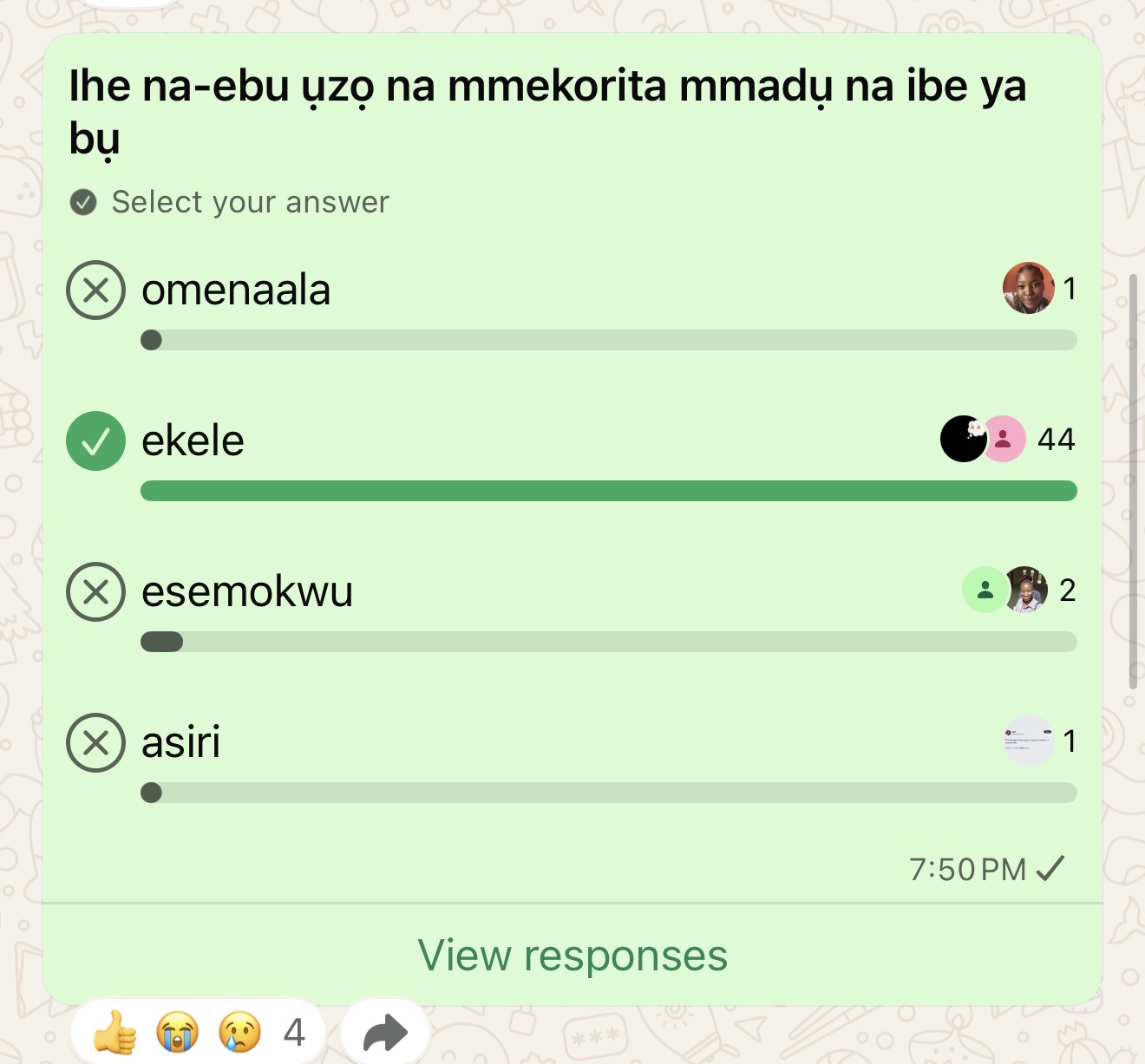
Title: GST 105 (Carryover – Old Code) Past Questions and Answers URL: https://studentsdash.com/gst-105-carryover-old-code-past-questions-and-answers/ -------------------------------------------------- Ihe na-ebuwe ụzọ na mmekọrịta mmadụ na ibe ya bụ? A. asịrị B. esemokwu C. ekele D. omenaala Answer: C Ndị Igbo sịrị “ekwee ekele” A. obi ụtọ adị B. udo adị C. enwee nghọta D. ihu asaa Answer: D Ibọọlachi bụ ekele A. ehihe B. abalị C. ụtụtụ D. agbamume Answer: C Naawo bụ ekele A. ehihe B. abalị C. ụtụtụ D. agbamume Answer: C Kachifoo bụ ekele A. ehihe B. abalị C. ụtụtụ D. agbamume Answer: B Obodo na-ekele jọọkwa n’ala Igbo bụ ndị A. Ọhọzara B. Nkanụ C. Abịrịba D. Afikpo Answer: D Ụzọ ọzọ ndị Igbo si ezipụta ekele bụ site na A. ịchị ọchị B. ibi ọma C. ikwe isi D. mkparịta ụka Answer: B Kedu nke na-abụghị ụzọ ndị Igbo si ezipụta ekele A. nnupu isi B. ibi ọma C. ikwe n’aka D. ekele ọnụ Answer: A N’ala Igbo ikwe n’aka bụ A. ekele B. ọgụ C. mgba D. ịkwa emu Answer: A Daalụ bụ ekele A. ehihe B. abalị C. ụtụtụ D. agbamume Answer: D Ekele onye rụrụ oru ọma bụ A. Imeela B. abalị ọma C. ụtụtụ ọma D. Ndo Answer: A Ekele onye ọrịa bụ A. Imeela B. abalị ọma C. ụtụtụ ọma D. Ndo Answer: D Kedu nke na-abụghị ekele onye na-arụ ọrụ A. Ị dị ike ọrụ B. Jisie ike C. Daalụ ọlụ D. Ndo Answer: D Mkpụrụ edemede Igbo bụ ……………….. e ji ede asụsụ Igbo. A. ụdaolu B. ọtọgrafị C. vọwelụ D. asụsụ Answer: B Mkpụrụ edemede Igbo dị ……………………………………………. A. 61 B. 32 C. 36 D. 45 Answer: C Ụdaume Igbo dị …………………………………………………………………. A. 10 B. 12 C. 13 D. 8 Answer: D Mgbochiume Igbo dị …………………………………………………………… A. 41 B. 32 C. 15 D. 28 Answer: D Ndị a bụ ezi ọmụmaatụ mgbochiume – m, k, g, h – ………………………… A. Eziokwu B. Asị C. o weghi m anya D. o nwere ike Answer: A Ndị a abụghị ezi ọmụmaatụ mgbochiume – o, u, i – ………………………….. A. Eziokwu B. Asị C. amaghị m D. otu bụ asịsa ya Answer: A Ụda mfe dị ……………………………………. A. 4 B. 6 C. 8 D. 2 Answer: A Ụda arọ dị …………………………………….. A. 3 B. 5 C. 4 D. 8 Mkpụrụ edemede Igbo nwere ntụpọ dị ………………………….. A. 4 B. 5 C. 6 D. 8 Answer: A Mkpụrụ edemede gbara mkpị dị …………………… n’Igbo A. 7 B. 9 C. 5 D. 3 Answer: B Ọ bụ na mkpụrụ ụdaasụsụ ka esi emepụta mkpụrụokwu ………… A. Eziokwu B. Asị C. amaghị m D. otu bụ asịsa ya Answer: A Ana-esi na mkpụrụ ụdaasụsụ emepụta isingwaa …………………….. A. oweghị m anya B. onwereike C. Eziokwu D. amaghị m Answer: C Ndịa abụghị ọmumaatụ isingwaa – fe, gwa, ri – …………………………… A. amaghị m B. Asị C. Eziokwu D. otu bụ asịsa ya Answer: D Enweghiike ijikọta mkpụrụ ụdaasụsụ were mebe mkpụrụokwu ……… A. Eziokwu B. Asị C. amaghị m D. otu bụ asịsa ya Answer: B /ŋ/ bụ akara (symbol) otu mgbochiume nwere ntụpọ ……………………….. A. Asi B. o nwereike C. Eziokwu D. amaghị m Answer: C /kp/ bụ akara mgbochiume mkpị ……………………………… A. amaghị m B. Asi C. Eziokwu D. otu bụ asịsa ya Answer: C Nanị otu n’ime mkpụrụ edemede ndị a bụ mgbochiume – m, k, o, p ……………… A. Eziokwu B. Asị C. amaghị m D. otu bụ asịsa ya Answer: B Mkpụrụ edemede akara ihe n’okpuru ya bụ ………………………….. A. mgbochiume B. ụdaolu C. ụdaume D. ntụpọ Answer: D “Akwụkwọ” nwere mkpụrụedemede …………………………………………. A. 6 B. 5 C. 7 D. 9 Answer: B “Mkputamkpu” nwere mkpụrụ edemede ……………………………. A. 9 B. 7 C. 8 D. 10 Answer: C Nkeji asụsụ Igbo dị olee? A. Asaa B. Ise C. Asatọ D. Iri Answer: D Kedu ihe na-abụghị Aha n’ebe a? A. Aha mmadụ B. Aha ihe C. Ọtọgrafị D. Aha ebe Answer: C ‘Ọnwụ’ bụ otu n’ime aha ndị a. A. Ahaaka B. Ahaizugbe C. Ahauche D. Ahaigwe Answer: C E nwere nnọchiaha ……….. A. Ise B. Asaa C. Atọ D. Iri Answer: B Kedu mkpụrụedemede e ji emebe nnọchiaha? A. Mgbochiume B. Ụdamkpị C. Ụdange D. Ụdaume na myiri ụdaume Answer: D Mkpọaha nwere ngalaba A. Anọ B. Ise C. Asatọ D. Iri Answer: A Nnọchiaha bụ okwu na-anọchi ….. A. Oche B. Aha mmadụ C. Akwụkwọ D. Ngwaa Answer: B Otu n’ime ndị a abụghị njụajụjụ A. Anaa B. Ebee C. Ọ dị mma D. Onye Answer: C Nkọwaaha bụ okwu na-akọwa maka A. Ngwaa B. Aha C. Nnọchiaha D. Nrụaka Answer: B Mkpọolu bụ …… A. M B. Anyị C. Unu D. Ha. Answer: A Ụbara onye atọ bụ ……… A. Anyị B. m C. Unu D. Ha Answer: A Nrụaka bụ okwu na-egosi……… A. Ihe a na-ekwu maka ya. B. ihe mmadụ na-eme. C. Ebe mmadụ na-aga. D. Ọrụ mmadụ na-arụ. Answer: A Ngwaa na-eme ka ahịrịokwu nwee……. A. Nghọta zuru oke. B. okwu dị ogologo. C. Ahịrịokwu maa mma. D. Ahịrịokwu nwee isi. Answer: A Mgbakwunye na-eso………. A. Nnọchiaha B. Nkọwaaha C. Mkpọaha D. Ngwaa. Answer: D Isingwaa mfe bụ ndị nwere…… A. otu nkejiokwu. B. nkejiokwu abụọ C. Nkejiokwu atọ D. Nkejiokwu anọ. Answer: A Nnyemakangwaa na-enyere ………..aka iji kwudosie ike n’ahịrịokwu. A. Omekangwaa. B. Isingwaa C. Isingwaa mfe D. Ngwaa. Answer: A Mmejupụta ngwaa bụ mkpụrụokwu na-esota ngwaa n’……. A. Azụ B. Ihu C. Etiti D. Ime. Answer: A Otu n’ime ndị a abụghị ụzọ e si amụba mkpụrụokwu A. Ngannihu. B. Nsonaazụ C. Ọnụọgụgụ. D. Nnọneetiti. Answer: C Omekangwaa bụ mkpụrụokwu …… A. na-akwudosi ike n’ahịrịokwu. B. anaghị akwudosi ike n’ahịrịokwu. C. Zuru oke D. nwere nghọta. Answer: A A na-eji akara ………..egosi nnyemakangwaa. A. Akara ọcha B. Akara uhie. C. Akara oji D. Akara ogologo. Answer: B Aha ndị a na- agụta ọnụ gụnyere ma ewepu ….. A. Ahaaka. B. Aha omee. C. . Ahaizugbe. D. Ahauche. Answer: D Ọyọkọ ube bụ ….. A. Ahaigwe. B. Ahaaka. C. Ahauche D. Aha izugbe. Answer: A Kedu nnọchiaha ahịrịokwu a na-akọwa ‘E riri nri’. A. Nnọchionye. B. Nnọchimpesin. C. Nnọchionwe. D. Nnọchinkọwa. Answer: B Aha ọnwa bụ ………. A. Ahaaka. B. Ahaizugbe. C. Ahaigwe. D. Ahaomee Answer: A Okwu ndị a bụ nkọwaaha ma ewepu……. A. Nwanyị ọma. B. Ewu oji. C. Ọjọọ mmadụ. D. Nkịta ọcha. Answer: A Otu n’ime ndị a abụghị njirimara nkọwa. A. Nkọwa na-eso mkpọaha. B. Nkọwa enweghi ike ikwu naanị ya. C. Nkọwa anaghị eso mkpụrụokwu ‘dị’. D. Nkọwa anaghị akọwa mkpọaha. Answer: B Mkpụrụokwu a bụ otu n’ime nrụaka. A. Ga. B. Jee. C. Ahụ. D. Ka. Answer: C Nrụaka bụ otu n’ime ngalaba…… A. Nnọchiaha. B. Aha. C. Nkọwaaha. D. Ngwaa. Answer: C Ngalaba ngwaa dị…… A. Asaa. B. Ise. C. Isii. D. Anọ. Answer: B E si na……enweta okwu ọhụrụ. A. Aha. B. Ngwaa. C. Nnọchiaha. D. Nkọwaaha. Answer: B Ngwaa ọbụla ga-enweriri ……… A. Isingwaa. B. Akangwaa. C. Ụkwụngwaa. D. Ahangwaa. Answer: A ‘Na’ na-arụ ọrụ dịka…… A. Tensi ndịugbu a. B. Tensi Ndịniihu. C. Ndịnaazụ. D. Njụ. Answer: D ‘Ga’ na-arụ ọrụ dịka……. A. Tensi Ndịnaazụ. B. Ndịugbua. C. Njụ. D. Ndịniihu. Answer: B Ọtụtụ okwu Igbo na-amụba site na ……… A. Aha. B. Ngwaa. C. Nbọchiaha. D. Nkọwaaha. Answer: B Omekangwaa bụ mkpụrụokwu na-esote…… A. Ngwaa. B. Aha. C. Mkpọaha. D. Nnyemakangwaa. Answer: D Njikọ nwere ike ijikọ ma ewepu……….. A. Mmadụ na mmadụ. B. Aha na aha. C. Mkpụrụokwu na mkpụruokwu. D. Nnọchiaha na nnọchiaha. Answer: A Mkpụrụokwu ndị a bụ njikọ ma ewezuga……….. A. na. B. ma. C. maka. D. pụọ. Answer: D Mkpụrụokwu e ji mara mbuụzọ bụ ……….. A. na. B. ka, C. ga. D. le. Answer: A A na-ederu ‘na’ n’isi mgbe ọ na-esote ………. A. Aha. B. Mgbochiume. C. Ụdaume. D. Omekangwaa. Answer: B E nwere nnyemakangwaa olee n’asụsụ Igbo? A. Atọ. B. Abụọ. C. Ise. D. Anọ Answer: B Isingwaa kewara ụzọ ………. A. Atọ. B. Abụọ. C. Anọ. D. Iri. Answer: B Mfinitivu bụ otu n’ime ndị a……. A. eri. B. ori. C. oriri. D. iri. Answer: C Mkpụrụokwu olee ka e ji mara nrụaka? A. Abụọ. B. Atọ. C. Anọ. D. Ise. Answer: A Mkpụrụokwu ndị a bụ Nnọchiaha ma ewezuga ………. A. Ọ. B. Anyị. C. Unu. D. Chaa. Answer: D E kewara Nkọwaaha ụzọ…….. A. Isii. B. Asaa. C. Iri. D. Anọ. Answer: A Ọcha bụ nkọwaaha nke……… A. Nkọwa. B. Nkeonye. C. Nrụaka. D. Nọmba Answer: A ‘A’ na njikọ na-arụtụ. ……… A. Ihe dị nso aka. B. Ihe dị tere aka. C. Ihe na-adịghị. D. Ihe e merela. Answer: A Omekangwaa na nnyemakangwaa na-ejikọ aka arụ ọrụ dịka……. A. Aha. B. Ngwaa. C. Mkpọaha. D. Nnọchiaha. Answer: A Otu n’ime ndị a bụ ahauche A. Iwe. B. Imirikiti. C. Ewu. D. Aha obodo. Answer: A Etu edemede kwesịrị ịdị ka ọ wee dị mma kaa aka ma dịkwa ụtọ bụ A. akara edeme B. usoro edemede C. mkpụrụ okwu D. ụda Answer: A Ihe ọ bụla e dere ede maka ọgụgụ bụ A. edemede B. ndebe olu C. akara ụda olu D. Nsupe Answer: A
 Quiz
GST 201 Past Questions Practice
Practice GST 201 Past Questions and Answers...
 Quiz
 Quiz
EBSU-GST 105 Past Questions Practice
Are you preparing for your GST 105 exam at Ebonyi State University? We’ve got you cov...
 Quiz
ECO 101 Past Questions Practice
Prepare effectively for your ECO 101 exam with our updated past questions and answers...
 Quiz
Phy 107 Past Questions Practice
Practice Phy 107 ( PHY 191) Past Questions and Answers...
 Quiz
MTH 101 Past Questions Practice
Prepare effectively for your MAT 101 (MTH 101) exam with our updated past questions a...

What Does “Sent to Institutions” Mean on NELFUND? What Students Should Know
If you recently applied or reapplied for the NELFUND student loan...