
All Study Materials & Past Questions
Explore over 10,000+ verified lecture notes, exam past questions, summaries, and course guides.
ECO 101 Past Questions and Answers
Title: ECO 101 Past Questions and Answers URL: https://studentsdash.com/eco-101-past-questions-and-answers/ -------------------------------------------------- The factor of production which represents innovation and risk‑taking is A. Entrepreneurship B. Capital C. Land D. Labour Answer: A Which of the following is NOT true of positive economics? A. Concerned with what actually happened B. Concerned with what will happen C. About what ought to happen D. An objective science Answer: C In the short run, the total cost equals the fixed cost of production when output is A. Increasing B. Decreasing C. Zero D. Constant Answer: C Effective demand occurs when the consumer is A. Maximising satisfaction B. Willing and able to pay C. Able to locate the seller promptly D. Able to bargain for a cheaper price Answer: B The output per unit of a variable factor employed is referred to as A. Marginal product B. Total product C. Average product D. Variable factor Answer: A Which of the following factors is NOT a determinant of demand? A. The consumers’ income B. The price of related good C. The consumers’ taste D. The cost of production Answer: D Which of the following is NOT capable of shifting the demand curve to the right? A. An increase in consumer income B. A fall in commodity’s own price C. An increase in the number of consumers D. A fall in the price of a complement Answer: B At the point where the budget line is tangent to an indifference curve, the consumer A. Prefers only one of the two goods B. Derives the maximum satisfaction possible C. Obtains the minimum satisfaction from the two goods D. Derives zero satisfaction from the two goods Answer: B If a price ceiling is set below the equilibrium price, there will likely be A. Excess demand for the commodity B. Shortage of the commodity C. Excess supply of the commodity D. Rationing of the commodity Answer: A The man‑made resource which is used in a production process is called A. Entrepreneur B. Wages C. Labour D. Capital Answer: D Which of the following is not a factor of production? A. Land B. Labour C. Money D. Capital Answer: C Which of the following statements is normative? A. Large government deficits cause an economy to grow more slowly B. People work harder if the wage is higher C. The unemployment rate should be lower D. Printing too much money causes inflation Answer: C If an increase in the price of blue jeans leads to an increase in the demand for board shorts, then blue jeans and board shorts are likely to be A. Inferior goods B. Normal goods C. Negatively related D. Substitutes Answer: D If an increase in consumer incomes leads to a decrease in the demand for camping equipment, then camping equipment is A. A normal good B. A Giffen good C. An inferior good D. A substitute good Answer: C Majority of the people of Buchanan in Liberia engage in fishing as a means of livelihood. This economic activity can be grouped under ……………….. type of production A. Tertiary production B. Industrial production C. Manufacturing production D. Primary production E. Construction production Answer: D A good for which an increase in income leads to a decrease in consumption is called a/an …………………………… A. Normal good B. Luxury good C. Capital good D. Necessary good E. Inferior good Answer: E The study of aggregate economic variables is the primary concern of ……………………………………… A. Microeconomics B. Labour economics C. Managerial economics D. Macroeconomics E. Industrial economics Answer: D The simplest and most common form of business organisation in West Africa is …………………………………… A. Sole proprietorship B. Partnership C. Cooperative society D. Public limited company E. Corporation Answer: A The necessary condition for profit maximisation is ……………… A. TR = TC B. MR = MC C. MC = AC D. MR = AR E. AC = AVC Answer: B The market structure in which abnormal profit is possible in both the short‑run and the long‑run is …………………………………………… A. Perfect competition B. Monopolistic competition C. Monopoly D. Duopoly E. Oligopoly Answer: C The change in Total Product (TP) resulting from the use of additional unit of a variable factor is referred to as ………………………………….. A. Total output B. Average output C. Marginal product D. Productivity index E. Diminishing utility Answer: C The definition of Economics as a Social Science subject which studies human behaviour as a relationship between ends and scarce means which have alternative uses was expressed by ……………………………………… A. Lionel Robbins B. Adam Smith C. Alfred Marshall D. David Ricardo E. John Maynard Keynes Answer: A A collection of ranked indifference curves is called …………………………………….. A. Budget line B. Isoquant curve C. Consumer surplus D. Utility map E. Indifference map Answer: E A market structure where barriers to entry are difficult that it is impossible for new firms to enter the market is called ……………………………………….. A. Oligopoly B. Monopoly C. Duopoly D. Perfect competition E. Monopsony Answer: B MORE LOADING… Network Bhad 😫
GST 104 Past Questions and Answers
Title: GST 104 Past Questions and Answers URL: https://studentsdash.com/gst-104-past-questions-and-answers-2/ -------------------------------------------------- GST 104 History and Philosophy of Science _ is the systematic study of the structure and behaviour of the physical and natural world through observations and experiment. A. Science B. Art C. Literature D. Economics Answer: A Every physical entity in the terrestrial and extra-terrestrial environment is a component of the nature. A. True B. False Answer: A The following are physical entities of the mother-nature EXCEPT A. Galaxies B. Stars C. Moons D. None of the above Answer: D The methodical manner to our mental skills to satisfy human curiosity is what we call? A. Graphical method B. Structural method C. Scientific method D. Linear method Answer: C Science originates from the Latin word A. Scientia B. Scint C. Dominus D. None of the above Answer: A Science consist of what or things, we can think, believe or hope and things we know A. True B. False Answer: A Science is self-correcting and self-generating human activity A. True B. False Answer: A _________is a mental process which serves as the tool of a scientist with which new discovery are made A. Scientific method B. Graphical method C. Structural method D. Linear method Answer: A Scientific method consists traditionally of A. Observation B. Problem identification C. Hypothesis formulation D. Drawing of conclusion E. All of the above Answer: E Scientists are not in general agreement as to exactly what constitute scientific procedure in reality A. True B. False Answer: A Scientist use inductive and deductive logic in the development and testing of hypothesis A. True B. False Answer: A _ proceeds from the specific and arrives at a generalization A. Deductive logic B. Inductive logic C. Specific logic D. All of the above Answer: B _ proceeds from the general to specific A. Inductive logic B. Deductive logic C. Specific logic D. All of the above Answer: B _ involves arriving at a probable conclusion base on several samplings. A. Inductive logic B. Deductive logic C. Specific logic D. None of the above Answer: A Science progress by interplay of inductive and deductive reasoning A. True B. False Answer: A Inductive generalization never attains absolute certainty. They only attain higher degree of probability. A. True //b/ False Answer: A The following are broad division of science A. Biological science B. Applied science C. Computer science D. All of the above Answer: D _ is the study of living organisms and life. A. Biological science B. Applied science C. Physical science D. None of the above Answer: A _ deals with the theory, experimentation and engineering that form the basis for the design and use of computers. A. Biological science B. Applied science C. Computer science D. None of the above Answer: C __ involves the study of algorithms, that process, store, and communicate digital information. A. Biological science B. Applied science C. Computer science D. None of the above Answer: C __ is the application of existing scientific knowledge to practical application A. Biological science B. Computer science C. Social science D. Applied science Answer: D Applied science deals with application fo scientific knowledge to practical problem solving. A. True B. False Answer: A __ is the branch of science that studies non-living system. A. Primary science B. Physical science C. Health education D. All of the above Answer: B Physical science deals with mater and energy. A. True B. False Answer: A Physical science it concerned with study of inanimate natural objects. A. True B. False Answer: A Biological science is subdivided into the following EXCEPT A. Botany B. Zoology C. Biochemistry D. Computer science Answer: C Physical science is subdivided into A. Physics B. Chemistry C. Geology D. All of the above Answer: D Applied science is subdivided into A. Medicine B. Agriculture C. Engineering D. All of the above Answer: D __ is the science of animals A. Botany B. Zoology C. Microbiology D. Computer science Answer: B Plant anatomy is known as A. Zootomy B. Phytotomy C. Botany D. Zoology Answer: B Botany is the science of plants A. True B. False Answer: A The advancement in science and technology lead to wealth creation, ease of life and so on. A. True B. False Answer: A Advances is science and technology have help in improving human life. A. True B. False Answer: A __ is applying scientific knowledge in practical ways. A. Technology B. Art C. Law D. Literature Answer: A _ is the science of land cultivation and breeding/rearing of animals to provide food, fiber, medicinal plant and other products to enhance and sustain life. A. engineering B. Geology C. Agriculture D. Physics Answer: C __ is the act of conveying meaning from one entity or group to another through the use of mutually understood sign, signs, symbols. A. Communication. B. Agriculture C. Machine D. Technology Answer: A Radar is used to locate objects beyond the range of vision. A. True B. False Answer: A The following are the non-verbal means of conveying messages. A. Music B. Dance C. Drawings D. All of the above Answer: D __ means for communication A. Electronic communication B. Telecommunication C. Frequency D. Modulation Answer: B The following are major telecommunication transmission media or devices. A. Fax B. Telephone C. Television D. All of the above Answer: D _ is sometimes called tele-copying A. Fax B. Internet C. Telephone D. E-mail Answer: A _ provides private two-way voice and data communication between two persons separated by a distance. A. Fax B. Telephone C. Internet D. Agriculture Answer: B Each telephone set has both a transmitter (mouth piece) and a receiver A. True B. False Answer: A Science and technology has provided us with good and bad effects. A. True B. False Answer: A ____________is the science and practice of establishing the diagnosis, prognosis, treatment and prevention of disease A. Medicine B. Machines C. Communication D. Agriculture Answer: A The use of anti-retroviral drugs in the suppression of HIV strands is also a good development in the area of medicine. A. True //b/ False Answer: A Who built the first pendulum clock A. Robert Boyle B. Robert Hooke C. Christian Huygens D. Galileo Answer: C Who discovered electricity A. Robert Boyle B. Robert Hooke C. Isaac Newton D. Micheal Faraday Answer: D Who discovered and first made U of telescope A. Robert Boyle B. Robert Hooke C. Galileo D. William Harvey Answer: C Who observed the effects of the mould penicillium on a bacteria culture A. Galileo B. Albert Einstein C. Alexandre fleming D. Robert Boyle Answer: C __ is a natural condition A. Effects B. Environment C. Chemical D. Water Answer: B _ is a change which is a result of an action. A. Effect B. Chemical C. Pollution D. Land Answer: A __ is a substance produced by chemistry A. Water B. Air C. Chemical D. Food Answer: C _ is a natural science A. Animals B. Plants C. Human D. Chemistry Answer: D The introduction of contaminants into the natural environment is called _ A. Hygiene B. Pollution C. Cleanness D. Neatness Answer: B _ gets introduced into the environment to cause pollution. A. Chemical B. Water C. Pollutants D. Fire. Answer: C Chemical pollutants are classified into? A. Two B. Four C. One D. Tree Answer: A Metal pollutants includes all except A. Chromium B. Lead C. Mercury D. Paracetamol Answer: D ________is one of the heavy metals found in urban street dust. A. Lead B. Chromium C. Zinc D. Hydrogen Answer: B ________Inhalation causes dermatitis and induces lung cancer. A. Lead B. Mercury C. Chromium D. Arsenic Answer: C Chromic acid and its salts have a corrosive action on the __ and mucous membranes. A. Mouth B. Eye C. Nose D. Skin Answer: D __ is used often used as herbicides and insecticides A. Arsenic B. Mercury C. Lead D. Cadmium Answer: A _ is a causative agent of cancer of the larynx, lung, skin and esophagus A. Lead B. Arsenic C. Cadmium D. Chromium Answer: B Cases of loss of teeth and early infertility are traceable to __ A. Lead poisoning B. Food poisoning C. Poisoned drinks D. Arsenic in drinking water Answer: A Lead components are used as stabilizer in plastic pipes. A. True B. False C. None of the above D. All of the above Answer: A _ is one of the raw materials used in the production of batteries A. Cadmium B. Antimonies lead C. Mercury black D. None of the above Answer: B the toxicity of cadmium may depend on the presence of other elements such as zinc and __ A. Magnesium B. Sodium C. Selenium D. Silver Answer: C _ is implicated in causing cortices disease and hypertension. A. Lead B. Mercury C. Magnesium D. Cadmium Answer: D __________is a general protoplasmic poison A. Mercury B. Lead C. Sodium D. Selenium Answer: A What is the full meaning of ADI A. Address – Incomplete signal B. Attitude display indicator C. Anti-detonent infection D. Acceptable daily intake Answer: D __ causes Hogskin’s disease A. Tin B. Iron C. Wilson’s poisoning D. Lead poisoning Answer: C _________industry converts animals skin into leather A. Automobile industry B. Film industry C. Food industry D. Tanning industry Answer: D Tannery can contributed to the problem of health hazard A. False B. True C. All of the above D. None of the above Answer: B Tannery can cause the following except A. High concentration of salts B. Oxygen depletion in water C. Bacteriological pollution D. Good health Answer: D Method of tannery effluents disposal is through? A. Burning B. Recycling C. Water (rivers and streams) D. Incineration Answer: C Most common metals associated with tanneries includes all except. A. Zin B. Tin C. Magnesium D. Potassium Answer: B The following are the major air pollutants except A. Oxides of sulphur B. Formaldehyde C. Carbonmonoxide D. Oxygen. Answer: D Another name for formaldehyde is _ A. Methanal B. Metanol C. Alcohol D. None of the above Answer: A Carbon monoxide is the same as? A. Carbon iv oxide B. Carbon ii oxide C. Carbon and oxide D. All of the above Answer: B Inhalation of CO can damage the liver and _ A. Spleen B. Kidney C. Nerve tissue D. Heart Answer: C _ is the increase in the temperature of the earths atmosphere caused by the buildup of green house gases? A. Tsanami B. Global warming C. Erosion D. Bush burning Answer: B Sources of green house gases are all except A. Burning of forests B. Cattle rearing C. Cooking of food D. Burning of fossil fuels Answer: C __ provides a protective layer which prevents the penetration of the sun. A. Ozone layer B. God C. Clouds D. Sky Answer: A Agricultural activities contribute to lad pollution. A. False B. True C. All of the above D. None of the above Answer: B Water is found by the combination of hydrogen and __ A. Nitrogen B. Sodium C. Oxygen D. Potassium Answer: C Environmental hazard of water are all except A. Pollution B. Flooding C. Erosion D. Cooking Answer: D Benefits of water includes all except A. Domestic use B. Erosion C. Agricultural use D. Medium of transport Answer: B _ is the change in the quality of water A. Water pollution B. Water storage C. Water purification D. Water wastage Answer: A Causes of chemical water pollution are all except A. Domestic activities B. Agricultural activities C. Water purification D. Industrial activities Answer: C industry is the crown jewel of the industrial sector in Nigeria A. Oil B. Brewery C. Tanning D. Bakery Answer: A . Examples of changes that occurs in the environment of man include __ A. Climate B. Culture C. Biodiversity D. All of the above Answer: D Environmental changes that occur around man include _ except A. Human health B. Culture C. Water D. Economy Answer: C Environmental changes that occur around man include A. Biodiversity B. Economy C. All of the above D. None of the above Answer: C Man lives in a world with rapid environmental changes A. True B. False C. All of the above D. None of the above Answer: A The team environment was derived from a French word known as __ A. Viron B. Environia C. Veronica D. Environmental Answer: B The environmental controls life and its activities A. True B. False C. All of the above D. None of the above Answer: A About environmental of man A. Affects man’s activities B. Everything that surrounds man C. All the surrounding conditions and element D. All of the above Answer: D According to Gisbert (2010), the types of environment include __ A. Natural environment B. Social environment C. Psychological environment D. All of the above Answer: D Example of biotic natural environment include:- A. Light B. Store C. Grass D. Wind Answer: C About biotic natural environment except A. Grass B. Lion C. Stone D. Man Answer: C Types of environment according to Gisbert (2010) except A. Natural environment B. Artificial environment C. Social environment D. Break environment Answer: D Natural environment include biotic and abiotic element. A. True B. False C. All of the above D. None of the above Answer: A About example f man-made environment A. Machinery B. Infrastructure C. All of the above D. None of the above Answer: C Natural environment summarizes the whole apparatus of our civilization A. True B. False C. All of the above D. None of the above Answer: B Components of social environment include the following except A. Regulation B. Authorities C. Tradition D. Infrastructure Answer: D Organization, government, power relationship and labour market are component of ______environment A. Social B. Man-made C. Natural D. All of the above Answer: A Non- living component of man’s environment include the following except A. Atmosphere B. Solar system C. Soil D. Fungi Answer: D The layer on which the lithosphere rests on the earth’s live is called _ A. Anthropology B. Lithman C. Asthenosphere D. Lithospherication Answer: C the part of the earth occupied by water is called _ A. River B. Ocean C. All of the above D. Hydrosphere Answer: D The first and lowest layer of earth’s atmosphere is __ A. Troposphere B. Lowersphere C. All of the above D. None of the above Answer: A Troposphere contains about three-quarters of the mass of the entire atmosphere. A. True B. False C. All of the above D. None of the above Answer: A __ protects plants, animals and human beings by blocking the most harmful ways of the sun. A. Hydrosphere B. Vapour C. Ozone D. Argon Answer: C The strastosphere is very wet, air in this layer contain plenty water A. True B. False C. All of the above D. None of the above Answer: B Water can take the form of the following except A. Ice B. Litmus C. Vapour D. Liquid Answer: B The lithosphere is the _ part of the earth crust? A. Ice B. Liquid C. Solid D. Gas Answer: C
GST 105 (Carryover – Old Code) Past Questions and Answers
Title: GST 105 (Carryover – Old Code) Past Questions and Answers URL: https://studentsdash.com/gst-105-carryover-old-code-past-questions-and-answers/ -------------------------------------------------- Ihe na-ebuwe ụzọ na mmekọrịta mmadụ na ibe ya bụ? A. asịrị B. esemokwu C. ekele D. omenaala Answer: C Ndị Igbo sịrị “ekwee ekele” A. obi ụtọ adị B. udo adị C. enwee nghọta D. ihu asaa Answer: D Ibọọlachi bụ ekele A. ehihe B. abalị C. ụtụtụ D. agbamume Answer: C Naawo bụ ekele A. ehihe B. abalị C. ụtụtụ D. agbamume Answer: C Kachifoo bụ ekele A. ehihe B. abalị C. ụtụtụ D. agbamume Answer: B Obodo na-ekele jọọkwa n’ala Igbo bụ ndị A. Ọhọzara B. Nkanụ C. Abịrịba D. Afikpo Answer: D Ụzọ ọzọ ndị Igbo si ezipụta ekele bụ site na A. ịchị ọchị B. ibi ọma C. ikwe isi D. mkparịta ụka Answer: B Kedu nke na-abụghị ụzọ ndị Igbo si ezipụta ekele A. nnupu isi B. ibi ọma C. ikwe n’aka D. ekele ọnụ Answer: A N’ala Igbo ikwe n’aka bụ A. ekele B. ọgụ C. mgba D. ịkwa emu Answer: A Daalụ bụ ekele A. ehihe B. abalị C. ụtụtụ D. agbamume Answer: D Ekele onye rụrụ oru ọma bụ A. Imeela B. abalị ọma C. ụtụtụ ọma D. Ndo Answer: A Ekele onye ọrịa bụ A. Imeela B. abalị ọma C. ụtụtụ ọma D. Ndo Answer: D Kedu nke na-abụghị ekele onye na-arụ ọrụ A. Ị dị ike ọrụ B. Jisie ike C. Daalụ ọlụ D. Ndo Answer: D Mkpụrụ edemede Igbo bụ ……………….. e ji ede asụsụ Igbo. A. ụdaolu B. ọtọgrafị C. vọwelụ D. asụsụ Answer: B Mkpụrụ edemede Igbo dị ……………………………………………. A. 61 B. 32 C. 36 D. 45 Answer: C Ụdaume Igbo dị …………………………………………………………………. A. 10 B. 12 C. 13 D. 8 Answer: D Mgbochiume Igbo dị …………………………………………………………… A. 41 B. 32 C. 15 D. 28 Answer: D Ndị a bụ ezi ọmụmaatụ mgbochiume – m, k, g, h – ………………………… A. Eziokwu B. Asị C. o weghi m anya D. o nwere ike Answer: A Ndị a abụghị ezi ọmụmaatụ mgbochiume – o, u, i – ………………………….. A. Eziokwu B. Asị C. amaghị m D. otu bụ asịsa ya Answer: A Ụda mfe dị ……………………………………. A. 4 B. 6 C. 8 D. 2 Answer: A Ụda arọ dị …………………………………….. A. 3 B. 5 C. 4 D. 8 Mkpụrụ edemede Igbo nwere ntụpọ dị ………………………….. A. 4 B. 5 C. 6 D. 8 Answer: A Mkpụrụ edemede gbara mkpị dị …………………… n’Igbo A. 7 B. 9 C. 5 D. 3 Answer: B Ọ bụ na mkpụrụ ụdaasụsụ ka esi emepụta mkpụrụokwu ………… A. Eziokwu B. Asị C. amaghị m D. otu bụ asịsa ya Answer: A Ana-esi na mkpụrụ ụdaasụsụ emepụta isingwaa …………………….. A. oweghị m anya B. onwereike C. Eziokwu D. amaghị m Answer: C Ndịa abụghị ọmumaatụ isingwaa – fe, gwa, ri – …………………………… A. amaghị m B. Asị C. Eziokwu D. otu bụ asịsa ya Answer: D Enweghiike ijikọta mkpụrụ ụdaasụsụ were mebe mkpụrụokwu ……… A. Eziokwu B. Asị C. amaghị m D. otu bụ asịsa ya Answer: B /ŋ/ bụ akara (symbol) otu mgbochiume nwere ntụpọ ……………………….. A. Asi B. o nwereike C. Eziokwu D. amaghị m Answer: C /kp/ bụ akara mgbochiume mkpị ……………………………… A. amaghị m B. Asi C. Eziokwu D. otu bụ asịsa ya Answer: C Nanị otu n’ime mkpụrụ edemede ndị a bụ mgbochiume – m, k, o, p ……………… A. Eziokwu B. Asị C. amaghị m D. otu bụ asịsa ya Answer: B Mkpụrụ edemede akara ihe n’okpuru ya bụ ………………………….. A. mgbochiume B. ụdaolu C. ụdaume D. ntụpọ Answer: D “Akwụkwọ” nwere mkpụrụedemede …………………………………………. A. 6 B. 5 C. 7 D. 9 Answer: B “Mkputamkpu” nwere mkpụrụ edemede ……………………………. A. 9 B. 7 C. 8 D. 10 Answer: C Nkeji asụsụ Igbo dị olee? A. Asaa B. Ise C. Asatọ D. Iri Answer: D Kedu ihe na-abụghị Aha n’ebe a? A. Aha mmadụ B. Aha ihe C. Ọtọgrafị D. Aha ebe Answer: C ‘Ọnwụ’ bụ otu n’ime aha ndị a. A. Ahaaka B. Ahaizugbe C. Ahauche D. Ahaigwe Answer: C E nwere nnọchiaha ……….. A. Ise B. Asaa C. Atọ D. Iri Answer: B Kedu mkpụrụedemede e ji emebe nnọchiaha? A. Mgbochiume B. Ụdamkpị C. Ụdange D. Ụdaume na myiri ụdaume Answer: D Mkpọaha nwere ngalaba A. Anọ B. Ise C. Asatọ D. Iri Answer: A Nnọchiaha bụ okwu na-anọchi ….. A. Oche B. Aha mmadụ C. Akwụkwọ D. Ngwaa Answer: B Otu n’ime ndị a abụghị njụajụjụ A. Anaa B. Ebee C. Ọ dị mma D. Onye Answer: C Nkọwaaha bụ okwu na-akọwa maka A. Ngwaa B. Aha C. Nnọchiaha D. Nrụaka Answer: B Mkpọolu bụ …… A. M B. Anyị C. Unu D. Ha. Answer: A Ụbara onye atọ bụ ……… A. Anyị B. m C. Unu D. Ha Answer: A Nrụaka bụ okwu na-egosi……… A. Ihe a na-ekwu maka ya. B. ihe mmadụ na-eme. C. Ebe mmadụ na-aga. D. Ọrụ mmadụ na-arụ. Answer: A Ngwaa na-eme ka ahịrịokwu nwee……. A. Nghọta zuru oke. B. okwu dị ogologo. C. Ahịrịokwu maa mma. D. Ahịrịokwu nwee isi. Answer: A Mgbakwunye na-eso………. A. Nnọchiaha B. Nkọwaaha C. Mkpọaha D. Ngwaa. Answer: D Isingwaa mfe bụ ndị nwere…… A. otu nkejiokwu. B. nkejiokwu abụọ C. Nkejiokwu atọ D. Nkejiokwu anọ. Answer: A Nnyemakangwaa na-enyere ………..aka iji kwudosie ike n’ahịrịokwu. A. Omekangwaa. B. Isingwaa C. Isingwaa mfe D. Ngwaa. Answer: A Mmejupụta ngwaa bụ mkpụrụokwu na-esota ngwaa n’……. A. Azụ B. Ihu C. Etiti D. Ime. Answer: A Otu n’ime ndị a abụghị ụzọ e si amụba mkpụrụokwu A. Ngannihu. B. Nsonaazụ C. Ọnụọgụgụ. D. Nnọneetiti. Answer: C Omekangwaa bụ mkpụrụokwu …… A. na-akwudosi ike n’ahịrịokwu. B. anaghị akwudosi ike n’ahịrịokwu. C. Zuru oke D. nwere nghọta. Answer: A A na-eji akara ………..egosi nnyemakangwaa. A. Akara ọcha B. Akara uhie. C. Akara oji D. Akara ogologo. Answer: B Aha ndị a na- agụta ọnụ gụnyere ma ewepu ….. A. Ahaaka. B. Aha omee. C. . Ahaizugbe. D. Ahauche. Answer: D Ọyọkọ ube bụ ….. A. Ahaigwe. B. Ahaaka. C. Ahauche D. Aha izugbe. Answer: A Kedu nnọchiaha ahịrịokwu a na-akọwa ‘E riri nri’. A. Nnọchionye. B. Nnọchimpesin. C. Nnọchionwe. D. Nnọchinkọwa. Answer: B Aha ọnwa bụ ………. A. Ahaaka. B. Ahaizugbe. C. Ahaigwe. D. Ahaomee Answer: A Okwu ndị a bụ nkọwaaha ma ewepu……. A. Nwanyị ọma. B. Ewu oji. C. Ọjọọ mmadụ. D. Nkịta ọcha. Answer: A Otu n’ime ndị a abụghị njirimara nkọwa. A. Nkọwa na-eso mkpọaha. B. Nkọwa enweghi ike ikwu naanị ya. C. Nkọwa anaghị eso mkpụrụokwu ‘dị’. D. Nkọwa anaghị akọwa mkpọaha. Answer: B Mkpụrụokwu a bụ otu n’ime nrụaka. A. Ga. B. Jee. C. Ahụ. D. Ka. Answer: C Nrụaka bụ otu n’ime ngalaba…… A. Nnọchiaha. B. Aha. C. Nkọwaaha. D. Ngwaa. Answer: C Ngalaba ngwaa dị…… A. Asaa. B. Ise. C. Isii. D. Anọ. Answer: B E si na……enweta okwu ọhụrụ. A. Aha. B. Ngwaa. C. Nnọchiaha. D. Nkọwaaha. Answer: B Ngwaa ọbụla ga-enweriri ……… A. Isingwaa. B. Akangwaa. C. Ụkwụngwaa. D. Ahangwaa. Answer: A ‘Na’ na-arụ ọrụ dịka…… A. Tensi ndịugbu a. B. Tensi Ndịniihu. C. Ndịnaazụ. D. Njụ. Answer: D ‘Ga’ na-arụ ọrụ dịka……. A. Tensi Ndịnaazụ. B. Ndịugbua. C. Njụ. D. Ndịniihu. Answer: B Ọtụtụ okwu Igbo na-amụba site na ……… A. Aha. B. Ngwaa. C. Nbọchiaha. D. Nkọwaaha. Answer: B Omekangwaa bụ mkpụrụokwu na-esote…… A. Ngwaa. B. Aha. C. Mkpọaha. D. Nnyemakangwaa. Answer: D Njikọ nwere ike ijikọ ma ewepu……….. A. Mmadụ na mmadụ. B. Aha na aha. C. Mkpụrụokwu na mkpụruokwu. D. Nnọchiaha na nnọchiaha. Answer: A Mkpụrụokwu ndị a bụ njikọ ma ewezuga……….. A. na. B. ma. C. maka. D. pụọ. Answer: D Mkpụrụokwu e ji mara mbuụzọ bụ ……….. A. na. B. ka, C. ga. D. le. Answer: A A na-ederu ‘na’ n’isi mgbe ọ na-esote ………. A. Aha. B. Mgbochiume. C. Ụdaume. D. Omekangwaa. Answer: B E nwere nnyemakangwaa olee n’asụsụ Igbo? A. Atọ. B. Abụọ. C. Ise. D. Anọ Answer: B Isingwaa kewara ụzọ ………. A. Atọ. B. Abụọ. C. Anọ. D. Iri. Answer: B Mfinitivu bụ otu n’ime ndị a……. A. eri. B. ori. C. oriri. D. iri. Answer: C Mkpụrụokwu olee ka e ji mara nrụaka? A. Abụọ. B. Atọ. C. Anọ. D. Ise. Answer: A Mkpụrụokwu ndị a bụ Nnọchiaha ma ewezuga ………. A. Ọ. B. Anyị. C. Unu. D. Chaa. Answer: D E kewara Nkọwaaha ụzọ…….. A. Isii. B. Asaa. C. Iri. D. Anọ. Answer: A Ọcha bụ nkọwaaha nke……… A. Nkọwa. B. Nkeonye. C. Nrụaka. D. Nọmba Answer: A ‘A’ na njikọ na-arụtụ. ……… A. Ihe dị nso aka. B. Ihe dị tere aka. C. Ihe na-adịghị. D. Ihe e merela. Answer: A Omekangwaa na nnyemakangwaa na-ejikọ aka arụ ọrụ dịka……. A. Aha. B. Ngwaa. C. Mkpọaha. D. Nnọchiaha. Answer: A Otu n’ime ndị a bụ ahauche A. Iwe. B. Imirikiti. C. Ewu. D. Aha obodo. Answer: A Etu edemede kwesịrị ịdị ka ọ wee dị mma kaa aka ma dịkwa ụtọ bụ A. akara edeme B. usoro edemede C. mkpụrụ okwu D. ụda Answer: A Ihe ọ bụla e dere ede maka ọgụgụ bụ A. edemede B. ndebe olu C. akara ụda olu D. Nsupe Answer: A

ENT 211 Past Questions and Answers
Title: ENT 211 Past Questions and Answers URL: https://studentsdash.com/ent-211-past-questions-and-answers/ -------------------------------------------------- ENT 211 – Entrepreneurship and Innovation Questions and Answers Entrepreneurial Behavior and Characteristics Q: A growing body of work shows that entrepreneurial behavior is dependent on _______ and _________ factors. A: Social and economic. Q: Entrepreneurs are _________ for economic change. A: Catalysts. Q: It is widely maintained that entrepreneurs are ________ individuals. A: Unusual. Q: The specific characteristics of an entrepreneur can be broken down into ________, ________, and ________. A: Psychological, sociological, and economic. Q: Collins and Moore studied 150 entrepreneurs and concluded that they are _____ and _____ people. A: Tough and pragmatic. Entrepreneurial Knowledge and Skills Q: In the contemporary world, entrepreneurial skills can be acquired through ____________. A: Systematic knowledge and practice. Q: In Chapter 1, _______ studies of some successful entrepreneurs were carried out to serve as motivational personalities to younger generations. A: Case studies. Q: Entrepreneurs always have a strong belief about a market opportunity and are willing to accept a high level of _____, _____, or ________ risk to pursue it. A: Financial, personal, or social risk. Q: Entrepreneurial spirit is characterized by ____ and _____. A: Innovation and risk-taking. Q: Entrepreneurship ranges in scale from ____ to _____. A: Solo projects to major undertakings. Types of Entrepreneurs and Entrepreneurship Q: Cole found that there are four types of entrepreneurs, namely: A: The innovator, the calculating inventor, the over-optimistic promoter, and the organizational builder. Q: The term intrapreneurship is derived from __ and __. A: “Intra” (internal) and entrepreneurship. Q: The major difference between an intrapreneur and an entrepreneur is that the fruit of success benefits the ______ rather than the _______. A: Organization… Intrapreneur. Q: Behavioral characteristics of intrapreneurship include ____, ______, ______, and _______. A: Initiative, ability to think outside the box, risk-taking, and leadership. Q: In Nigeria, the private sector encourages _______ as a strategy for the growth of their various organizations. A: Intrapreneurship. Historical Perspectives on Entrepreneurship Q: Notable early economists wrote enthusiastically about entrepreneurs as ________ of progressive economies. A: Change agents. Q: ______ combined the theories of Cantillon and Adam Smith. A: Jean-Baptiste Say. Q: ______ invented the mechanical reaper in 1831. A: Cyrus McCormick. Q: The 19th-century entrepreneurs were the ________. A: Captains of industries. Q: As a ______, the entrepreneur plays a very strategic role in the economy. A: Prime mover of change. Q: Africa is said to have ____ million SMEs. A: 65. Entrepreneurial Culture Q: The roots of ___, ___, and ____ encountered more resistance in the African psyche. A: Capitalism, utility, and individualism. Q: Cultural issues lie entirely in the distinction made by each culture between _________ and ___________. A: Cardinal values of civilization and instrumental values. Q: ________ is the foundation of a dynamic economy. A: A strong entrepreneurial culture. Q: A culture of entrepreneurship is particularly strong in _____________ markets. A: Rapid-growth. Q: ________ is one of the most precious things a company has, said ________. A: Culture… Herb Kelleher, founder of Southwest Airlines. Q: _____ serves to socialize the employee. A: Culture. Q: An entrepreneurial culture is not optional; it is an ___________. A: Absolute necessity. Q: According to Prosek, the key to unleashing creative energy is to create an entrepreneurial culture based on four pillars: A: 1. Authenticity 2. Commitment to people 3. Commitment to business 4. Continuous effort Q: Sustaining entrepreneurial culture starts with _____ and also __________. A: Who you hire… Reward system. Q: Creating ____________ leads to the creation of a business that will continue to grow by adapting to change and actively pursuing new opportunities in the market. A: An entrepreneurial culture. Notable Entrepreneurs and Their Contributions Q: Naveen Jain is an ________, _________, and _________. A: Entrepreneur, philanthropist, and technology pioneer. Q: ______ identified 10 secrets of becoming a successful entrepreneur. A: Naveen Jain. Q: Naveen Jain is the founder of: A: World Innovation Institute Moon Express Inome and InfoSpace Q: Success does not necessarily come from breakthrough innovation but from _______________. A: Flawless execution. Q: He believes that a business plan is too long if it’s ________. A: More than one page. Q: Behind every overnight success lies ______________. A: Years of hard work and sweat. Q: Most companies die of ______________ rather than __________. A: Indigestion… Starvation. Q: He also said in most cases, your ___ and ___ are still your best guide. A: Heart and gut. Aliko Dangote and Entrepreneurship in Africa Q: Dangote is ranked by ______________ as the _____ richest person in the world. A: Forbes… 43rd. Q: Alhaji Aliko Dangote was born on _________________. A: 10th of April, 1957. Q: Dangote is the ________ of Nigeria’s business circle. A: Golden child. Q: Dangote Cement accounts for a quarter of the _______________ total market cap. A: Nigerian Stock Exchange. Q: In the journey of entrepreneurship, _________ is supreme. A: Resilience and vision. DOWNLOAD STUDENTSDASH APP
GST 105 (IGBO) Past Questions and Answers (Quiz Questions)
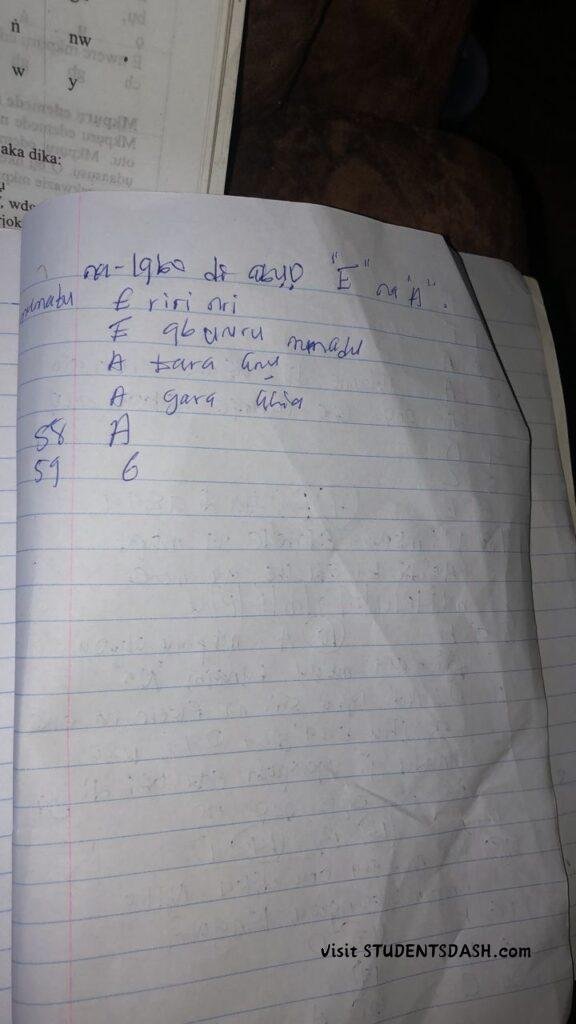
Title: GST 105 (IGBO) Past Questions and Answers (Quiz Questions) URL: https://studentsdash.com/gst-105-igbo-past-questions/ -------------------------------------------------- Omekangwaa na nnyemakangwaa na-ejikọ aka arụ ọrụ dịka……. A. Aha. B. Ngwaa. C. Mkpọaha. D. Nnọchiaha. Answer: A ‘Na’ na-arụ ọrụ dịka…… A. Tensi ndịugbu a. B. Tensi Ndịniihu. C. Ndịnaazụ. D. Njụ. Answer: D Ihe ọ bụla e dere ede maka ọgụgụ bụ A. edemede B. ndebe olu C. akara ụda olu D. Nsupe Answer: A Ụzọ ọzọ ndị Igbo si ezipụta ekele bụ site na A. ịchị ọchị B. ibi ọma C. ikwe isi D. mkparịta ụka Answer: B Mkpụrụ edemede Igbo dị ……………………………………………. A. 61 B. 32 C. 36 D. 45 Answer: C Nrụaka bụ okwu na-egosi……… A. Ihe a na-ekwu maka ya. B. ihe mmadụ na-eme. C. Ebe mmadụ na-aga. D. Ọrụ mmadụ na-arụ. Answer: A Nanị otu n’ime mkpụrụ edemede ndị a bụ mgbochiume – m, k, o, p ……………… A. Eziokwu B. Asị C. amaghị m D. otu bụ asịsa ya Answer: B Mkpụrụ edemede Igbo bụ ……………….. e ji ede asụsụ Igbo. A. ụdaolu B. ọtọgrafị C. vọwelụ D. asụsụ Answer: B Daalụ bụ ekele A. ehihe B. abalị C. ụtụtụ D. agbamume Answer: D Kachifoo bụ ekele A. ehihe B. abalị C. ụtụtụ D. agbamume Answer: B Kedu nke na-abụghị ekele onye na-arụ ọrụ A. Ị dị ike ọrụ B. Jisie ike C. Daalụ ọlụ D. Ndo Answer: D Isingwaa mfe bụ ndị nwere…… A. otu nkejiokwu. B. nkejiokwu abụọ C. Nkejiokwu atọ D. Nkejiokwu anọ. Answer: A Mkpụrụokwu ndị a bụ njikọ ma ewezuga……… A. na. B. ma. C. maka. D. pụọ. Answer: D Mkpụrụ edemede akara ihe n’okpuru ya bụ ………………………….. A. mgbochiume B. ụdaolu C. ụdaume D. ntụpọ Answer: D ‘Ga’ na-arụ ọrụ dịka……. A. Tensi Ndịnaazụ. B. Ndịugbua. C. Njụ. D. Ndịniihu. Answer: B Ndị Igbo sịrị “ekwee ekele” A. obi ụtọ adị B. udo adị C. enwee nghọta D. ihu asaa Answer: D Nnọchiaha bụ okwu na-anọchi ….. A. Oche B. Aha mmadụ C. Akwụkwọ D. Ngwaa Answer: B Mkpụrụokwu olee ka e ji mara nrụaka? A. Abụọ. B. Atọ. C. Anọ. D. Ise. Answer: A Enweghiike ijikọta mkpụrụ ụdaasụsụ were mebe mkpụrụokwu ……… A. Eziokwu B. Asị C. amaghị m D. otu bụ asịsa ya Answer: B Ngwaa ọbụla ga-enweriri ……… A. Isingwaa. B. Akangwaa. C. Ụkwụngwaa. D. Ahangwaa. Answer: A “Mkputamkpu” nwere mkpụrụ edemede ……………………………. A. 9 B. 7 C. 8 D. 10 Answer: C Ndị a bụ ezi ọmụmaatụ mgbochiume – m, k, g, h – ………………………… A. Eziokwu B. Asị C. o weghi m anya D. o nwere ike Answer: A Nkọwaaha bụ okwu na-akọwa maka A. Ngwaa B. Aha C. Nnọchiaha D. Nrụaka Answer: B Kedu nke na-abụghị ụzọ ndị Igbo si ezipụta ekele A. nnupu isi B. ibi ọma C. ikwe n’aka D. ekele ọnụ Answer: A A na-eji akara ………..egosi nnyemakangwaa. A. Akara ọcha B. Akara uhie. C. Akara oji D. Akara ogologo. Answer: B E nwere nnọchiaha ……….. A. Ise B. Asaa C. Atọ D. Iri Answer: B A na-ederu ‘na’ n’isi mgbe ọ na-esote ………. A. Aha. B. Mgbochiume. C. Ụdaume. D. Omekangwaa. Answer: B Mkpụrụ edemede gbara mkpị dị …………………… n’Igbo A. 7 B. 9 C. 5 D. 3 Answer: B Ibọọlachi bụ ekele A. ehihe B. abalị C. ụtụtụ D. agbamume Answer: C Naawo bụ ekele A. ehihe B. abalị C. ụtụtụ D. agbamume Answer: C Ihe na-ebuwe ụzọ na mmekọrịta mmadụ na ibe ya bụ? A. asịrị B. esemokwu C. ekele D. omenaala Answer: C “Akwụkwọ” nwere mkpụrụedemede …………………………………………. A. 6 B. 5 C. 7 D. 9 Answer: B Ngalaba ngwaa dị…… A. Asaa. B. Ise. C. Isii. D. Anọ. Answer: B Kedu mkpụrụedemede e ji emebe nnọchiaha? A. Mgbochiume B. Ụdamkpị C. Ụdange D. Ụdaume na myiri ụdaume Answer: D Ụda mfe dị ……………………………………. A. 4 B. 6 C. 8 D. 2 Answer: A /kp/ bụ akara mgbochiume mkpị ……………………………… A. amaghị m B. Asi C. Eziokwu D. otu bụ asịsa ya Answer: C E si na……enweta okwu ọhụrụ. A. Aha. B. Ngwaa. C. Nnọchiaha. D. Nkọwaaha. Answer: B Kedu ihe na-abụghị Aha n’ebe a? A. Aha mmadụ B. Aha ihe C. Ọtọgrafị D. Aha ebe Answer: C Nnyemakangwaa na-enyere ………..aka iji kwudosie ike n’ahịrịokwu. A. Omekangwaa. B. Isingwaa C. Isingwaa mfe D. Ngwaa. Answer: A Ụbara onye atọ bụ ……… A. Anyị B. m C. Unu D. Ha Answer: A Mmejupụta ngwaa bụ mkpụrụokwu na-esota ngwaa n’……. A. Azụ B. Ihu C. Etiti D. Ime. Answer: A Otu n’ime ndị a abụghị ụzọ e si amụba mkpụrụokwu A. Ngannihu. B. Nsonaazụ C. Ọnụọgụgụ. D. Nnọneetiti. Answer: C Omekangwaa bụ mkpụrụokwu …… A. na-akwudosi ike n’ahịrịokwu. B. anaghị akwudosi ike n’ahịrịokwu. C. Zuru oke D. nwere nghọta. Answer: A Aha ndị a na- agụta ọnụ gụnyere ma ewepu ….. A. Ahaaka. B. Aha omee. C. . Ahaizugbe. D. Ahauche. Answer: D Ọyọkọ ube bụ ….. A. Ahaigwe. B. Ahaaka. C. Ahauche D. Aha izugbe. Answer: A Kedu nnọchiaha ahịrịokwu a na-akọwa ‘E riri nri’. A. Nnọchionye. B. Nnọchimpesin. C. Nnọchionwe. D. Nnọchinkọwa. Answer: B Aha ọnwa bụ ………. A. Ahaaka. B. Ahaizugbe. C. Ahaigwe. D. Ahaomee Answer: A Okwu ndị a bụ nkọwaaha ma ewepu……. A. Nwanyị ọma. B. Ewu oji. C. Ọjọọ mmadụ. D. Nkịta ọcha. Answer: A Otu n’ime ndị a abụghị njirimara nkọwa. A. Nkọwa na-eso mkpọaha. B. Nkọwa enweghi ike ikwu naanị ya. C. Nkọwa anaghị eso mkpụrụokwu ‘dị’. D. Nkọwa anaghị akọwa mkpọaha. Answer: B Mkpụrụokwu a bụ otu n’ime nrụaka. A. Ga. B. Jee. C. Ahụ. D. Ka. Answer: C Nrụaka bụ otu n’ime ngalaba…… A. Nnọchiaha. B. Aha. C. Nkọwaaha. D. Ngwaa. Answer: C Nkeji asụsụ Igbo dị olee? A. Asaa B. Ise C. Asatọ D. Iri Answer: D ‘Ọnwụ’ bụ otu n’ime aha ndị a. A. Ahaaka B. Ahaizugbe C. Ahauche D. Ahaigwe Answer: C Mkpọaha nwere ngalaba A. Anọ B. Ise C. Asatọ D. Iri Answer: A Otu n’ime ndị a abụghị njụajụjụ A. Anaa B. Ebee C. Ọ dị mma D. Onye Answer: C Mkpọolu bụ …… A. M B. Anyị C. Unu D. Ha. Answer: A Ngwaa na-eme ka ahịrịokwu nwee……. A. Nghọta zuru oke. B. okwu dị ogologo. C. Ahịrịokwu maa mma. D. Ahịrịokwu nwee isi. Answer: A Mgbakwunye na-eso………. A. Nnọchiaha B. Nkọwaaha C. Mkpọaha D. Ngwaa. Answer: D Ndịa abụghị ọmumaatụ isingwaa – fe, gwa, ri – …………………………… A. amaghị m B. Asị C. Eziokwu D. otu bụ asịsa ya Answer: D Ọ bụ na mkpụrụ ụdaasụsụ ka esi emepụta mkpụrụokwu ………… A. Eziokwu B. Asị C. amaghị m D. otu bụ asịsa ya Answer: A Ana-esi na mkpụrụ ụdaasụsụ emepụta isingwaa …………………….. A. oweghị m anya B. onwereike C. Eziokwu D. amaghị m Answer: C Ndị a abụghị ezi ọmụmaatụ mgbochiume – o, u, i – ………………………….. A. Eziokwu B. Asị C. amaghị m D. otu bụ asịsa ya Answer: A Ụda arọ dị …………………………………….. A. 3 B. 5 C. 4 D. 8 Answer: C Mkpụrụ edemede Igbo nwere ntụpọ dị ………………………….. A. 4 B. 5 C. 6 D. 8 Answer: A /ŋ/ bụ akara (symbol) otu mgbochiume nwere ntụpọ ……………………….. A. Asi B. o nwereike C. Eziokwu D. amaghị m Answer: C E nwere nnyemakangwaa olee n’asụsụ Igbo? A. Atọ. B. Abụọ. C. Ise. D. Anọ Answer: B Isingwaa kewara ụzọ ………. A. Atọ. B. Abụọ. C. Anọ. D. Iri. Answer: B Mfinitivu bụ otu n’ime ndị a……. A. eri. B. ori. C. oriri. D. iri. Answer: C Mkpụrụokwu ndị a bụ Nnọchiaha ma ewezuga ………. A. Ọ. B. Anyị. C. Unu. D. Chaa. Answer: D E kewara Nkọwaaha ụzọ…….. A. Isii. B. Asaa. C. Iri. D. Anọ. Answer: A Ọcha bụ nkọwaaha nke……… A. Nkọwa. B. Nkeonye. C. Nrụaka. D. Nọmba Answer: A ‘A’ na njikọ na-arụtụ. ……… A. Ihe dị nso aka. B. Ihe dị tere aka. C. Ihe na-adịghị. D. Ihe e merela. Answer: A Otu n’ime ndị a bụ ahauche A. Iwe. B. Imirikiti. C. Ewu. D. Aha obodo. Answer: A Etu edemede kwesịrị ịdị ka ọ wee dị mma kaa aka ma dịkwa ụtọ bụ// A. akara edeme B. usoro edemede C. mkpụrụ okwu D. ụda Answer: A Obodo na-ekele jọọkwa n’ala Igbo bụ ndị A. Ọhọzara B. Nkanụ C. Abịrịba D. Afikpo Answer: D N’ala Igbo ikwe n’aka bụ A. ekele B. ọgụ C. mgba D. ịkwa emu Answer: A Ekele onye rụrụ oru ọma bụ A. Imeela B. abalị ọma C. ụtụtụ ọma D. Ndo Answer: A Ekele onye ọrịa bụ A. Imeela B. abalị ọma C. ụtụtụ ọma D. Ndo Answer: D Ụdaume Igbo dị …………………………………………………………………. A. 10 B. 12 C. 13 D. 8 Answer: D Mgbochiume Igbo dị …………………………………………………………… A. 41 B. 32 C. 15 D. 28 Answer: D Njikọ nwere ike ijikọ ma ewepu……….. A. Mmadụ na mmadụ. B. Aha na aha. C. Mkpụrụokwu na mkpụruokwu. D. Nnọchiaha na nnọchiaha. Answer: A Mkpụrụokwu e ji mara mbuụzọ bụ ……….. A. na. B. ka, C. ga. D. le. Answer: A Ọtụtụ okwu Igbo na-amụba site na ……… A. Aha. B. Ngwaa. C. Nbọchiaha. D. Nkọwaaha. Answer: B Omekangwaa bụ mkpụrụokwu na-esote…… A. Ngwaa. B. Aha. C. Mkpọaha. D. Nnyemakangwaa. Answer: D Answers are after the questions Mkpụrụokwu ndị a bụ Nnọchiaha ma ewezuga ………. A. Ọ. B. Anyị. C. Unu. D. Chaa. Mkpụrụokwu a bụ otu n’ime nrụaka. A. Ga. B. Jee. C. Ahụ. D. Ka. Ụda mfe dị ……………………………………. A. 4 B. 6 C. 8 D. 2 Omekangwaa bụ mkpụrụokwu na-esote…… A. Ngwaa. B. Aha. C. Mkpọaha. D. Nnyemakangwaa. Otu n’ime ndị a abụghị njụajụjụ A. Anaa B. Ebee C. Ọ dị mma D. Onye Omekangwaa na nnyemakangwaa na-ejikọ aka arụ ọrụ dịka……. A. Aha. B. Ngwaa. C. Mkpọaha. D. Nnọchiaha. E nwere nnọchiaha ……….. A. Ise B. Asaa C. Atọ D. Iri Mkpụrụedemede Igbo nwere ntụpọ dị ………………………….. A. 4 B. 5 C. 6 D. 8 “Mkputamkpu” nwere mkpụrụ edemede ……………………………. A. 9 B. 7 C. 8 D. 10 Mkpụrụokwu e ji mara mbuụzọ bụ ……….. A. na. B. ka. C. ga. D. le. Ndị Igbo sịrị “ekwee ekele” A. obi ụtọ adị B. udo adị C. enwee nghọta D. ihu asaa Ọyọkọ ube bụ ….. A. Ahaigwe. B. Ahaaka. C. Ahauche. D. Aha izugbe. Nrụaka bụ okwu na-egosi……… A. Ihe a na-ekwu maka ya. B. Ihe mmadụ na-eme. C. Ebe mmadụ na-aga. D. Ọrụ mmadụ na-arụ. E kewara Nkọwaaha ụzọ…….. A. Isii. B. Asaa. C. Iri. D. Anọ. ‘Na’ na-arụ ọrụ dịka…… A. Tensi ndịugbu a. B. Tensi Ndịniihu. C. Ndịnaazụ. D. Njụ. Kedu nnọchiaha ahịrịokwu a na-akọwa ‘E riri nri’. A. Nnọchionye. B. Nnọchimpesin. C. Nnọchionwe. D. Nnọchinkọwa. Aha ndị a na-agụta ọnụ gụnyere ma ewepu ….. A. Ahaaka. B. Aha omee. C. Ahaizugbe. D. Ahauche. Kedu mkpụrụedemede e ji emebe nnọchiaha? A. Mgbochiume. B. Ụdamkpị. C. Ụdange. D. Ụdaume na myiri ụdaume. Ngalaba ngwaa dị…… A. Asaa. B. Ise. C. Isii. D. Anọ. Kedu ihe na-abụghị Aha n’ebe a? A. Aha mmadụ. B. Aha ihe. C. Ọtọgrafị. D. Aha ebe. Ndị a bụ ezi ọmụmaatụ mgbochiume – m, k, g, h – ………………………… A. Eziokwu. B. Asị. C. o weghi m anya. D. o nwere ike. Mgbakwunye na-eso………. A. Nnọchiaha. B. Nkọwaaha. C. Mkpọaha. D. Ngwaa. Mkpọolu bụ …… A. M. B. Anyị. C. Unu. D. Ha. Obodo na-ekele jọọkwa n’ala Igbo bụ ndị A. Ọhọzara B. Nkanụ C. Abịrịba D. Afikpo Ekele onye ọrịa bụ A. Imeela B. Abalị ọma C. Ụtụtụ ọma D. Ndo Ụbara onye atọ bụ ……… A. Anyị B. M C. Unu D. Ha A na-eji akara ………..egosi nnyemakangwaa. A. Akara ọcha B. Akara uhie C. Akara oji D. Akara ogologo Mkpụrụokwu olee ka e ji mara nrụaka? A. Abụọ B. Atọ C. Anọ D. Ise Mkpụrụ edemede Igbo bụ ……………….. e ji ede asụsụ Igbo. A. Ụdaolu B. Ọtọgrafị C. Vọwelụ D. Asụsụ Otu n’ime ndị a abụghị ụzọ e si amụba mkpụrụokwu A. Ngannihu. B. Nsonaazụ. C. Ọnụọgụgụ. D. Nnọneetiti. Nkeji asụsụ Igbo dị olee? A. Asaa B. Ise C. Asatọ D. Iri Ụda mfe dị ……………………………………. A. 4 B. 6 C. 8 D. 2 Okwu ndị a bụ nkọwaaha ma ewepụ……. A. Nwanyị ọma. B. Ewu oji. C. Ọjọọ mmadụ. D. Nkịta ọcha. N’ala Igbo ikwe n’aka bụ A. Ekele. B. Ọgụ. C. Mgba. D. Ịkwa emu. E nwere nnọchiaha ……….. A. Ise B. Asaa C. Atọ D. Iri E nwere nnyemakangwaa olee n’asụsụ Igbo? A. Atọ. B. Abụọ. C. Ise. D. Anọ. Mgbakwunye na-eso………. A. Nnọchiaha B. Nkọwaaha C. Mkpọaha D. Ngwaa. Njikọ nwere ike ijikọ ma ewepụ……….. A. Mmadụ na mmadụ. B. Aha na aha. C. Mkpụrụokwu na mkpụrụokwu. D. Nnọchiaha na nnọchiaha. ‘Na’ na-arụ ọrụ dịka…… A. Tensi ndịugbu a. B. Tensi Ndịniihu. C. Ndịnaazụ. D. Njụ. Mkpụrụokwu olee ka e ji mara nrụaka? A. Abụọ. B. Atọ. C. Anọ. D. Ise. Aha ndị a na-agụta ọnụ gụnyere ma ewepụ ….. A. Ahaaka. B. Aha omee. C. Ahaizugbe. D. Ahauche. Ekele onye rụrụ oru ọma bụ A. Imeela B. Abalị ọma C. Ụtụtụ ọma D. Ndo Ngalaba ngwaa dị…… A. Asaa. B. Ise. C. Isii. D. Anọ. Ọcha bụ nkọwaaha nke……… A. Nkọwa. B. Nkeonye. C. Nrụaka. D. Nọmba. Ibọọlachi bụ ekele A. Ehihe B. Abalị C. Ụtụtụ D. Agbamume ‘Ga’ na-arụ ọrụ dịka……. A. Tensi Ndịnaazụ. B. Ndịugbua. C. Njụ. D. Ndịniihu. Otu n’ime ndị a bụ ahauche A. Iwe. B. Imirikiti. C. Ewu. D. Aha obodo. Isingwaa mfe bụ ndị nwere…… A. Otu nkejiokwu. B. Nkejiokwu abụọ. C. Nkejiokwu atọ. D. Nkejiokwu anọ. Enweghiike ijikọta mkpụrụ ụdaasụsụ were mebe mkpụrụokwu ……… A. Eziokwu B. Asị C. Amaghị m D. Otu bụ asịsa ya Ihe na-ebuwe ụzọ na mmekọrịta mmadụ na ibe ya bụ? A. Asịrị B. Esemokwu C. Ekele D. Omenala Ana-esi na mkpụrụ ụdaasụsụ emepụta isingwaa …………………….. A. Oweghị m anya B. Onwereike C. Eziokwu D. Amaghị m E kewara Nkọwaaha ụzọ…….. A. Isii. B. Asaa. C. Iri. D. Anọ. Nkọwaaha bụ okwu na-akọwa maka A. Ngwaa B. Aha C. Nnọchiaha D. Nrụaka Nnọchiaha bụ okwu na-anọchi ….. A. Oche B. Aha mmadụ C. Akwụkwọ D. Ngwaa Ọtụtụ okwu Igbo na-amụba site na ……… A. Aha. B. Ngwaa. C. Nbọchiaha. D. Nkọwaaha. Kedu nke na-abụghị ekele onye na-arụ ọrụ? A. Ị dị ike ọrụ. B. Jisie ike. C. Daalụ ọlụ. D. Ndo. Kedu nnọchiaha ahịrịokwu a na-akọwa ‘E riri nri’? A. Nnọchionye. B. Nnọchimpesin. C. Nnọchionwe. D. Nnọchinkọwa. Ngwaa na-eme ka ahịrịokwu nwee……. A. Nghọta zuru oke. B. Okwu dị ogologo. C. Ahịrịokwu maa mma. D. Ahịrịokwu nwee isi. Mkpụrụ edemede Igbo nwere ntụpọ dị ………………………….. A. 4 B. 5 C. 6 D. 8 (MOST QUESTIONS PAGE 2) ANSWERS
GST 102 QUESTIONS AND ANSWERS
Title: GST 102 QUESTIONS AND ANSWERS URL: https://studentsdash.com/gst-102-questions-and-answers/ -------------------------------------------------- 1: Attempts to get a concise and universally accepted definition of philosophy leads to except Confusion Frustration Solidarity Absurdity ANS – Solidarity 2: Philosophy covers one of the following scope Science Technology Art Astrology ANS – Science 3: The following pair is the scope covered by philosophy Astrology & technology Technology & Art Science & Humanity Humanity & art ANS – Science & Humanity 4: Philosophy is derived from the word Latin Greek Roman Spanish ANS- Greek 5: The meanings of the words that used to derived philosophy include To love and knowledge Knowledge to love Knowledge & wisdom To love and wisdom Advertisement ANS – To love and wisdom 6: Who viewed philosophers as a man whose passion is to seek the truth or a man whose heart is fixed on reality Plato Socrates Uduma John Hospers ANS – Plato 7: Who described definition of philosophy as numerous confusion and pitfalls to which every reader will fall action of he is not cleared about some of the basic principles and the problems of summations Socrates John Hospers Plato Uduma ANS – John Hospers 8: The department of knowledge which deals with ultimate reality or with the most general cause & principle of this was defined in which text? Oxford dictionary Philosophy Global handbook Plato’s ledger Uduma’s research ANS – Oxford dictionary 9: The only science which is the science itself and of other science as well was defined by Plato Socrates Uduma Hospers ANS – Plato 10: The advection of knowledge is a describe of philosophy in Phaedo Euthvdemus Plato’s ledger Oxford dictionary ANS – Euthvdemus Chat on WhatsApp
GST 103 PAST QUESTIONS AND ANSWERS
Title: GST 103 PAST QUESTIONS AND ANSWERS URL: https://studentsdash.com/gst-103-past-questions-and-answers-3/ -------------------------------------------------- 1: Aside oil, Nigeria has over 50 different minerals deposited in various states of the country True False ANS – True 2: Nigerians have made their marks in the following areas (s) Football Medicine Business Information technology All of the above ANS – All of the above 3: One of the challenges facing Nigeria as a nation state is political leadership which is a product of the nation’s colonial antecedent sparing True False ANS – True 4: The following are defects in the colonial policy of the Nigerian Nation except Independence Lopsidedness of the political geography Unification of people who are diverse in history, culture, and level of economic development All of the above None of the above ANS – Independence 5: The following(s) is/are flash points in the amalgamation of the country Unity in diversity Economics of large scale Large market Psychological advantage of strategic location of Nigeria All of the above ANS – All of the above 6: The amalgation of Nigeria was dated 1964 1914 1960 1963 ANS – 1914 7: Emmy: _ Analysis the Lagos colony and Southern protectorate and the Northern Protectorate in 1914 Shehu Shagari Nnamdi Azikwe Lord Lugard Mohammed Buhari ANS – ~ Lord Lugard 8: In 1914, Lord Lugard created a central legislature called Nigerian council as an advisory and deliberative body. True False ANS – True 9: The constitutional instrument of Nigeria council of 1914 include all except Order-in (1912) Letters patent (1913) Nigerian Protectorate order-in council (1913) Nigerian protectorate letters patent (1914) ANS – Nigerian protectorate letters patent (1914) 10: The Federal republic of Nigeria derived her name from the Ngier river True False ANS – True VIEW MORE
GST 106 Past Questions and Answers
Title: GST 106 Past Questions and Answers URL: https://studentsdash.com/gst-106-past-questions-and-answers/ -------------------------------------------------- What is entrepreneurship? a) The process of starting and managing a new business b) Working for a corporation c) Selling products online d) Buying stocks Answer: a) The process of starting and managing a new business Which of the following is a key characteristic of successful entrepreneurs? a) Fear of failure b) Risk-taking ability c) Avoidance of change d) Lack of vision Answer: b) Risk-taking ability What is a business plan? a) A legal document b) A detailed plan outlining business goals and strategies c) A sales pitch d) A marketing brochure Answer: b) A detailed plan outlining business goals and strategies What does the term “market research” refer to? a) Collecting information about consumer needs and preferences b) Selling products c) Advertising strategies d) Hiring employees Answer: a) Collecting information about consumer needs and preferences Which of the following is a common source of funding for startups? a) Personal savings b) Bank loans c) Venture capital d) All of the above Answer: d) All of the above What is the purpose of a SWOT analysis? a) To analyze the stock market b) To assess strengths, weaknesses, opportunities, and threats c) To calculate profits d) To evaluate employees Answer: b) To assess strengths, weaknesses, opportunities, and threats What is the role of a mentor in entrepreneurship? a) To discourage new ideas b) To provide guidance and support c) To take over the business d) To replace the entrepreneur Answer: b) To provide guidance and support What does “branding” involve? a) Creating a unique identity for a product or service b) Setting prices for products c) Writing business plans d) Hiring staff Answer: a) Creating a unique identity for a product or service What is a “target market”? a) The total market for all products b) The specific group of consumers a business aims to reach c) A market with no competition d) A market for government contracts Answer: b) The specific group of consumers a business aims to reach Which of the following is a benefit of entrepreneurship? a) Increased risk of failure b) Opportunity for financial independence c) Lack of flexibility d) Limited job satisfaction Answer: b) Opportunity for financial independence What does “cash flow” refer to? a) The money coming in and going out of a business b) The total profit of a business c) The amount of debt a business has d) The number of employees Answer: a) The money coming in and going out of a business What is an elevator pitch? a) A long business presentation b) A brief and persuasive speech to spark interest in a project c) A pitch for an investment d) A formal proposal document Answer: b) A brief and persuasive speech to spark interest in a project Which of the following describes “entrepreneurial spirit”? a) A lack of innovation b) A passion for creating and building businesses c) A focus on job security d) Resistance to change Answer: b) A passion for creating and building businesses What is “market segmentation”? a) Dividing a market into smaller groups of consumers b) Merging companies c) Selling to only one type of customer d) Ignoring customer needs Answer: a) Dividing a market into smaller groups of consumers What is the primary goal of marketing? a) To create products b) To promote and sell products or services c) To hire employees d) To develop financial plans Answer: b) To promote and sell products or services What does “scalability” mean in a business context? a) The ability to maintain current performance levels b) The potential to grow and increase revenue without proportionately increasing costs c) The difficulty of expanding d) The ability to hire more staff Answer: b) The potential to grow and increase revenue without proportionately increasing costs Which of the following is a disadvantage of entrepreneurship? a) Flexibility in decision-making b) High levels of uncertainty and risk c) Ability to pursue personal passions d) Potential for high profits Answer: b) High levels of uncertainty and risk What is “competitive analysis”? a) Examining only your own business b) Assessing competitors to understand their strengths and weaknesses c) Ignoring market trends d) Focusing solely on financial data Answer: b) Assessing competitors to understand their strengths and weaknesses What does “e-commerce” refer to? a) Traditional retail shopping b) Buying and selling goods or services over the internet c) A type of advertising d) A method of public speaking Answer: b) Buying and selling goods or services over the internet What is “customer relationship management” (CRM)? a) A strategy for managing a company’s interactions with current and potential customers b) A financial management tool c) A method of product development d) A way to hire employees Answer: a) A strategy for managing a company’s interactions with current and potential customers What is the “value proposition”? a) The price of a product b) The unique value a product or service offers to customers c) The profit margin d) The cost of production Answer: b) The unique value a product or service offers to customers What does “venture capital” refer to? a) Money provided by investors to startups and small businesses with long-term growth potential b) Funds saved by entrepreneurs c) Government grants for small businesses d) Loans from banks Answer: a) Money provided by investors to startups and small businesses with long-term growth potential Which of the following is a key element of effective networking? a) Focusing only on personal gain b) Building mutually beneficial relationships c) Ignoring others’ interests d) Avoiding follow-ups Answer: b) Building mutually beneficial relationships What does “bootstrapping” mean in business? a) Starting a business with minimal financial resources b) Seeking large investments from the start c) Relying solely on bank loans d) Ignoring cost management Answer: a) Starting a business with minimal financial resources What is the primary role of a business consultant? a) To manage daily operations b) To provide expert advice and strategies to improve a business c) To replace the business owner d) To focus only on marketing Answer: b) To provide expert advice and strategies to improve a business What is “social entrepreneurship”? a) Focusing solely on profit-making b) Creating businesses that aim to solve social problems c) Ignoring community needs d) Running a traditional nonprofit organization Answer: b) Creating businesses that aim to solve social problems Which of the following describes a “startup”? a) A well-established company b) A newly established business, often in the early stages of development c) A nonprofit organization d) A large corporation Answer: b) A newly established business, often in the early stages of development What is “customer feedback”? a) Ignoring customer opinions b) Information provided by customers about their experiences with a product or service c) The price customers are willing to pay d) Marketing strategies Answer: b) Information provided by customers about their experiences with a product or service What does “profit margin” refer to? a) The total revenue of a business b) The difference between revenue and costs expressed as a percentage c) The amount of debt a business has d) The cost of production Answer: b) The difference between revenue and costs expressed as a percentage What is the purpose of a marketing strategy? a) To increase costs b) To outline how a business will reach its target market c) To ignore consumer preferences d) To manage operations Answer: b) To outline how a business will reach its target market What does “diversification” mean in business? a) Focusing on one product only b ) Expanding a business’s range of products or services c) Reducing the workforce d) Ignoring market trends Answer: b) Expanding a business’s range of products or services What is “lead generation”? a) The process of attracting and converting potential customers b) Selling to existing customers c) Increasing operational costs d) Ignoring marketing Answer: a) The process of attracting and converting potential customers Which of the following best describes “angel investors”? a) Individuals who provide capital to startups in exchange for equity b) Banks that offer loans c) Government agencies that fund businesses d) Corporate investors Answer: a) Individuals who provide capital to startups in exchange for equity What is the role of a business incubator? a) To shut down businesses b) To support startups by providing resources, mentorship, and funding c) To only provide office space d) To ignore the needs of entrepreneurs Answer: b) To support startups by providing resources, mentorship, and funding What does “supply chain management” involve? a) Managing only the sales department b) Overseeing the flow of goods and services from suppliers to customers c) Ignoring supplier relationships d) Focusing solely on production Answer: b) Overseeing the flow of goods and services from suppliers to customers What is “intellectual property”? a) Physical assets of a business b) Creations of the mind, such as inventions and trademarks c) Financial statements d) Employee knowledge Answer: b) Creations of the mind, such as inventions and trademarks What does “scalability” mean for a business model? a) The inability to grow b) The capacity to grow and manage increased demand without significant cost increases c) A focus on a single product d) A fixed operational capacity Answer: b) The capacity to grow and manage increased demand without significant cost increases What is the importance of customer service in business? a) It has no importance b) It helps build customer loyalty and satisfaction c) It increases operational costs d) It focuses solely on profits Answer: b) It helps build customer loyalty and satisfaction Which of the following is an example of a social enterprise? a) A company focused solely on profit b) A nonprofit organization c) A business that reinvests profits to achieve social objectives d) A government agency Answer: c) A business that reinvests profits to achieve social objectives What is “peer-to-peer lending”? a) Borrowing from banks b) Individuals lending money to each other without an intermediary c) Government funding for businesses d) Corporate loans Answer: b) Individuals lending money to each other without an intermediary What does “innovation” mean in a business context? a) Sticking to traditional methods b) Developing new ideas, products, or processes c) Ignoring competition d) Focusing solely on existing products Answer: b) Developing new ideas, products, or processes What is the purpose of a business pitch? a) To confuse potential investors b) To present an idea to potential investors or stakeholders c) To sell products d) To ignore market trends Answer: b) To present an idea to potential investors or stakeholders What is “lean startup methodology”? a) A process focusing on rapid prototyping and customer feedback b) A traditional business planning approach c) A method for large corporations only d) Ignoring customer input Answer: a) A process focusing on rapid prototyping and customer feedback Which of the following is an essential component of effective leadership? a) Micromanagement b) Communication skills c) Avoiding team input d) Focusing solely on profits Answer: b) Communication skills What is the role of a board of directors in a company? a) To handle day-to-day operations b) To provide oversight and strategic guidance c) To replace the CEO d) To focus only on marketing Answer: b) To provide oversight and strategic guidance What is a “franchise”? a) A completely independent business b) A business model where one party licenses the use of its brand to another party c) A nonprofit organization d) A government-run enterprise Answer: b) A business model where one party licenses the use of its brand to another party What does “business ethics” refer to? a) Ignoring moral principles in business b) The study of what is right and wrong in business practices c) Focusing solely on profits d) Legal regulations only Answer: b) The study of what is right and wrong in business practices Which of the following is a common challenge faced by entrepreneurs? a) Too much funding b) High competition c) Excessive support from the community d) Perfect market conditions Answer: b) High competition What is the significance of “exit strategy” for entrepreneurs? a) It has no significance b) It outlines how an entrepreneur plans to sell or close their business c) It focuses solely on profits d) It is a marketing tactic Answer: b) It outlines how an entrepreneur plans to sell or close their business What is “business development”? a) The process of improving existing products only b) Activities aimed at growing a business through partnerships, markets, and strategies c) A focus on daily operations d) Ignoring market opportunities Answer: b) Activities aimed at growing a business through partnerships, markets, and strategies
GST 107 Past Questions and Answers
Title: GST 107 Past Questions and Answers URL: https://studentsdash.com/gst-107-past-questions-and-answers-2/ -------------------------------------------------- Ajụjụ: Gịnị ka “ezinaụlọ” pụtara n’omenala Igbo? A) Ụmụnne na Ụmụnna B) Ụlọ nne na nna C) Enyi D) Ndị agbata obi Azịza: B) Ụlọ nne na nna Ajụjụ: N’omenala Igbo, onye bụ onye kacha mma inye nduzi na ezinụlọ? A) Ụmụaka kacha lớn B) Nna C) Nne D) Ndị ikwu Azịza: B) Nna Ajụjụ: Kedu okwu na-akọwa lineage n’Igbo? A) Omenala B) Igbodo C) Ọha D) Okwu Azịza: C) Ọha Ajụjụ: Kedu ụdị ezinụlọ na-ahụkarị n’Igbo? A) Ezinụlọ okpukpu abụọ B) Ezinụlọ na-enweghị nna C) Ezinụlọ nke Ụmụnna D) Ezinụlọ nke ndị agbata obi Azịza: A) Ezinụlọ okpukpu abụọ Ajụjụ: Olee otú a si ahọpụta onye isi ezinụlọ n’Igbo? A) Site n’ịgba otu B) Site na afọ C) Site na ọnụ ọgụgụ ụmụaka D) Site na ikike Azịza: D) Site na ikike Ajụjụ: Gịnị bụ ihe dị mkpa banyere “agumagu” n’omenala Igbo? A) Usoro nri B) Akụkọ C) Akwụkwọ nkọwa na amamihe D) Egwuregwu Azịza: C) Akwụkwọ nkọwa na amamihe Ajụjụ: Kedu otu n’ime okwu agumagu ndị a bụ nke a na-ejikarị na Igbo? A) Ebe anụ na-adịghị, anwụ na-adịghị. B) Ọkụ na-ejiri mmadụ gbaa. C) Nwa na-adịghị arịọ anaghị enweta. D) Ihe a na-eme, abụghị ihe a na-eti. Azịza: C) Nwa na-adịghị arịọ anaghị enweta. Ajụjụ: Olee ihe a na-atụ anya mgbe a na-ejikarị agumagu? A) Ịkpa ikwu B) Iwepụta akwụkwọ C) Ịkekọrịta ihe ọmụma D) Ịkpọrọ egwu Azịza: C) Ịkekọrịta ihe ọmụma Ajụjụ: Gịnị ka agumagu na-enye na ndụ? A) Ncheta B) Iwepụ nsogbu C) Amamihe D) Ụmụaka Azịza: C) Amamihe Ajụjụ: Kedu ihe nwere ike ịbụ nke a na-eme n’okwu agumagu? A) Eziokwu B) Ekwensu C) Nkụzi D) Ihe ijuanya Azịza: A) Eziokwu Ajụjụ: Gịnị ka “oji” na-anọchite anya na omenala Igbo? A) Ọgaranya B) Udo na enyi C) Ikwu D) Amamihe Azịza: B) Udo na enyi Ajụjụ: Kedu ka a na-ejikarị “oji” n’ọdịnihu? A) Dị ka nri B) Maka ịchọ mma C) Maka ngọzi na ekpere D) Maka ememe Azịza: C) Maka ngọzi na ekpere Ajụjụ: Kedu ihe a na-eme na oji tupu emume? A) A na-ere ya B) A na-ewepụ ya C) A na-esi nri ya D) A na-ekpe ekpere Azịza: D) A na-ekpe ekpere Ajụjụ: Olee otu oji si dị n’ime emume? A) Ebe a na-esi nri B) N’otu akpọrọ C) Dị ka ihe a na-enweta D) Dị ka nri Azịza: C) Dị ka ihe a na-enweta Ajụjụ: Kedu ihe oji na-anọchite anya n’ịgba ọgwụgwụ? A) Ọganihu B) Okwu C) Okwu oma D) Ọnwụ Azịza: A) Ọganihu Ajụjụ: Gịnị ka “alumdinanwunye” pụtara? A) Ikwu ume Ụmụnwanyị B) Ọrụ Ụmụnwanyị n’ezinụlọ C) Ọrụ ụmụ nwoke D) Ịmụ ụmụ Azịza: B) Ọrụ Ụmụnwanyị n’ezinụlọ Ajụjụ: N’omenala Igbo, ụmụnwanyi na-arụkarị ọrụ nke: A) Ịkụ ọdụ B) Ahịa na nlekọta ụlọ C) Ndọrọndọrọ ọchịchị D) Ije agha Azịza: B) Ahịa na nlekọta ụlọ Ajụjụ: Kedu n’elu ọrụ ụmụnwanyi na omenala Igbo? A) Ụlọ na-arụ ọrụ B) Nlekọta ụmụaka C) Nlekọta ụlọ D) Ihe niile dị n’elu Azịza: D) Ihe niile dị n’elu Ajụjụ: Kedu ihe e ji mara ụmụnwanyi na Igbo? A) Ọrụ na-arụ B) Nlekọta na nlekọta C) Okwu na-eme D) Otu a na-achịkọta Azịza: A) Ọrụ na-arụ Ajụjụ: Kedu ihe a na-atụ anya ka ụmụnwanyi mee n’ezinụlọ? A) Ịkụzi B) Ịkwado C) Ije ije D) Nlekọta Azịza: D) Nlekọta Ajụjụ: Gịnị ka “omenaala” pụtara na omenala Igbo? A) Egwuregwu ọdịnala B) Omenala na omume C) Emume D) Nri Azịza: B) Omenala na omume Ajụjụ: Kedu emume a na-eme n’Igbo? A) Emume Akwukwo B) Emume Krismas C) Emume Easter D) Emume nke nnwere onwe Azịza: A) Emume Akwukwo Ajụjụ: Kedu nke a na-emekarị na emume Igbo? A) Ịgba egwú B) Ịkụ nzukọ C) Ịmụ akwụkwọ D) Ịrị elu Azịza: A) Ịgba egwú Ajụjụ: Gịnị ka e ji mara emume Akwukwo? A) Ime nri B) Ngọzi C) Ịgba egwu D) Ngwa ahịa Azịza: B) Ngọzi Ajụjụ: Kedu nke a bụ ihe ndị Igbo na-emekarị n’omenala ha? A) Ịgba egwu B) Ime nri C) Ịkekọrịta D) Ihe niile dị n’elu Azịza: D) Ihe niile dị n’elu Ajụjụ: Gịnị ka “akaoru” pụtara n’omenala Igbo? A) Ejiri okpukpu B) Nkà na ọrụ C) Egwuregwu na egwu D) Wụrụrụ Azịza: B) Nkà na ọrụ Ajụjụ: Kedu nke a bụ nkà ọdịnala Igbo? A) Ime ite B) Ịkụ akpụ C) Ịme ihe okike D) Ihe niile dị n’elu Azịza: D) Ihe niile dị n’elu Ajụjụ: Kedu ihe a na-eme na nka Igbo? A) Ịmepụta B) Ịzụlite C) Ime ihe D) Ihe niile dị n’elu Azịza: D) Ihe niile dị n’elu Ajụjụ: Kedu ihe nkà a na-ahụkarị n’Igbo? A) Ime nri B) Ịme nke mkpụrụ C) Ịkụ okpokoro D) All of the above Azịza: D) All of the above Ajụjụ: Kedu ihe a na-ekwu na nka Igbo? A) Okwu ọma B) Okwu atụ C) Okwu ọhụrụ D) Okwu pụrụ iche Azịza: A) Okwu ọma Ajụjụ: Gịnị ka “aru na nsoala” pụtara? A) Omenala ọma B) Iwu na nche C) Omenala D) Ememe Azịza: B) Iwu na nche Ajụjụ: Kedu otu n’ime iwu a na-ahụkarị n’omenala Igbo? A) Ịri nri na aka ekpe B) Ịgwa mkpọtụ C) Ịgba egwú D) Ịkụziri mmadụ Azịza: A) Ịri nri na aka ekpe Ajụjụ: Kedu ihe bụ isi na iwu aru na nsoala? A) Eziokwu B) Amamihe C) Ọdịnala D) Njikọ Azịza: C) Ọdịnala Ajụjụ: Olee ihe a na-atụ anya ka mmadụ mee iji gbochie aru na nsoala? A) Ịrụsi ọrụ B) Ịmara iwu C) Iji akụ na ụba D) Ịme ihe ọma Azịza: B) Ịmara iwu Ajụjụ: Kedu ihe dị iche na aru na nsoala na omenala Igbo? A) Iwu na akparamàgwà B) Iwu na ngọzi C) Iwu na izugbe D) Iwu na akụ Azịza: A) Iwu na akparamàgwà Ajụjụ: Gịnị ka “ekele” pụtara? A) Ngọzi B) Nnabata C) Ikwesịrị D) Ememe Azịza: B) Nnabata Ajụjụ: Nnabata Igbo maka “ụtụtụ ọma” bụ: A) Kedu B) Ụtụtụ ọma C) Ị bịa? D) Ndewo Azịza: B) Ụtụtụ ọma Ajụjụ: Kedu otu ị ga-esi ekele mmadụ na Igbo? A) Ndewo B) Kedu C) Nnoo D) All of the above Azịza: D) All of the above Ajụjụ: Olee ihe e ji mara nkwanye ugwu n’Igbo? A) Ịsị na ekele B) Ịsị ka e nwee C) Ịmara na ekele D) Ịsị ka ewere Azịza: A) Ịsị na ekele Ajụjụ: Kedu ihe a na-eme mgbe a na-enyere ekele? A) Ekele na-enwe eziokwu B) Ekele na-enyere C) Ekele na-enwe udo D) Ekele na-enwe ike Azịza: C) Ekele na-enwe udo Ajụjụ: Gịnị ka “otu nzuzo” pụtara n’omenala Igbo? A) Ndị ọzọ B) Otu a na-azụlite C) Otu ekeresimesi D) Otu egwu Azịza: B) Otu a na-azụlite Ajụjụ: Kedu uru nke otu nzuzo na omenala Igbo? A) Nkwado na inye aka B) Iwepu C) Imerụ D) Njikọ Azịza: A) Nkwado na inye aka Ajụjụ: Kedu ihe a na-eme na otu nzuzo? A) Iji kwuo B) Iji kparịta ụka C) Iji gbanwee ndụ D) Ihe niile dị n’elu Azịza: D) Ihe niile dị n’elu Ajụjụ: Kedu okwu na-akọwa otu nzuzo? A) Nzuzo B) Nkwanye C) Ezi D) Nkwado Azịza: A) Nzuzo Ajụjụ: Olee ihe a na-atụ anya ka ndị otu nzuzo mee? A) Ikekọrịta B) Nkwado C) Ọrụ na-ejikọta D) Ihe niile dị n’elu Azịza: D) Ihe niile dị n’elu Ajụjụ: Kedu ụzọ e si achọpụta onye bụ ezi nna n’Igbo? A) Site na akụ B) Site na ọmụmụ C) Site na ọrụ D) Site na ụka Azịza: B) Site na ọmụmụ Ajụjụ: Kedu ihe bụ isi na ndụ ezinụlọ? A) Ịkekọrịta B) Iji akụ C) Ịkparịta ụka D) Ihe niile dị n’elu Azịza: D) Ihe niile dị n’elu Ajụjụ: Kedu onye na-ahụ maka nlekọta n’ezinụlọ? A) Nna B) Nne C) Ụmụaka D) Ụmụnne Azịza: B) Nne Ajụjụ: Kedu ihe a na-eme na ezinaụlọ n’Igbo? A) Ịkọ akụkọ B) Ịmụta C) Ịkpọrọ D) Ihe niile dị n’elu Azịza: D) Ihe niile dị n’elu Ajụjụ: Kedu ụzọ e si atụ uche n’ezinaụlọ? A) Site n’ịkpa ikwu B) Site n’ịmara ihe C) Site n’ịkekọrịta D) Ihe niile dị n’elu Azịza: D) Ihe niile dị n’elu