Studentsdash
New Search

Results for "Medicine"

82 found

Matched Resources

82 total results
Past Questions

GST 104 Past Questions and Answers

Title: GST 104 Past Questions and Answers URL: https://studentsdash.com/gst-104-past-questions-and-answers-2/ -------------------------------------------------- GST 104 History and Philosophy of Science _ is the systematic study of the structure and behaviour of the physical and natural world through observations and experiment. A. Science B. Art C. Literature D. Economics Answer: A Every physical entity in the terrestrial and extra-terrestrial environment is a component of the nature. A. True B. False Answer: A The following are physical entities of the mother-nature EXCEPT A. Galaxies B. Stars C. Moons D. None of the above Answer: D The methodical manner to our mental skills to satisfy human curiosity is what we call? A. Graphical method B. Structural method C. Scientific method D. Linear method Answer: C Science originates from the Latin word A. Scientia B. Scint C. Dominus D. None of the above Answer: A Science consist of what or things, we can think, believe or hope and things we know A. True B. False Answer: A Science is self-correcting and self-generating human activity A. True B. False Answer: A _________is a mental process which serves as the tool of a scientist with which new discovery are made A. Scientific method B. Graphical method C. Structural method D. Linear method Answer: A Scientific method consists traditionally of A. Observation B. Problem identification C. Hypothesis formulation D. Drawing of conclusion E. All of the above Answer: E Scientists are not in general agreement as to exactly what constitute scientific procedure in reality A. True B. False Answer: A Scientist use inductive and deductive logic in the development and testing of hypothesis A. True B. False Answer: A _ proceeds from the specific and arrives at a generalization A. Deductive logic B. Inductive logic C. Specific logic D. All of the above Answer: B _ proceeds from the general to specific A. Inductive logic B. Deductive logic C. Specific logic D. All of the above Answer: B _ involves arriving at a probable conclusion base on several samplings. A. Inductive logic B. Deductive logic C. Specific logic D. None of the above Answer: A Science progress by interplay of inductive and deductive reasoning A. True B. False Answer: A Inductive generalization never attains absolute certainty. They only attain higher degree of probability. A. True //b/ False Answer: A The following are broad division of science A. Biological science B. Applied science C. Computer science D. All of the above Answer: D _ is the study of living organisms and life. A. Biological science B. Applied science C. Physical science D. None of the above Answer: A _ deals with the theory, experimentation and engineering that form the basis for the design and use of computers. A. Biological science B. Applied science C. Computer science D. None of the above Answer: C __ involves the study of algorithms, that process, store, and communicate digital information. A. Biological science B. Applied science C. Computer science D. None of the above Answer: C __ is the application of existing scientific knowledge to practical application A. Biological science B. Computer science C. Social science D. Applied science Answer: D Applied science deals with application fo scientific knowledge to practical problem solving. A. True B. False Answer: A __ is the branch of science that studies non-living system. A. Primary science B. Physical science C. Health education D. All of the above Answer: B Physical science deals with mater and energy. A. True B. False Answer: A Physical science it concerned with study of inanimate natural objects. A. True B. False Answer: A Biological science is subdivided into the following EXCEPT A. Botany B. Zoology C. Biochemistry D. Computer science Answer: C Physical science is subdivided into A. Physics B. Chemistry C. Geology D. All of the above Answer: D Applied science is subdivided into A. Medicine B. Agriculture C. Engineering D. All of the above Answer: D __ is the science of animals A. Botany B. Zoology C. Microbiology D. Computer science Answer: B Plant anatomy is known as A. Zootomy B. Phytotomy C. Botany D. Zoology Answer: B Botany is the science of plants A. True B. False Answer: A The advancement in science and technology lead to wealth creation, ease of life and so on. A. True B. False Answer: A Advances is science and technology have help in improving human life. A. True B. False Answer: A __ is applying scientific knowledge in practical ways. A. Technology B. Art C. Law D. Literature Answer: A _ is the science of land cultivation and breeding/rearing of animals to provide food, fiber, medicinal plant and other products to enhance and sustain life. A. engineering B. Geology C. Agriculture D. Physics Answer: C __ is the act of conveying meaning from one entity or group to another through the use of mutually understood sign, signs, symbols. A. Communication. B. Agriculture C. Machine D. Technology Answer: A Radar is used to locate objects beyond the range of vision. A. True B. False Answer: A The following are the non-verbal means of conveying messages. A. Music B. Dance C. Drawings D. All of the above Answer: D __ means for communication A. Electronic communication B. Telecommunication C. Frequency D. Modulation Answer: B The following are major telecommunication transmission media or devices. A. Fax B. Telephone C. Television D. All of the above Answer: D _ is sometimes called tele-copying A. Fax B. Internet C. Telephone D. E-mail Answer: A _ provides private two-way voice and data communication between two persons separated by a distance. A. Fax B. Telephone C. Internet D. Agriculture Answer: B Each telephone set has both a transmitter (mouth piece) and a receiver A. True B. False Answer: A Science and technology has provided us with good and bad effects. A. True B. False Answer: A ____________is the science and practice of establishing the diagnosis, prognosis, treatment and prevention of disease A. Medicine B. Machines C. Communication D. Agriculture Answer: A The use of anti-retroviral drugs in the suppression of HIV strands is also a good development in the area of medicine. A. True //b/ False Answer: A Who built the first pendulum clock A. Robert Boyle B. Robert Hooke C. Christian Huygens D. Galileo Answer: C Who discovered electricity A. Robert Boyle B. Robert Hooke C. Isaac Newton D. Micheal Faraday Answer: D Who discovered and first made U of telescope A. Robert Boyle B. Robert Hooke C. Galileo D. William Harvey Answer: C Who observed the effects of the mould penicillium on a bacteria culture A. Galileo B. Albert Einstein C. Alexandre fleming D. Robert Boyle Answer: C __ is a natural condition A. Effects B. Environment C. Chemical D. Water Answer: B _ is a change which is a result of an action. A. Effect B. Chemical C. Pollution D. Land Answer: A __ is a substance produced by chemistry A. Water B. Air C. Chemical D. Food Answer: C _ is a natural science A. Animals B. Plants C. Human D. Chemistry Answer: D The introduction of contaminants into the natural environment is called _ A. Hygiene B. Pollution C. Cleanness D. Neatness Answer: B _ gets introduced into the environment to cause pollution. A. Chemical B. Water C. Pollutants D. Fire. Answer: C Chemical pollutants are classified into? A. Two B. Four C. One D. Tree Answer: A Metal pollutants includes all except A. Chromium B. Lead C. Mercury D. Paracetamol Answer: D ________is one of the heavy metals found in urban street dust. A. Lead B. Chromium C. Zinc D. Hydrogen Answer: B ________Inhalation causes dermatitis and induces lung cancer. A. Lead B. Mercury C. Chromium D. Arsenic Answer: C Chromic acid and its salts have a corrosive action on the __ and mucous membranes. A. Mouth B. Eye C. Nose D. Skin Answer: D __ is used often used as herbicides and insecticides A. Arsenic B. Mercury C. Lead D. Cadmium Answer: A _ is a causative agent of cancer of the larynx, lung, skin and esophagus A. Lead B. Arsenic C. Cadmium D. Chromium Answer: B Cases of loss of teeth and early infertility are traceable to __ A. Lead poisoning B. Food poisoning C. Poisoned drinks D. Arsenic in drinking water Answer: A Lead components are used as stabilizer in plastic pipes. A. True B. False C. None of the above D. All of the above Answer: A _ is one of the raw materials used in the production of batteries A. Cadmium B. Antimonies lead C. Mercury black D. None of the above Answer: B the toxicity of cadmium may depend on the presence of other elements such as zinc and __ A. Magnesium B. Sodium C. Selenium D. Silver Answer: C _ is implicated in causing cortices disease and hypertension. A. Lead B. Mercury C. Magnesium D. Cadmium Answer: D __________is a general protoplasmic poison A. Mercury B. Lead C. Sodium D. Selenium Answer: A What is the full meaning of ADI A. Address – Incomplete signal B. Attitude display indicator C. Anti-detonent infection D. Acceptable daily intake Answer: D __ causes Hogskin’s disease A. Tin B. Iron C. Wilson’s poisoning D. Lead poisoning Answer: C _________industry converts animals skin into leather A. Automobile industry B. Film industry C. Food industry D. Tanning industry Answer: D Tannery can contributed to the problem of health hazard A. False B. True C. All of the above D. None of the above Answer: B Tannery can cause the following except A. High concentration of salts B. Oxygen depletion in water C. Bacteriological pollution D. Good health Answer: D Method of tannery effluents disposal is through? A. Burning B. Recycling C. Water (rivers and streams) D. Incineration Answer: C Most common metals associated with tanneries includes all except. A. Zin B. Tin C. Magnesium D. Potassium Answer: B The following are the major air pollutants except A. Oxides of sulphur B. Formaldehyde C. Carbonmonoxide D. Oxygen. Answer: D Another name for formaldehyde is _ A. Methanal B. Metanol C. Alcohol D. None of the above Answer: A Carbon monoxide is the same as? A. Carbon iv oxide B. Carbon ii oxide C. Carbon and oxide D. All of the above Answer: B Inhalation of CO can damage the liver and _ A. Spleen B. Kidney C. Nerve tissue D. Heart Answer: C _ is the increase in the temperature of the earths atmosphere caused by the buildup of green house gases? A. Tsanami B. Global warming C. Erosion D. Bush burning Answer: B Sources of green house gases are all except A. Burning of forests B. Cattle rearing C. Cooking of food D. Burning of fossil fuels Answer: C __ provides a protective layer which prevents the penetration of the sun. A. Ozone layer B. God C. Clouds D. Sky Answer: A Agricultural activities contribute to lad pollution. A. False B. True C. All of the above D. None of the above Answer: B Water is found by the combination of hydrogen and __ A. Nitrogen B. Sodium C. Oxygen D. Potassium Answer: C Environmental hazard of water are all except A. Pollution B. Flooding C. Erosion D. Cooking Answer: D Benefits of water includes all except A. Domestic use B. Erosion C. Agricultural use D. Medium of transport Answer: B _ is the change in the quality of water A. Water pollution B. Water storage C. Water purification D. Water wastage Answer: A Causes of chemical water pollution are all except A. Domestic activities B. Agricultural activities C. Water purification D. Industrial activities Answer: C industry is the crown jewel of the industrial sector in Nigeria A. Oil B. Brewery C. Tanning D. Bakery Answer: A . Examples of changes that occurs in the environment of man include __ A. Climate B. Culture C. Biodiversity D. All of the above Answer: D Environmental changes that occur around man include _ except A. Human health B. Culture C. Water D. Economy Answer: C Environmental changes that occur around man include A. Biodiversity B. Economy C. All of the above D. None of the above Answer: C Man lives in a world with rapid environmental changes A. True B. False C. All of the above D. None of the above Answer: A The team environment was derived from a French word known as __ A. Viron B. Environia C. Veronica D. Environmental Answer: B The environmental controls life and its activities A. True B. False C. All of the above D. None of the above Answer: A About environmental of man A. Affects man’s activities B. Everything that surrounds man C. All the surrounding conditions and element D. All of the above Answer: D According to Gisbert (2010), the types of environment include __ A. Natural environment B. Social environment C. Psychological environment D. All of the above Answer: D Example of biotic natural environment include:- A. Light B. Store C. Grass D. Wind Answer: C About biotic natural environment except A. Grass B. Lion C. Stone D. Man Answer: C Types of environment according to Gisbert (2010) except A. Natural environment B. Artificial environment C. Social environment D. Break environment Answer: D Natural environment include biotic and abiotic element. A. True B. False C. All of the above D. None of the above Answer: A About example f man-made environment A. Machinery B. Infrastructure C. All of the above D. None of the above Answer: C Natural environment summarizes the whole apparatus of our civilization A. True B. False C. All of the above D. None of the above Answer: B Components of social environment include the following except A. Regulation B. Authorities C. Tradition D. Infrastructure Answer: D Organization, government, power relationship and labour market are component of ______environment A. Social B. Man-made C. Natural D. All of the above Answer: A Non- living component of man’s environment include the following except A. Atmosphere B. Solar system C. Soil D. Fungi Answer: D The layer on which the lithosphere rests on the earth’s live is called _ A. Anthropology B. Lithman C. Asthenosphere D. Lithospherication Answer: C the part of the earth occupied by water is called _ A. River B. Ocean C. All of the above D. Hydrosphere Answer: D The first and lowest layer of earth’s atmosphere is __ A. Troposphere B. Lowersphere C. All of the above D. None of the above Answer: A Troposphere contains about three-quarters of the mass of the entire atmosphere. A. True B. False C. All of the above D. None of the above Answer: A __ protects plants, animals and human beings by blocking the most harmful ways of the sun. A. Hydrosphere B. Vapour C. Ozone D. Argon Answer: C The strastosphere is very wet, air in this layer contain plenty water A. True B. False C. All of the above D. None of the above Answer: B Water can take the form of the following except A. Ice B. Litmus C. Vapour D. Liquid Answer: B The lithosphere is the _ part of the earth crust? A. Ice B. Liquid C. Solid D. Gas Answer: C

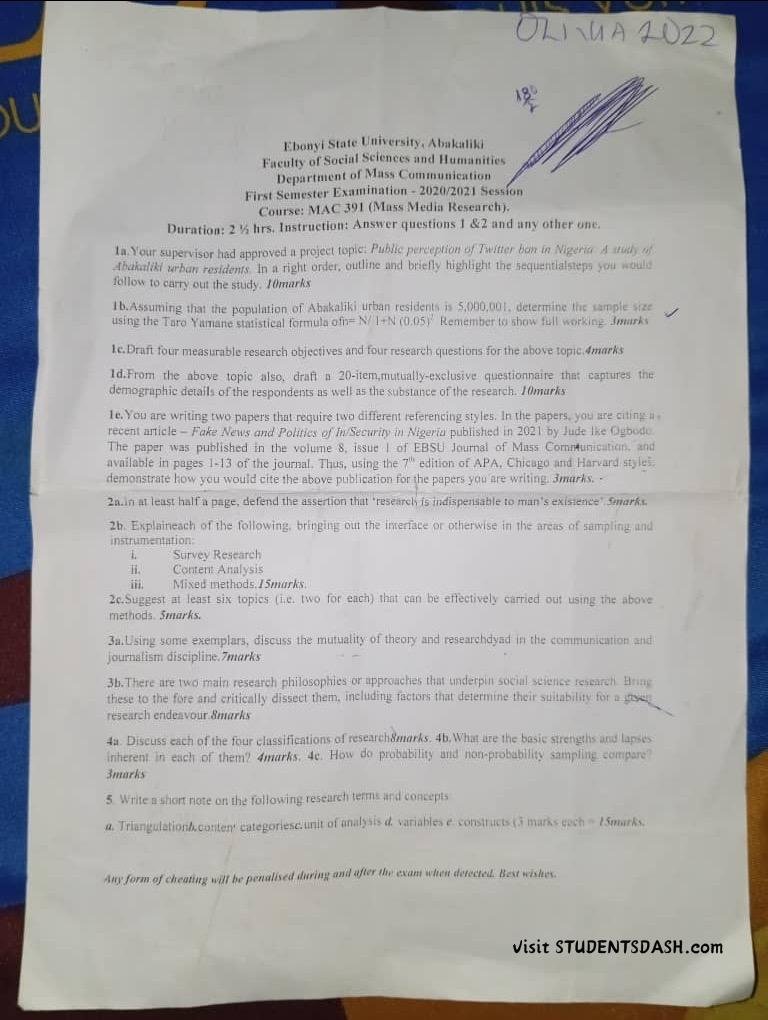
Image Post
Past Questions

GST 302 Past Questions and Answers

Title: GST 302 Past Questions and Answers URL: https://studentsdash.com/gst-302-past-questions-and-answers/ -------------------------------------------------- Study GST 302 Past Questions with Studentsdash What is the primary purpose of financial record-keeping? A) To calculate profits B) To help track expenses and income C) To apply for loans D) To report to shareholders Answer: B Who is primarily responsible for financial record-keeping in a small business? A) Accountant B) Owner or manager C) Customer D) Vendor Answer: B Which document records daily transactions in a business? A) Income statement B) Balance sheet C) Ledger D) Journal Answer: D The difference between assets and liabilities is known as: A) Profit B) Equity C) Revenue D) Debt Answer: B Which term refers to money owed by the business? A) Assets B) Revenue C) Expenses D) Liabilities Answer: D In publishing, what is the final step before printing a book? A) Editing B) Proofreading C) Design layout D) Marketing Answer: B Which of the following is considered a primary source of information? A) Textbook B) Newspaper article C) Research journal D) Encyclopedia Answer: C In publishing, what is an ISBN used for? A) Identifying a book B) Setting a book’s price C) Marketing a book D) Rating a book Answer: A Which tool is essential for carpentry work? A) Stethoscope B) Hammer C) Microscope D) Calculator Answer: B What type of wood is commonly used in furniture making? A) Mahogany B) Pine C) Teak D) All of the above Answer: D Which profession deals with cutting and shaping wood? A) Plumber B) Carpenter C) Electrician D) Mechanic Answer: B Grass cutter farming primarily involves which of these animals? A) Poultry B) Fish C) Rodents D) Cattle Answer: C What is a major benefit of grass cutter farming? A) High cost B) Requires large space C) Low maintenance D) High demand for machinery Answer: C Which of the following is an example of plumbing material? A) Screwdriver B) Wrench C) PVC pipe D) Sandpaper Answer: C What is a primary use of plumbing in buildings? A) Electrical wiring B) Water supply and waste removal C) Painting walls D) Structural support Answer: B Refrigeration is essential in which of these industries? A) Agriculture B) Hospitality C) Medicine D) All of the above Answer: D Air conditioning is mainly used for: A) Increasing air moisture B) Reducing room temperature C) Decreasing humidity D) Purifying water Answer: B What does calligraphy refer to? A) Artistic form of writing B) Technical drawing C) Medical transcription D) Fast typing Answer: A Which tool is often used in calligraphy? A) Hammer B) Fountain pen C) Paintbrush D) Chisel Answer: B In electrical installations, what does AC stand for? A) Alternating Circuit B) Active Current C) Alternating Current D) Additional Current Answer: C Which device protects electrical appliances from power surges? A) Fuse B) Battery C) Transformer D) Cable Answer: A Which system is primarily used to store food over time? A) Air conditioning B) Plumbing C) Refrigeration D) Carpentry Answer: C Piggery enterprise involves the farming of which animal? A) Sheep B) Cows C) Pigs D) Goats Answer: C A young pig is known as a: A) Kitten B) Calf C) Piglet D) Chick Answer: C What is the main product obtained from pig farming? A) Wool B) Leather C) Pork D) Milk Answer: C Which of these is not a typical use of wood? A) Building construction B) Fabric manufacturing C) Furniture making D) Paper production Answer: B PVC stands for: A) Polyvinyl Chloride B) Polyvinyl Carbonate C) Plastic Vinyl Core D) Polymer Viscous Compound Answer: A What is the main function of a thermostat in refrigeration? A) To increase temperature B) To measure humidity C) To control temperature D) To circulate air Answer: C Which skill is essential for creating legible and decorative text? A) Typing B) Calligraphy C) Printing D) Embroidery Answer: B An electrician’s primary role is to: A) Fix plumbing issues B) Install electrical systems C) Repair furniture D) Design software Answer: B Which part of an electrical system carries current? A) Fuse B) Wire C) Insulator D) Breaker Answer: B The main ingredient in making cement blocks is: A) Sand B) Water C) Cement D) All of the above Answer: D Publishing primarily involves: A) Selling products B) Creating and distributing content C) Managing finances D) Manufacturing goods Answer: B An ISBN number is unique to: A) Newspapers B) Books C) Magazines D) Websites Answer: B One of the major pests in piggery farming is: A) Weevils B) Fleas C) Rodents D) Caterpillars Answer: B Which profession involves designing wooden structures? A) Electrician B) Carpenter C) Plumber D) Mechanic Answer: B Electricity flows through a conductor made of: A) Wood B) Rubber C) Metal D) Plastic Answer: C In calligraphy, thick lines are usually created by: A) Pressing harder B) Using a finer pen C) Writing quickly D) Reducing ink flow Answer: A Which of the following is a characteristic of well-fitted plumbing? A) High pressure B) Leak-proof C) Low water usage D) Minimal insulation Answer: B Which industry relies heavily on cold storage? A) Automotive B) Construction C) Food D) Textile Answer: C Which tool is used to cut wood? A) Screwdriver B) Hammer C) Saw D) Wrench Answer: C In publishing, ‘editing’ refers to: A) Printing a book B) Writing a story C) Reviewing and correcting text D) Selling a book Answer: C A typical domestic electrical installation involves: A) Plumbing pipes B) Gas fittings C) Wiring circuits D) Water supply Answer: C A book cover is designed to: A) Protect the book B) Advertise the book C) Organize pages D) Both A and B Answer: D In pig farming, feed efficiency is crucial because it: A) Reduces weight B) Increases growth rate C) Lowers cost D) Enhances breeding Answer: B A publishing company’s main objective is to: A) Write content B) Edit articles C) Distribute content D) Print materials Answer: C A calligrapher’s tool is commonly known as a: A) Paintbrush B) Stylus C) Nib D) Roller Answer: C What is a safe practice in electrical installations? A) Using wet hands B) Turning off power C) Standing in water D) Using damaged wires Answer: B Refrigeration helps to preserve food by: A) Increasing humidity B) Lowering temperature C) Adding nutrients D) Removing oxygen Answer: B A major challenge in publishing is: A) Finding authors B) Generating ideas C) Distribution D) Editing Answer: C

Image Post
Past Questions

LASU Cut-Off Marks, Courses, UTME Subjects & O’Level Requirements (Lagos State University)

Title: LASU Cut-Off Marks, Courses, UTME Subjects & O’Level Requirements (Lagos State University) URL: https://studentsdash.com/lasu-cut-off-marks-courses-utme-subjects-olevel-requirements-lagos-state-university/ -------------------------------------------------- LASU Campus (Ojo, Lagos State) LASU Admission Guide (2026/2027) The Lagos State University (LASU) is a popular state-owned university established in 1983. It is located in Ojo, Lagos State and is one of the most competitive state universities in Nigeria. This guide explains the complete LASU admission requirements for the 2026/2027 academic session , including cut-off marks, Post-UTME screening process, O’Level requirements, and UTME subject combinations. LASU UTME Cut-Off Mark for 2026/2027 The general JAMB cut-off mark for LASU is 190 . However, competitive courses require significantly higher scores. Medicine & Surgery: 240 – 270 Law: 230 – 250 Engineering courses: 210 – 240 Arts, Education & Sciences: 190 – 210 Always verify official updates via the LASU official website . LASU Post-UTME Screening Exercise LASU conducts an online Post-UTME screening exercise . Candidates are assessed mainly using: UTME score O’Level grades Correct UTME subject combination Uploaded results on JAMB CAPS Note: LASU Post-UTME may involve CBT screening depending on the year. General Admission Requirements To qualify for admission into LASU, candidates must meet the following requirements: Minimum UTME score approved by LASU Five (5) O’Level credit passes including English Language Mathematics is compulsory for Science, Engineering, and Management courses Correct UTME subject combination LASU must be chosen as First Choice institution LASU Faculty Requirements (UTME Subjects) Faculty of Engineering UTME Subjects: English Language, Mathematics, Physics, Chemistry O’Level: English, Mathematics, Physics, Chemistry, Biology College of Medicine UTME Subjects: English Language, Biology, Chemistry, Physics O’Level: English, Mathematics, Biology, Chemistry, Physics Faculty of Arts & Social Sciences UTME Subjects: English Language + three relevant subjects O’Level: English, Mathematics and three relevant subjects LASU Admission Tips (2026/2027) Score far above LASU cut-off mark (200+ recommended) Use the correct UTME subject combination Upload complete O’Level results early on JAMB CAPS Choose LASU as First Choice Follow LASU screening updates regularly

Image Post
Past Questions

MAC 391 Past Questions and Answers

Title: MAC 391 Past Questions and Answers URL: https://studentsdash.com/mac-391-past-questions-and-answers-3/ -------------------------------------------------- ANSWER TO QUESTION 1 a. Steps for Carrying Out the Study To conduct the study on “Role of radio in the campaign against street drugs (Mkpulumma and Colos) among youths in Ebonyi State: A study of Salt FM Abakaliki,” the following steps should be followed: 1. Identification of Research Problem: Clearly define the problem by examining how radio influences youths in drug-related campaigns. 2. Review of Related Literature: Gather and analyze past studies on the topic to understand existing knowledge gaps. 3. Formulation of Research Objectives and Hypotheses: Develop measurable objectives and hypotheses based on the study’s focus. 4. Research Design and Methodology: Decide on the research approach (quantitative, qualitative, or mixed methods), data collection methods, and sampling techniques. 5. Population and Sample Selection: Identify the study population (Ebonyi youths) and determine the appropriate sample size using a statistical formula. 6. Instrument Design and Validation: Develop questionnaires or interview guides and validate them through pilot studies. 7. Data Collection: Administer the research instruments and collect data from selected respondents. 8. Data Analysis and Interpretation: Use statistical tools to analyze collected data and interpret the results in line with research questions. 9. Presentation of Findings: Report findings using tables, charts, and narratives. 10. Conclusion and Recommendations: Summarize key findings, conclude the study, and provide recommendations for future research and policy implementations. b. Sample Size Determination using Taro Yamane Formula The Taro Yamane formula for sample size determination is: Thus, the appropriate sample size for the study is approximately 400 respondents. c. Research Objectives, Questions, and Hypotheses Research Objectives: 1. To examine the influence of Salt FM Abakaliki’s radio campaigns on youth perception of street drugs. 2. To assess the effectiveness of radio programs in discouraging drug use among youths in Ebonyi State. Research Questions: 1. How does Salt FM Abakaliki’s campaign influence youth perception of street drugs? 2. How effective are radio programs in discouraging drug use among Ebonyi State youths? Alternate Hypotheses: 1. H₁: Salt FM Abakaliki’s campaign has a significant influence on youth perception of street drugs. 2. H₁: Radio programs are effective in discouraging drug use among Ebonyi State youths. d. 15-Item Multiple-Choice Questionnaire Section A: Demographics 1. What is your age? • a) 15-20 • b) 21-25 • c) 26-30 • d) 31 and above 2. What is your gender? • a) Male • b) Female • c) Others 3. What is your highest level of education? • a) Secondary school • b) OND/NCE • c) HND/B.Sc • d) Postgraduate 4. What is your occupation? • a) Student • b) Trader • c) Civil servant • d) Others Section B: Substance of the Study 5. Have you ever listened to a radio program about drug abuse? • a) Yes • b) No 6. How often do you listen to Salt FM Abakaliki? • a) Daily • b) Occasionally • c) Rarely • d) Never 7. Do you think radio programs can change youth attitudes toward drugs? • a) Strongly agree • b) Agree • c) Disagree • d) Strongly disagree 8. Which of these radio campaigns have you heard about drug abuse? • a) Drug-Free Ebonyi • b) Youth Against Drugs • c) Say No to Mkpulumma & Colos • d) None 9. Have you taken drugs such as Mkpulumma or Colos before? • a) Yes • b) No 10. If yes, did a radio program influence your decision to stop? • a) Yes • b) No 11. Which media do you think is most effective in drug abuse awareness? • a) Radio • b) Television • c) Social media • d) Newspapers 12. What do you think is the major cause of drug abuse among youths? • a) Peer pressure • b) Unemployment • c) Family issues • d) Media influence 13. How would you rate the effectiveness of Salt FM’s anti-drug campaigns? • a) Very effective • b) Moderately effective • c) Not effective 14. Do you think more radio programs should be used for drug awareness? • a) Yes • b) No 15. Would you recommend radio campaigns as a primary strategy for reducing drug abuse? • a) Yes • b) No e. APA 7th Edition Citation of the Article In-text citation: (Ogbodo, 2021) Reference list entry: Ogbodo, J. I. (2021). Mixing nonsense with substance: Negotiating satirical and investigative journalism hybrid genre in Nigerian publishing. African Journalism Studies, 2(4), 137-152. 2 ANSWER TO QUESTION 2 a. Steps for Conducting the Study To conduct the study on “Newspaper framing of Mmesoma fake UTME result saga: A content analysis of The Punch and Daily Sun,” the following steps should be followed: 1. Identify the Research Problem: Establish the relevance of the topic by analyzing how newspapers framed the Mmesoma fake UTME result saga. 2. Review of Related Literature: Examine existing studies on newspaper framing and media coverage of similar issues to identify gaps. 3. Formulate Research Objectives and Questions: Develop specific objectives and research questions to guide the study. 4. Select Research Design and Methodology: Choose content analysis as the research design, define content categories, and decide on coding units. 5. Define the Population and Sampling Technique: Identify all newspaper articles published on the topic within the selected period and determine the sampling technique (e.g., purposive sampling). 6. Develop the Coding Guide: Establish coding categories (e.g., positive, negative, neutral framing) and operational definitions for consistency. 7. Conduct Pilot Study: Test the coding guide with a small sample to ensure reliability and consistency. 8. Data Collection: Analyze relevant newspaper articles from The Punch and Daily Sun within the selected timeframe. 9. Data Analysis and Interpretation: Use descriptive statistics to analyze frequency and patterns of newspaper framing. 10. Discussion of Findings: Compare findings with existing literature and provide explanations for observed trends. 11. Conclusion and Recommendations: Summarize key findings and suggest improvements in media framing practices. ⸻ b. Determining the Unit of Analysis The unit of analysis refers to the specific elements to be studied within the newspaper content. Since the period of study is 4 months, the unit of analysis can be determined as follows: 1. Identify Relevant Newspaper Articles: Search The Punch and Daily Sun archives for all articles related to the Mmesoma fake UTME result saga. 2. Categorize Articles by Publication Dates: Select all articles published within the chosen 4-month timeframe. 3. Break Down the Content into Smaller Units: The unit of analysis could be: • Entire articles • Paragraphs • Headlines • Images/captions 4. Choose the Most Suitable Unit: Since the study is on newspaper framing, the best unit of analysis would be headlines, lead paragraphs, and full articles related to the saga. ⸻ c. Sample Size Determination Using Constructed and Manifest Content Formats • Constructed Content Format: Involves selecting specific newspaper issues systematically (e.g., picking two newspapers per week over four months). • Manifest Content Format: Involves analyzing all visible content directly related to the topic within the selected period. Sample Size Calculation: • Assuming an average of 5 relevant articles per week from both newspapers, for 4 months (16 weeks): • Total articles = 5 × 16 = 80 • Sample selection: A systematic or purposive sampling technique can be used to select a representative 50% of the total articles (i.e., 40 articles ). ⸻ d. Calculating Inter-Rater Reliability Inter-rater reliability (IRR) is calculated using Cohen’s Kappa formula or Percentage Agreement formula : Thus, the inter-rater reliability is 69.2% , indicating moderate agreement between the coders. ⸻ e. Can the Topic Be Effectively Studied Using Content Analysis? Yes , content analysis is an appropriate method for studying the topic. Reasons include: 1. Media Framing Analysis: Content analysis helps to identify how newspapers portray events—whether in a positive, negative, or neutral tone. 2. Quantifiable Data: It allows researchers to measure the frequency of specific frames (e.g., victim-blaming, investigative reporting). 3. Comparative Study: It enables a comparison of framing patterns between The Punch and Daily Sun over time. 4. Unobtrusive Method: Since content analysis examines existing articles, it does not require interaction with respondents, reducing bias. 5. Replicability: The study can be replicated in future research to assess trends in media framing of similar issues. ⸻ Final Thoughts This study effectively applies content analysis to evaluate how Nigerian newspapers framed the Mmesoma fake UTME result saga, offering insights into media bias and framing patterns. 3 ANSWER TO QUESTION 3 a. Defending the Assertion: “Research is to see what everybody else has seen, and to think what nobody else has thought.” This statement means that research is not just about looking at things but thinking about them in a new way. Many people see the same things every day, but only researchers ask deep questions and find new ideas from them. For example, before Isaac Newton, people saw fruits fall from trees, but he asked why they fall and discovered gravity. In the same way, people read newspapers, but a researcher can study how newspapers report news and find out if they are biased or not. 1. Research Helps Us Discover New Things • Science and Medicine: Doctors and scientists study diseases and develop cures instead of just watching people fall sick. • Media and Communication: Researchers study how newspapers report events and if they are fair or one-sided. • Business and Society: Economists study how people spend money and what affects the economy. 2. Research is About Asking the Right Questions Many people see problems but do not ask questions about them. A good researcher thinks differently and tries to find answers that others may not have thought about. 3. Conclusion This statement means that research is about looking at the world differently. Instead of just accepting things the way they are, researchers try to understand why things happen and how to improve them. b. Explanation of Research Methods i. Survey Research What is it? Survey research is a method where a researcher asks people questions to gather information. It is commonly used in studies about people’s opinions, behaviors, or experiences. How it Works with Sampling and Instruments: • Sampling: Researchers cannot ask everybody, so they select a group of people (sample) that represents the whole population. They may use random selection or choose people based on certain characteristics. • Instruments: The main tool used is a questionnaire, which contains questions for people to answer. These can be yes/no questions, multiple-choice, or open-ended questions. Example: If a researcher wants to study how students feel about the Mmesoma UTME saga, they can give a questionnaire to 100 students from different universities and analyze their answers. ii. Content Analysis What is it? Content analysis is a method used to study media content (newspapers, TV, social media, etc.). It helps researchers find patterns in how information is presented. How it Works with Sampling and Instruments: • Sampling: The researcher picks a number of articles or news reports that are related to the topic. For example, they may select all newspaper articles about Mmesoma within a 4-month period. • Instruments: The main tool is a coding sheet, which is used to record how many times certain words, themes, or ideas appear in the news. Example: If a researcher wants to study how The Punch and Daily Sun framed Mmesoma’s case, they can count how many times the newspapers used words like “fraud”, “mistake”, or “victim”. iii. Mixed Methods What is it? Mixed methods research means using both survey research (asking people questions) and content analysis (studying media content) to get a better understanding of a topic. How it Works with Sampling and Instruments: • Sampling: The researcher can use a mix of survey sampling (selecting people to answer questions) and content sampling (selecting newspapers or TV reports to analyze). • Instruments: The researcher uses both questionnaires (for surveys) and coding sheets (for content analysis). Example: A researcher studying the Mmesoma UTME saga can: 1. Use surveys to ask students if they think the media was fair to her. 2. Use content analysis to check if newspapers used negative or positive words in their reports. 3. Combine the results to get a complete understanding of the media framing. Final Thoughts These three research methods help researchers collect information, analyze patterns, and understand how events are reported. The choice of method depends on the research topic and the type of data needed. 4 ANSWER TO QUESTION 4 a. Content Categories Content categories are the different groups or themes used in content analysis to classify information. When researchers analyze media content (e.g., newspapers, TV programs, or social media posts), they divide the content into specific categories based on the topic being studied. Example: If a researcher is studying how newspapers reported the Mmesoma UTME saga, they may create categories like “fraud,” “victim,” “investigation,” and “public reaction” to organize the information. ⸻ b. Unit of Analysis The unit of analysis is the main thing a researcher is studying in a research project. It can be individuals, groups, organizations, events, or media content. Example: • If a study is about students’ opinions on UTME exams, the unit of analysis is students . • If a study is analyzing newspaper articles, the unit of analysis is each article . The unit of analysis helps researchers focus on what exactly they are measuring. ⸻ c. Interview Guided An interview-guided research method is a type of data collection where the researcher uses prepared questions to guide a discussion with participants. It can be structured (fixed questions), semi-structured (flexible questions), or unstructured (free discussion). Example: If a researcher wants to understand how journalists reported the Mmesoma saga, they can interview newspaper editors and reporters to ask them about their experiences and decision-making processes. ⸻ d. Research Philosophy Research philosophy refers to the beliefs and assumptions that guide a researcher’s approach to studying a topic. It helps determine how data is collected, analyzed, and interpreted . There are different types of research philosophies, such as: • Positivism – Believes research should be based on facts and numbers (scientific approach). • Interpretivism – Focuses on understanding people’s experiences and perspectives (qualitative approach). • Pragmatism – Uses a mix of both methods depending on the research problem. Example: A study on newspaper framing of Mmesoma can use interpretivism to analyze how different newspapers presented the story and the meanings behind their words. ⸻ e. Documentation in Research Documentation in research refers to keeping records of all sources, data, and findings during a study. It ensures that research is organized, transparent, and verifiable . Researchers document their work by: • Keeping notes from interviews or surveys • Saving media content used in content analysis • Citing books, articles, and websites properly • Writing a research report with full details Example: If a researcher studies newspaper framing of Mmesoma, they must document all articles analyzed, interview transcripts, and citations used to support their findings. ⸻ Final Thoughts These research terms help guide how studies are conducted, ensuring that information is properly collected, analyzed, and documented.

Image Post
Past Questions

Nigerian universities’ UTME cut-off marks

Title: Nigerian universities’ UTME cut-off marks URL: https://studentsdash.com/nigerian-universities-utme-cut-off-marks/ -------------------------------------------------- Lagos State University and Lagos State University of Science and Technology fixed 195, while Lagos State University of Education adopted 185. JAMB explained that the approved figures represent the minimum thresholds for admission consideration, adding that institutions are permitted to set higher requirements for competitive courses such as Medicine, Law, Pharmacy and Engineering. UNIVERSITY CUT OFF MARK Full List OF University Cut Off Mark Pan-Atlantic University — 220 Air Force Institute of Technology — 200 Covenant University — 200 Federal University of Medicine and Medical Sciences — 200 Obafemi Awolowo University — 200 University of Benin — 200 University of Ibadan — 200 University of Lagos — 200 University of Nigeria — 200 Lagos State University of Science and Technology — 195 Lagos State University — 195 Lagos State University of Education — 185 Afe Babalola University — 180 Ahmadu Bello University — 180 Federal University of Health Sciences — 180 Nigeria Police Academy — 180 Nigerian University of Technology and Management — 180 Shanahan University — 180 University of Abuja — 180 University of Ilorin — 180 University of Jos — 170 Augustine University — 170 Babcock University — 170 Federal University of Applied Sciences — 170 Federal University — 170 Ladoke Akintola University of Technology — 170 Nasarawa State University — 170 BITS University — 170 Ibrahim Badamasi Babangida University — 160 Abubakar Tafawa Balewa University — 160 Admiralty University of Nigeria — 160 African Aviation and Aerospace University — 160 Ajayi Crowther University — 160 Al-Hikmah University — 160 Bamidele Olumilua University — 160 Bayero University Kano — 160 Bells University of Technology — 160 Caleb University — 160 Chrisland University — 160 Dominion University — 160 Emmanuel Alayande University of Education — 160 Federal University of Agriculture — 160 Federal University of Education — 160 Federal University of Health Sciences — 160 Federal University of Technology and Environmental Sciences — 160 Federal University of Technology — 160 First Technical University — 160 Imo State University — 160 Isaac Balami University of Aeronautics and Management — 160 Karl Kumm University — 160 Kwara State University — 160 Landmark University — 160 Lead City University — 160 Modibbo Adama University — 160 Nnamdi Azikiwe University — 160 Olabisi Onabanjo University — 160 Osun State University — 160 Plateau State University — 160 Redeemer’s University — 160 Summit University — 160 Tai Solarin University of Education — 160 Taraba State College of Nursing and Midwifery — 160 University of Ilesa — 160 AbdulRasaq Abubakar Toyin University — 150 Adamawa State University — 150 Adeleke University — 150 African School of Economics — 150

Image Post
Past Questions

SED 102 Past Questions and Answers

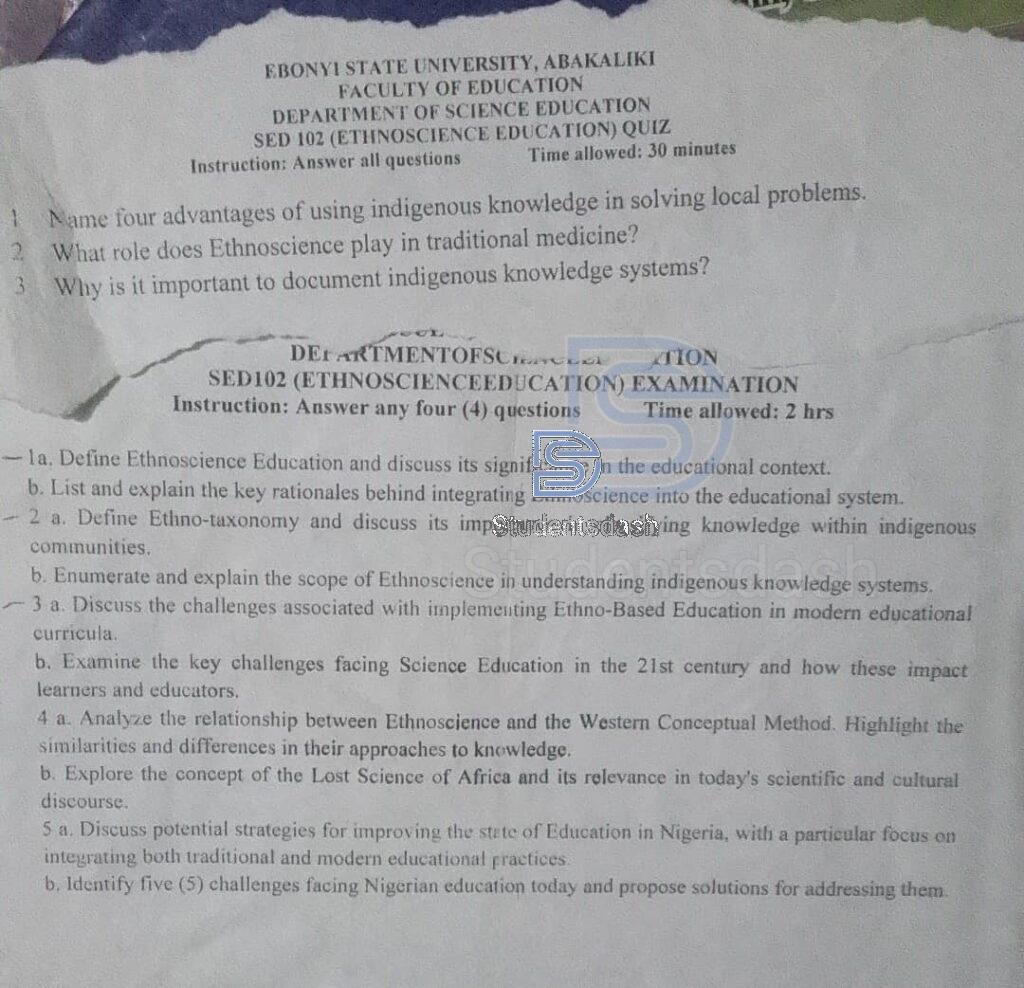
Title: SED 102 Past Questions and Answers URL: https://studentsdash.com/sed-102-past-questions-and-answers/ -------------------------------------------------- SED 102 Quiz and Exam Past Questions and Answers QUIZ QUESTIONS 1. Name four advantages of using indigenous knowledge in solving local problems. Indigenous knowledge is very useful in solving problems that affect local people because it is knowledge that comes from their own experience and environment. First, it is cheaper and more available because the resources are already around the community. Second, it respects culture and tradition, so people accept it easily and trust it more. Third, it helps in providing quick solutions, for example in farming, healing, and weather prediction. Fourth, it promotes self-reliance because people don’t always have to wait for foreign solutions before they act. 2. What role does Ethnoscience play in traditional medicine? Ethnoscience plays a very big role in traditional medicine because it helps to explain and organize the knowledge that people use for healing. It makes sure that plants, roots, and local practices are studied and understood scientifically. It also helps in preserving healing methods that are passed from one generation to another. By doing this, ethnoscience connects traditional medicine to modern science and gives it more recognition and respect. 3. Why is it important to document indigenous knowledge systems? It is important to document indigenous knowledge systems because if they are not recorded, they can be lost when the older generation dies. Documentation helps to keep the ideas and practices safe for the future. It also allows researchers and students to learn from them and even improve on them. Again, documenting such knowledge helps to protect people’s intellectual property so that outsiders do not steal and claim it as their own. Finally, it creates a link between local knowledge and modern education, making it possible to combine the two for better results. EXAMINATION QUESTIONS 1a. Define Ethnoscience Education and discuss its significance in the educational context. Ethnoscience education is the teaching and learning of science based on the knowledge, culture, and practices of indigenous people. It uses the way local communities explain nature, medicine, farming, and environment as part of science learning. Its significance in education is that it makes learning more meaningful to students because it connects science to their daily lives. It also promotes respect for culture and diversity in the classroom. Another importance is that it helps in solving local problems with ideas that students can relate to, instead of only depending on Western methods. 1b. List and explain the key rationales behind integrating Ethnoscience into the educational system. To make learning practical: students see examples around them. To preserve culture: traditional knowledge will not die out. To encourage innovation: combining local and modern ideas can bring new solutions. To build confidence: students value their culture and see that it has scientific worth. To promote development: local knowledge can support agriculture, medicine, and technology in the community. 2a. Define Ethno-taxonomy and discuss its importance in classifying knowledge within indigenous communities. Ethno-taxonomy is the way indigenous people classify and name plants, animals, and things in their environment based on their use, shape, or meaning in the culture. Its importance is that it helps communities to easily identify useful plants and animals, especially in farming and medicine. It also keeps knowledge organized in a way that children and learners can understand. Furthermore, it helps in passing knowledge from one generation to another in a structured manner. 2b. Enumerate and explain the scope of Ethnoscience in understanding indigenous knowledge systems. Agriculture: local ways of planting, harvesting, and storing crops. Medicine: use of herbs, roots, and traditional healing methods. Environment: predicting weather, managing forests and water. Culture: rituals, taboos, and beliefs that protect nature. Technology: local crafts, tools, and building techniques. This wide scope shows that ethnoscience touches almost every part of community life. 3a. Discuss the challenges associated with implementing Ethno-Based Education in modern educational curricula. Some challenges are: Lack of written records since most indigenous knowledge is oral. Negative attitude, as some people see local knowledge as backward. Shortage of teachers who are trained in ethnoscience. Difficulty in combining it with modern curriculum requirements. Influence of globalization that pushes Western science more than local science. 3b. Examine the key challenges facing Science Education in the 21st century and how these impact learners and educators. Challenges include poor funding, lack of laboratories, shortage of qualified teachers, and too much focus on theory instead of practice. Another challenge is the fast growth of technology which many schools cannot keep up with. These challenges affect learners by making science hard and uninteresting. For educators, it makes teaching stressful and less effective because they don’t have the right tools and support. 4a. Analyze the relationship between Ethnoscience and the Western Conceptual Method. Highlight the similarities and differences in their approaches to knowledge. The similarity is that both seek to understand nature and solve human problems. Both depend on observation and experience. The difference is that ethnoscience is based on culture, traditions, and local environment, while Western science is based on experiments, measurement, and universal rules. Ethnoscience is often practical and connected to daily life, while Western science is more formal and structured. 4b. Explore the concept of the Lost Science of Africa and its relevance in today’s scientific and cultural discourse. The Lost Science of Africa refers to the scientific knowledge that Africans had in areas like medicine, astronomy, architecture, and technology before colonization but was ignored or destroyed by foreign influence. Its relevance today is that rediscovering it can inspire pride in African heritage. It also provides ideas that can solve present-day problems, especially in agriculture, health, and environment. 5a. Discuss potential strategies for improving the state of Education in Nigeria, with a particular focus on integrating both traditional and modern educational practices. Some strategies include funding schools properly, training teachers in both modern and local knowledge, and including ethnoscience in the curriculum. Schools can also invite community elders to share knowledge with students. Another strategy is to encourage research that joins traditional practices with modern science. By doing this, education in Nigeria will become more balanced and meaningful. 5b. Identify five (5) challenges facing Nigerian education today and propose solutions for addressing them. Poor funding → Government should increase budget for education. Lack of infrastructure → Build more classrooms and laboratories. Shortage of teachers → Employ and train more qualified teachers. Examination malpractice → Promote integrity and strengthen monitoring. Outdated curriculum → Regularly review curriculum to include modern and local knowledge.

Image Post
Past Questions

BCH 212 Past Questions and Answers

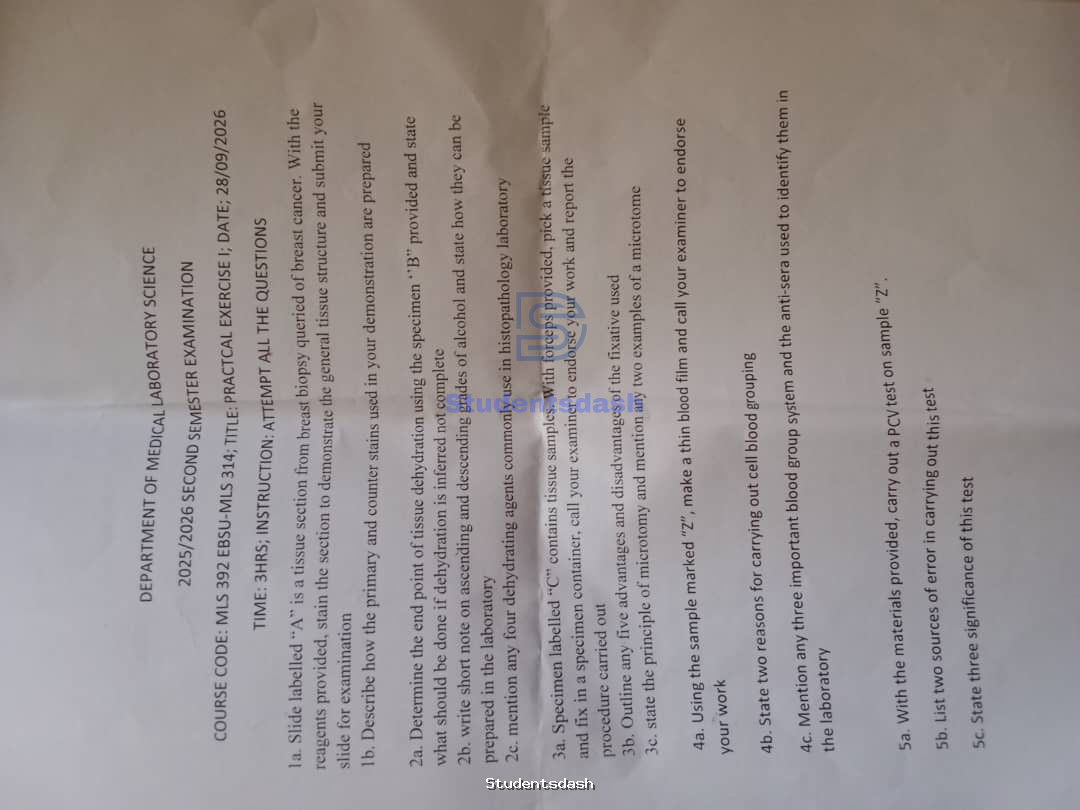
*DEPARTMENT OF MEDICAL BIOCHEMISTRY*  *FACULTY OF BASIC MEDICINE*  *COLLEGE OF HEALTH SCIENCES*  *EBONYI STATE UNIVERSITY, ABAKALIKI**SECOND SEMESTER EXAMINATION - 2019/2020 ACADEMIC SESSION*COURSE CODE: BCH 212  DEPARTMENT: Anatomy, Med. Lab. Sci, Nursing Sci, Physiology  COURSE TITLE: Metabolism and Biochemical pathways  Time Allowed: 2 Hours  Date: 9th April, 2021*Instruction:*  Answer Any FOUR (4) Questions only. All Questions Carry Equal Marks.  Do not end in the middle of a question.*Question 1:*  a) What is transamination in amino acid metabolism? State the features of transamination  b) State the Biochemical and clinical symptoms associated with two named inborn errors of cyclic metabolism  c) The form in which ammonium is secreted by an organism depends on the ecological niche of the organism.*Question 2:*  a) What is the limiting enzyme in urea cycle is carbamoyl phosphate synthetase and it exists in two forms  b) What are the differences between carbamoyl phosphate synthetase (CPS I) and carbamoyl phosphate synthetase (CPS II)  c) State the pathological conditions associated with defect in the enzymes involved in urea cycle (name the deficient enzyme in each case)  d) State the inborn errors involved in the metabolism of branched chain amino acid (name the defective enzyme in each case)*Question 3:*  a) State the difference between Glucogenesis and Gluconeogenesis  b) Outline without structure the synthetic pathway of bilirubin and describe one case of its pathology  c) Define the following:  i) Substrate level phosphorylation  ii) Gluconeogenesis and list its precursors*Question 4:*  a) Describe the cytosolic events of heme biosynthesis, stating the inborn error in each step the features & the deficient enzyme.  b) List the proteins/enzymes involved in heme degradation from the stage of catabolism to excretion  c) Write two compounds that are the salvage pathways of purine biosynthesis & state the significance in the living system.  d) With an equation, state the common reaction between pyrimidine & purine biosynthesis.*Question 5:*  a) Briefly discuss on the inhibitory role of NADH + H+ in fatty acid oxidation  b) Differentiate between ketonemia and ketonuria giving a general name for both conditions  c) Write on the mechanism of action of a named drug used in the management/treatment of fatty liver  d) NADPH is an essential ingredient (coenzyme) in the anabolic process of fatty acid metabolism (TRUE/FALSE)

Free
PDF
Relevant Articles (2) Visit blog
Link copied to clipboard!