Studentsdash
New Search

Results for "Law"

75 found

Matched Resources

75 total results
Past Questions

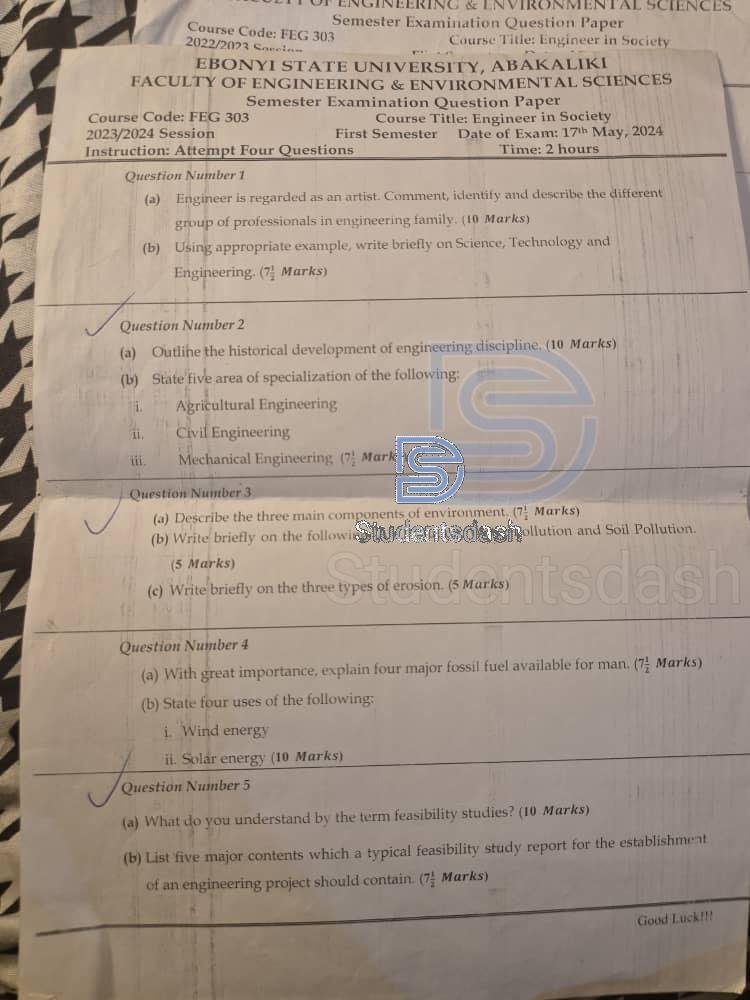
EBSU Supplementary Admission 2026_2027_ Meaning, Who Can Apply and What Candidates Should Know

Title: EBSU Supplementary Admission 2026/2027: Meaning, Who Can Apply and What Candidates Should Know URL: https://studentsdash.com/ebsu-supplementary-admission/ -------------------------------------------------- Many candidates waiting for EBSU admission 2026/2027 may start hearing about supplementary admission . Some students may hear people say: EBSU supplementary form is out. EBSU will still release supplementary admission. You can still change course through supplementary. Candidates who were not admitted may still have another chance. But before you believe everything you hear, it is important to understand what supplementary admission means and how candidates should handle it. This article will explain EBSU supplementary admission , who may need it, what candidates should check, and mistakes to avoid. To stay updated on EBSU admission, supplementary admission, JAMB CAPS, clearance, and freshers’ updates, download the Studentsdash app here: Download Studentsdash App You can also find EBSU departmental group links through Studentsdash Communities : Join Studentsdash Communities What Is EBSU Supplementary Admission? Supplementary admission is another admission opportunity that may come after the main admission list or admission batches. It is usually for candidates who were not admitted in the first admission process but may still be considered for another course or available space. For example, if a candidate applied for a very competitive course and did not get admission, the school may later provide another opportunity for candidates to apply for available courses, if supplementary admission is announced. But candidates should understand one thing: Supplementary admission is not automatic. You must wait for official information before taking any step. Does Supplementary Admission Mean Admission Is Guaranteed? No. Supplementary admission does not mean everybody who applies will be admitted. It only means there may be another opportunity for candidates to be considered. Your admission still depends on things like: Your JAMB score Your O’Level result Available space Course requirement Correct subject combination Successful application School admission process So do not see supplementary admission as automatic admission. Who May Need EBSU Supplementary Admission? Supplementary admission may be useful for candidates who were not admitted into their first-choice course. It may also help candidates whose JAMB score is not strong enough for their chosen course but may fit another available department. For example, if a candidate applied for Medicine , Nursing , Law , Medical Laboratory Science , Computer Science , or another competitive course but was not admitted, the candidate may need to check if there are other courses available later. But do not rush to change course or pay anybody without official instructions. Why Candidates Should Be Careful Admission season is when many fake updates start moving around. Some people may claim that supplementary admission is out when it is not. Some may send fake links. Some may ask you to pay money to get your name on the list. Some may say they can help you get admission if you give them your JAMB details. Be careful. Do not pay anyone because of fear. Do not use random links. Do not give your JAMB login details to people you do not trust. What To Check Before Applying for Supplementary Admission If EBSU announces supplementary admission, do not rush immediately. First, check these things: Is the update from a trusted source? Is the portal link correct? What courses are available? What is the required JAMB score? Does your O’Level result match the course? Is there a payment involved? Can you generate invoice from the official portal? Will the course be okay for you? Do not apply blindly. Check Your JAMB CAPS First Before thinking about supplementary admission, keep checking your JAMB CAPS . Your admission may still be processing. You may see: Not Admitted Admission in Progress Congratulations, you have been offered admission If your CAPS still shows Not Admitted , it does not always mean admission is over. Admission can come in batches, so keep checking. Confirm Your O’Level Upload Your O’Level result is very important. If your O’Level result is not uploaded on JAMB CAPS, your admission may be delayed or affected. Before applying for any supplementary option, confirm that your WAEC , NECO , NABTEB , or combined result is properly uploaded. Do not assume it is uploaded. Visit a trusted CBT centre if you are not sure. Check Your Course Cut-Off Mark Some candidates are not admitted because their score is below the cut-off mark for their course. That is why you should check your course requirement. If your score is not enough for your first-choice course, supplementary admission may give you a chance to consider another course, if available. But make sure the new course matches your score and O’Level subjects. Do Not Choose Any Course Just Because You Want Admission This is very important. Some students may become desperate and choose any course during supplementary admission. Do not do that. Before choosing another course, ask yourself: Can I study this course? Do I understand what the course is about? Does my O’Level result match it? Can I continue with it for four or more years? Will I be comfortable if I get admitted into it? Admission is important, but you should still make a wise decision. Can Supplementary Admission Change Your Course? In some cases, supplementary admission may involve choosing another available course. This means a candidate who was not admitted into one course may be considered for another department. But this depends on the school’s instruction at that time. Do not assume. Wait for proper information and follow the right process. Should You Pay for Supplementary Admission? If supplementary admission is officially announced and payment is required, candidates should pay only through the correct school portal or approved payment process. Do not pay into personal accounts. Do not pay through random links. Do not send money to someone who claims they can help you. Always generate invoice properly and keep your receipt safe. What If You Are Still Seeing Not Admitted? If your CAPS is still showing Not Admitted , stay calm. Check your O’Level upload. Check your course cut-off mark. Check the EBSU portal. Follow trusted updates. Do not panic because your friend has been admitted. Your own admission may still come later, or you may need to wait for other admission options if they are announced. Use Studentsdash App To Stay Updated Supplementary admission updates can be confusing because many people may start posting different things online. To avoid missing real updates, download the Studentsdash app here: Download Studentsdash App You can use the app to follow EBSU admission updates, JAMB CAPS guides, Post UTME information, clearance updates, school fees updates, and freshers’ tips. Join Studentsdash Communities for Departmental Links If you are admitted or waiting for admission, joining the right student community can help you stay informed. You can find EBSU departmental group links through: Studentsdash Communities Departmental groups can help you get updates about clearance, registration, lectures, course materials, and other student information. Mistakes To Avoid During Supplementary Admission Do not believe every WhatsApp update. Do not pay fake admission agents. Do not use random links. Do not choose a course blindly. Do not ignore your O’Level upload. Do not forget to check your JAMB CAPS. Do not give your JAMB password to strangers. Do not wait until the last minute if supplementary admission is officially announced. Do not panic because others have been admitted. Final Advice EBSU supplementary admission may be another opportunity for candidates who were not admitted in the first admission process, but candidates must be careful. Do not rush. Do not pay fake agents. Do not choose a course without checking your score and O’Level subjects. Do not use random links. Keep checking JAMB CAPS, follow the EBSU portal, and stay updated through trusted platforms. To stay updated on EBSU admission, supplementary admission, JAMB CAPS, clearance, and freshers’ guides, download the Studentsdash app here: Download Studentsdash App You can also find EBSU departmental group links through: Studentsdash Communities For questions and guidance, join Studentsdash on Telegram through t.me/studentsdash or call/message 07075012541 . Studentsdash is available to help EBSU aspirants and freshers stay updated and avoid costly mistakes during the admission process.

Image Post
Past Questions

EBSU-CHEM 101 Past Questions and Answers

Title: EBSU-CHEM 101 Past Questions and Answers URL: https://studentsdash.com/ebsu-chem-101-past-questions-and-answers/ -------------------------------------------------- What is the atomic number of an element? a) The number of protons in an atom b) The total number of neutrons and protons c) The total number of electrons d) The mass of the atom Answer: a) The number of protons in an atom What is the main characteristic of ionic compounds? a) They have low melting points. b) They conduct electricity in solid form. c) They are formed by the transfer of electrons. d) They are usually gases at room temperature. Answer: c) They are formed by the transfer of electrons. What is the pH scale used to measure? a) Temperature b) Pressure c) Acidity or basicity d) Concentration of solutions Answer: c) Acidity or basicity What is the primary component of air? a) Oxygen b) Nitrogen c) Carbon dioxide d) Argon Answer: b) Nitrogen What is a molecule? a) The smallest particle of an element b) A group of atoms bonded together c) A charged particle d) A pure substance made of one type of atom Answer: b) A group of atoms bonded together What is the law of conservation of mass? a) Mass can be created or destroyed. b) Mass cannot be created or destroyed in a chemical reaction. c) Mass is always lost in a chemical reaction. d) Mass is only conserved in physical changes. Answer: b) Mass cannot be created or destroyed in a chemical reaction. Which of the following is a characteristic of metals? a) Brittle and non-lustrous b) Good conductors of heat and electricity c) High ionization energy d) Poor thermal conductors Answer: b) Good conductors of heat and electricity What is an exothermic reaction? a) A reaction that absorbs heat b) A reaction that releases heat c) A reaction that occurs at high temperatures d) A reaction that involves gases Answer: b) A reaction that releases heat What is the formula for calculating density? a) Mass × Volume b) Mass / Volume c) Volume / Mass d) Mass + Volume Answer: b) Mass / Volume Which of the following elements is a noble gas? a) Oxygen b) Nitrogen c) Argon d) Carbon Answer: c) Argon What is the principle behind chromatography? a) Separating based on density b) Separating based on solubility c) Separating based on boiling points d) Separating based on size Answer: b) Separating based on solubility What is an isotope? a) Atoms of the same element with different numbers of protons b) Atoms of different elements with the same mass c) Atoms of the same element with different numbers of neutrons d) Atoms that have lost or gained electrons Answer: c) Atoms of the same element with different numbers of neutrons What is the boiling point of water at standard atmospheric pressure? a) 0°C b) 50°C c) 100°C d) 212°C Answer: c) 100°C Which type of bond involves the sharing of electron pairs between atoms? a) Ionic bond b) Covalent bond c) Metallic bond d) Hydrogen bond Answer: b) Covalent bond What does a balanced chemical equation represent? a) The physical state of reactants b) The exact amounts of reactants used c) The conservation of mass during a reaction d) The speed of a reaction Answer: c) The conservation of mass during a reaction Which of the following is not a state of matter? a) Solid b) Liquid c) Gas d) Plasma Answer: d) Plasma What is the process of a solid turning directly into a gas called? a) Evaporation b) Condensation c) Sublimation d) Freezing Answer: c) Sublimation What is the primary purpose of a catalyst in a chemical reaction? a) To increase the temperature b) To speed up the reaction without being consumed c) To decrease the concentration of reactants d) To change the direction of the reaction Answer: b) To speed up the reaction without being consumed What is the main component of table salt? a) Sodium b) Chlorine c) Sodium chloride d) Potassium Answer: c) Sodium chloride What is the term for a reaction that occurs without the addition of heat? a) Endothermic b) Exothermic c) Spontaneous d) Non-spontaneous Answer: c) Spontaneous What does the term “oxidation” refer to in chemistry? a) The loss of electrons b) The gain of electrons c) The formation of ionic bonds d) The breaking of covalent bonds Answer: a) The loss of electrons Which type of reaction occurs when an acid and a base react to form water and salt? a) Synthesis b) Decomposition c) Neutralization d) Redox Answer: c) Neutralization What is the significance of the mole in chemistry? a) It represents the mass of a substance. b) It is a unit for measuring volume. c) It is a counting unit for particles. d) It is used to measure energy. Answer: c) It is a counting unit for particles. What is the process of a liquid turning into a solid called? a) Freezing b) Melting c) Condensation d) Evaporation Answer: a) Freezing What is an alloy? a) A compound made of two different elements b) A mixture of metals c) A pure metal d) A gas solution Answer: b) A mixture of metals Which of the following is a property of acids? a) Bitter taste b) Slippery feel c) Sour taste d) Turns litmus blue Answer: c) Sour taste What is the main characteristic of a base? a) It has a pH less than 7. b) It turns litmus paper red. c) It has a slippery feel. d) It reacts with metals to produce hydrogen gas. Answer: c) It has a slippery feel. Which of the following elements is found in organic compounds? a) Nitrogen b) Carbon c) Oxygen d) All of the above Answer: d) All of the above What is the difference between an element and a compound? a) Elements are pure substances; compounds are mixtures. b) Compounds can be broken down into simpler substances; elements cannot. c) Elements are made of molecules; compounds are not. d) All of the above Answer: b) Compounds can be broken down into simpler substances; elements cannot. What does the term “endothermic” mean in a chemical reaction? a) It releases heat. b) It absorbs heat. c) It occurs spontaneously. d) It requires a catalyst. Answer: b) It absorbs heat. What is the purpose of using indicators in chemistry? a) To separate substances b) To measure temperature c) To identify pH levels d) To increase reaction rates Answer: c) To identify pH levels What is the smallest unit of a chemical element? a) Atom b) Molecule c) Ion d) Compound Answer: a) Atom What type of reaction involves the breakdown of a compound into simpler substances? a) Synthesis b) Decomposition c) Combustion d) Single displacement Answer: b) Decomposition What is the term for a negatively charged ion? a) Cation b) Anion c) Neutral d) Molecule Answer: b) Anion Which of the following is a characteristic of covalent bonds? a) High melting points b) Formed between metals and nonmetals c) Shared electron pairs d) Conduct electricity in solution Answer: c) Shared electron pairs What is the purpose of using a titration in chemistry? a) To determine the mass of a sample b) To separate mixtures c) To find the concentration of a solution d) To measure temperature changes Answer: c) To find the concentration of a solution What happens to the particles in a solid when it is heated? a) They move closer together. b) They gain energy and move more freely. c) They remain stationary. d) They turn into a gas. Answer: b) They gain energy and move more freely. What is a saturated solution? a) A solution that contains no solute. b) A solution that can dissolve more solute. c) A solution that has reached its maximum solute capacity. d) A solution that contains only pure solvent. Answer: c) A solution that has reached its maximum solute capacity. What type of reaction is combustion? a) Synthesis b) Decomposition c) Redox d) Neutralization Answer: c) Redox What is the primary purpose of a buffer solution? a) To change pH rapidly b) To maintain a stable pH c) To increase acidity d) To dilute a solution Answer: b) To maintain a stable pH What is the effect of increasing pressure on the solubility of gases in liquids? a) Solubility decreases b) Solubility remains the same c) Solubility increases d) It causes precipitation Answer: c) Solubility increases What is the primary component of most biological molecules? a) Nitrogen b) Oxygen c) Carbon d) Hydrogen Answer: c) Carbon Which of the following is a characteristic of acids? a) They turn litmus paper blue. b) They produce hydroxide ions in solution. c) They have a sour taste. d) They have a pH greater than 7. Answer: c) They have a sour taste. What is the difference between a physical change and a chemical change? a) Physical changes do not alter the substance’s composition. b) Chemical changes are reversible. c) Physical changes require energy. d) Chemical changes do not involve changes in energy. Answer: a) Physical changes do not alter the substance’s composition. What is the term for the energy needed to start a reaction? a) Activation energy b) Free energy c) Thermal energy d) Kinetic energy Answer: a) Activation energy What is a common characteristic of alkali metals? a) They are found in nature in pure form. b) They are very reactive, especially with water. c) They have high melting points. d) They are poor conductors of electricity. Answer: b) They are very reactive, especially with water. What is the significance of the periodic table? a) It lists all known elements in alphabetical order. b) It organizes elements based on their properties and atomic numbers. c) It predicts chemical reactions. d) It shows the history of chemistry. Answer: b) It organizes elements based on their properties and atomic numbers. What happens to the temperature of a substance during a phase change? a) It increases continuously. b) It decreases continuously. c) It remains constant. d) It fluctuates. Answer: c) It remains constant. What is a common use for sodium bicarbonate (baking soda)? a) As a preservative b) As an antacid c) As a fuel d) As a flavor enhancer Answer: b) As an antacid Which of the following best describes a covalent bond? a) The attraction between positively and negatively charged ions. b) The sharing of electron pairs between atoms. c) The transfer of electrons from one atom to another. d) A bond formed by a metal and a non-metal. Answer: b) The sharing of electron pairs between atoms.

Image Post
Past Questions

EBSU-CHEM 102 Past Questions and Answers

Title: EBSU-CHEM 102 Past Questions and Answers URL: https://studentsdash.com/ebsu-chem-102-past-questions-and-answers/ -------------------------------------------------- 1. What is the basic unit of matter? A) Molecule B) Atom C) Compound D) Element Answer: B) Atom 2. Which of the following is a chemical change? A) Ice melting B) Sugar dissolving in water C) Iron rusting D) Water boiling Answer: C) Iron rusting 3. What is the atomic number of an element? A) Number of neutrons B) Number of protons C) Number of electrons D) Total number of particles Answer: B) Number of protons 4. Which of the following is a strong acid? A) Acetic acid B) Hydrochloric acid C) Citric acid D) Carbonic acid Answer: B) Hydrochloric acid 5. What is the molar mass of water (H₂O)? A) 16 g/mol B) 18 g/mol C) 20 g/mol D) 22 g/mol Answer: B) 18 g/mol 6. In the periodic table, elements are arranged by increasing: A) Mass B) Density C) Atomic number D) Volume Answer: C) Atomic number 7. What type of bond involves the sharing of electron pairs between atoms? A) Ionic bond B) Covalent bond C) Metallic bond D) Hydrogen bond Answer: B) Covalent bond 8. Which of the following elements is a noble gas? A) Oxygen B) Nitrogen C) Argon D) Hydrogen Answer: C) Argon 9. What is the pH of a neutral solution at 25°C? A) 0 B) 7 C) 14 D) 10 Answer: B) 7 10. Which of the following compounds is an alkane? A) C₂H₄ B) C₃H₈ C) C₂H₂ D) C₃H₆ Answer: B) C₃H₈ 11. What is the principle behind chromatography? A) Boiling point B) Density C) Solubility D) Diffusion Answer: C) Solubility 12. Which of the following is a characteristic of metals? A) Brittle B) Poor conductors of heat C) Malleable D) Dull appearance Answer: C) Malleable 13. Which reaction type involves the combination of two or more substances to form a single product? A) Decomposition B) Single replacement C) Synthesis D) Combustion Answer: C) Synthesis 14. In a chemical equation, what do the coefficients represent? A) The physical state of the reactants B) The number of moles of a substance C) The temperature of the reaction D) The pressure of the system Answer: B) The number of moles of a substance 15. What is the main product of the complete combustion of hydrocarbons? A) Carbon monoxide B) Carbon dioxide C) Water D) Both B and C Answer: D) Both B and C 16. Which of the following is a property of acids? A) Bitter taste B) Slippery feel C) Sour taste D) Turns litmus blue Answer: C) Sour taste 17. What is Avogadro’s number? A) 6.022 × 10²³ B) 1.602 × 10⁻¹⁹ C) 3.14 × 10² D) 9.81 × 10² Answer: A) 6.022 × 10²³ 18. What is the main characteristic of ionic compounds? A) They have low melting points B) They conduct electricity in solid form C) They are formed from metals and nonmetals D) They are typically gases at room temperature Answer: C) They are formed from metals and nonmetals 19. Which gas is produced during the reaction of an acid with a metal? A) Oxygen B) Nitrogen C) Hydrogen D) Carbon dioxide Answer: C) Hydrogen 20. In an endothermic reaction, energy is: A) Released B) Absorbed C) Neither released nor absorbed D) Converted to mass Answer: B) Absorbed 21. What is the molecular formula for glucose? A) C₆H₁₂O₆ B) C₁₂H₂₂O₁₁ C) C₆H₁₂O D) C₆H₁₁O₆ Answer: A) C₆H₁₂O₆ 22. Which of the following elements is most electronegative? A) Sodium B) Chlorine C) Magnesium D) Calcium Answer: B) Chlorine 23. What is the main purpose of a buffer solution? A) To change pH drastically B) To maintain pH stability C) To neutralize acids only D) To increase acidity Answer: B) To maintain pH stability 24. Which of the following is not a type of isomerism? A) Structural isomerism B) Geometric isomerism C) Optical isomerism D) Nuclear isomerism Answer: D) Nuclear isomerism 25. What type of radiation is emitted during radioactive decay? A) Alpha particles B) Beta particles C) Gamma rays D) All of the above Answer: D) All of the above 26. Which of the following compounds has a tetrahedral molecular geometry? A) Water (H₂O) B) Methane (CH₄) C) Ammonia (NH₃) D) Carbon dioxide (CO₂) Answer: B) Methane (CH₄) 27. What is the main function of a catalyst in a chemical reaction? A) To change the reaction products B) To lower the activation energy C) To increase the temperature D) To absorb heat Answer: B) To lower the activation energy 28. What is a polar molecule? A) A molecule with an even distribution of charge B) A molecule with a net dipole moment C) A molecule that does not dissolve in water D) A molecule that is highly reactive Answer: B) A molecule with a net dipole moment 29. Which of the following elements has the highest atomic mass? A) Hydrogen B) Carbon C) Oxygen D) Uranium Answer: D) Uranium 30. What type of intermolecular force is present in water? A) Ionic bonds B) Covalent bonds C) Hydrogen bonds D) Metallic bonds Answer: C) Hydrogen bonds 31. Which law states that the volume of a gas is directly proportional to its temperature at constant pressure? A) Boyle’s Law B) Charles’s Law C) Avogadro’s Law D) Gay-Lussac’s Law Answer: B) Charles’s Law 32. In a titration, what is the purpose of the indicator? A) To measure the volume B) To determine the endpoint of the reaction C) To increase the reaction rate D) To dilute the solution Answer: B) To determine the endpoint of the reaction 33. Which of the following represents a saturated hydrocarbon? A) C₂H₄ B) C₃H₆ C) C₅H₁₂ D) C₄H₈ Answer: C) C₅H₁₂ 34. Which gas law relates pressure and volume at constant temperature? A) Avogadro’s Law B) Boyle’s Law C) Charles’s Law D) Ideal Gas Law Answer: B) Boyle’s Law 35. What is the chemical formula for sulfuric acid? A) H₂SO₄ B) H₂SO₃ C) HSO₄ D) H₃SO₄ Answer: A) H₂SO₄ 36. Which of the following statements about metals is correct? A) They are good insulators of heat B) They are generally brittle C) They conduct electricity D) They have a dull appearance Answer: C) They conduct electricity 37. In an experiment, the quantity of solute in a solution is increased. This process is known as: A) Dilution B) Concentration C) Saturation D) Filtration Answer: B) Concentration 38. The periodic trend that describes the ability of an atom to attract electrons is called: A) Electronegativity B) Ionization energy C) Atomic radius D) Electron affinity Answer: A) Electronegativity 39. Which of the following is a property of bases? A) Taste sour B) React with metals to produce hydrogen gas C) Feel slippery D) Turn litmus paper red Answer: C) Feel slippery 40. Which type of reaction involves the breakdown of a compound into simpler substances? A) Synthesis B) Decomposition C) Single replacement D) Double replacement Answer: B) Decomposition 41. The term “stoichiometry” refers to: A) The study of energy changes in reactions B) The calculation of reactants and products in chemical reactions C) The behavior of gases D) The arrangement of electrons in atoms Answer: B) The calculation of reactants and products in chemical reactions 42. What is the primary function of a reagent in a chemical reaction? A) To act as a catalyst B) To change color C) To react and form products D) To dilute the solution Answer: C) To react and form products 43. Which of the following compounds is an example of a nonpolar molecule? A) H₂O B) NH₃ C) CO₂ D) CH₃OH Answer: C) CO₂ 44. In which state of matter do particles have the least energy? A) Solid B) Liquid C) Gas D) Plasma Answer: A) Solid 45. Which type of mixture has a uniform composition throughout? A) Heterogeneous mixture B) Homogeneous mixture C) Colloid D) Suspension Answer: B) Homogeneous mixture 46. Which element is commonly used in the manufacture of glass? A) Silicon B) Calcium C) Iron D) Sodium Answer: A) Silicon 47. The energy required to remove an electron from an atom is called: A) Electronegativity B) Ionization energy C) Electron affinity D) Atomic radius Answer: B) Ionization energy 48. In which type of bond do electrons transfer from one atom to another? A) Covalent bond B) Ionic bond C) Metallic bond D) Hydrogen bond Answer: B) Ionic bond 49. Which gas law states that the pressure of a gas is inversely proportional to its volume at constant temperature? A) Charles’s Law B) Boyle’s Law C) Gay-Lussac’s Law D) Ideal Gas Law Answer: B) Boyle’s Law 50. Which of the following best describes a solution? A) A mixture of solids B) A homogeneous mixture of two or more substances C) A substance with a fixed composition D) A heterogeneous mixture of liquids Answer: B) A homogeneous mixture of two or more substances

Image Post
Past Questions

EBSU-PHY 191 Past Questions and Answers

Title: EBSU-PHY 191 Past Questions and Answers URL: https://studentsdash.com/ebsu-phy-191-past-questions-and-answers/ -------------------------------------------------- What is the primary purpose of a vernier caliper? a) To measure mass b) To measure length with high precision c) To measure temperature d) To measure volume Answer: b) To measure length with high precision Which instrument is used to measure electrical current? a) Voltmeter b) Ammeter c) Ohmmeter d) Multimeter Answer: b) Ammeter What is the principle behind the use of a barometer? a) Measuring temperature changes b) Measuring atmospheric pressure c) Measuring humidity levels d) Measuring wind speed Answer: b) Measuring atmospheric pressure In an experiment measuring the acceleration due to gravity, which method is commonly used? a) Measuring time taken for a ball to roll down a ramp b) Dropping an object and timing its fall c) Using a pendulum d) All of the above Answer: d) All of the above What type of energy is measured with a spring scale? a) Kinetic energy b) Gravitational potential energy c) Elastic potential energy d) Thermal energy Answer: c) Elastic potential energy Which law explains the relationship between pressure and volume of a gas? a) Newton’s First Law b) Charles’s Law c) Boyle’s Law d) Ohm’s Law Answer: c) Boyle’s Law What does a power meter measure? a) Voltage b) Current c) Power d) Resistance Answer: c) Power What is the unit of force in the International System of Units (SI)? a) Joule b) Newton c) Pascal d) Watt Answer: b) Newton Which device is used to measure the angle of an inclined plane? a) Protractor b) Clinometer c) Compass d) Level Answer: b) Clinometer What is the purpose of a stopwatch in physics experiments? a) To measure mass b) To measure time intervals c) To measure temperature d) To measure distance Answer: b) To measure time intervals In an experiment to determine specific heat capacity, what is the main variable measured? a) Temperature change b) Volume c) Pressure d) Mass of the substance Answer: a) Temperature change What does the term “resonance” refer to in a physics experiment? a) The absorption of sound waves b) The amplification of sound at certain frequencies c) The reflection of light waves d) The dissipation of energy Answer: b) The amplification of sound at certain frequencies Which law states that the total energy in a closed system remains constant? a) Newton’s Second Law b) Conservation of Energy c) Hooke’s Law d) Ohm’s Law Answer: b) Conservation of Energy What is the primary function of a resistor in an electric circuit? a) To measure current b) To provide resistance to current flow c) To store electrical energy d) To convert AC to DC Answer: b) To provide resistance to current flow What type of wave is sound? a) Longitudinal wave b) Transverse wave c) Electromagnetic wave d) Surface wave Answer: a) Longitudinal wave What does a photometer measure? a) Light intensity b) Electrical current c) Temperature d) Pressure Answer: a) Light intensity In an experiment measuring the density of an object, which of the following is calculated? a) Volume and mass b) Length and time c) Force and acceleration d) Pressure and temperature Answer: a) Volume and mass Which device is commonly used to measure voltage in a circuit? a) Ammeter b) Voltmeter c) Multimeter d) Ohmmeter Answer: b) Voltmeter What is the concept of “centripetal force”? a) Force acting on an object in free fall b) Force required to keep an object moving in a circular path c) Force opposing motion d) Force resulting from gravity Answer: b) Force required to keep an object moving in a circular path What type of energy is associated with the motion of an object? a) Potential energy b) Kinetic energy c) Thermal energy d) Chemical energy Answer: b) Kinetic energy What is the primary purpose of a heat exchanger in an experiment? a) To measure temperature changes b) To transfer heat between fluids c) To mix different substances d) To generate electricity Answer: b) To transfer heat between fluids Which of the following is used to measure temperature? a) Manometer b) Barometer c) Thermometer d) Calorimeter Answer: c) Thermometer What is the effect of increasing the resistance in a circuit while keeping the voltage constant? a) Current increases b) Current decreases c) Voltage decreases d) Power increases Answer: b) Current decreases What is the purpose of a friction block in physics experiments? a) To create motion b) To reduce friction c) To measure force d) To study motion on surfaces Answer: d) To study motion on surfaces Which principle is demonstrated by a pendulum? a) Conservation of mass b) Conservation of energy c) Newton’s Third Law d) Bernoulli’s Principle Answer: b) Conservation of energy What is the formula for calculating work done? a) Force × Distance b) Mass × Acceleration c) Power × Time d) Energy × Time Answer: a) Force × Distance What does the term “frequency” refer to in wave mechanics? a) The speed of the wave b) The distance between wave crests c) The number of cycles per unit time d) The amplitude of the wave Answer: c) The number of cycles per unit time What is the relationship between voltage, current, and resistance known as? a) Newton’s Law b) Kirchhoff’s Law c) Ohm’s Law d) Faraday’s Law Answer: c) Ohm’s Law Which instrument is used to measure the speed of an object? a) Stopwatch b) Speedometer c) Tachometer d) Anemometer Answer: b) Speedometer What is the purpose of a galvanometer in an experiment? a) To measure potential difference b) To measure current c) To measure resistance d) To measure frequency Answer: b) To measure current What happens to the frequency of a wave if its wavelength increases while the wave speed remains constant? a) Frequency increases b) Frequency decreases c) Frequency remains the same d) It becomes zero Answer: b) Frequency decreases Which law relates the pressure and volume of a gas at constant temperature? a) Charles’s Law b) Boyle’s Law c) Avogadro’s Law d) Ideal Gas Law Answer: b) Boyle’s Law What type of lens is used to focus light rays? a) Diverging lens b) Converging lens c) Flat lens d) Cylindrical lens Answer: b) Converging lens What does the term “momentum” refer to in physics? a) The energy of an object at rest b) The mass of an object times its velocity c) The force acting on an object d) The speed of an object Answer: b) The mass of an object times its velocity In a simple circuit, what happens if one component fails? a) The circuit continues to function b) The circuit may still function depending on the configuration c) The circuit completely shuts down d) The current increases Answer: c) The circuit completely shuts down What is the purpose of a pulley in a physics experiment? a) To measure weight b) To change the direction of force c) To lift objects with less effort d) All of the above Answer: d) All of the above What is the standard unit of pressure in the SI system? a) Pascal b) Bar c) Atmosphere d) Torr Answer: a) Pascal What is a common method to determine the density of an irregular object? a) Measuring its mass only b) Submerging it in water and measuring the displaced water c) Calculating its volume using its dimensions d) Measuring its temperature Answer: b) Submerging it in water and measuring the displaced water What does a capacitor do in a circuit? a) Stores electrical energy b) Provides resistance c) Converts AC to DC d) Measures voltage Answer: a) Stores electrical energy Which phenomenon explains why a straw appears bent in water? a) Reflection b) Refraction c) Diffraction d) Dispersion Answer: b) Refraction What is the purpose of a digital oscilloscope? a) To measure temperature b) To visualize electrical signals c) To measure resistance d) To calculate energy Answer: b) To visualize electrical signals What happens to the pressure of a gas when its volume decreases at constant temperature? a) Pressure increases b) Pressure decreases c) Pressure remains the same d) Pressure fluctuates Answer: a) Pressure increases In a pendulum experiment, what variable is typically measured to determine the effect of length on period? a) Length of the string b) Mass of the bob c) Angle of release d) Speed of the bob Answer: a) Length of the string What is the function of a fuse in an electrical circuit? a) To increase voltage b) To limit current flow c) To measure resistance d) To protect against overload Answer: d) To protect against overload What type of energy transformation occurs in a hydroelectric power plant? a) Mechanical to electrical b) Electrical to thermal c) Chemical to mechanical d) Nuclear to electrical Answer: a) Mechanical to electrical Which principle explains how airplanes generate lift? a) Bernoulli’s Principle b) Archimedes’ Principle c) Newton’s Third Law d) Pascal’s Principle Answer: a) Bernoulli’s Principle What is the purpose of using a sound level meter? a) To measure frequency of sound b) To measure sound intensity c) To measure speed of sound d) To measure sound quality Answer: b) To measure sound intensity What happens to the resistance of a wire if its length is doubled? a) Resistance remains the same b) Resistance doubles c) Resistance decreases d) Resistance quadruples Answer: b) Resistance doubles What is the primary cause of friction in motion? a) Weight of the object b) Surface roughness c) Air resistance d) Temperature Answer: b) Surface roughness In an electrical circuit, what does the term “short circuit” refer to? a) A break in the circuit b) A low-resistance connection between two points c) A high-resistance connection d) A circuit with multiple pathways Answer: b) A low-resistance connection between two points

Image Post
Past Questions

EBSU-Phy 101 Past Questions and Answers

Title: EBSU-Phy 101 Past Questions and Answers URL: https://studentsdash.com/phy-101-past-questions-and-answers/ -------------------------------------------------- The measurement of the following physical quantity is the same: A. Pressure and stress B. Work and force C. Velocity and acceleration D. Length and mass Answer: A If a car is traveling at 8 m/s and accelerates uniformly at 2 m/s², its velocity after 5 seconds will be: A. 20 m/s B. 18 m/s C. 25 m/s D. 24 m/s Answer: B The maximum velocity acquired by a body falling through a viscous liquid is called: A. Viscous velocity B. Velocity gradient C. Terminal velocity D. Instantaneous velocity Answer: C If a spring has a stiffness of 950 N/m, what amount of work will be done in extending the spring by 60 mm? A. 1.71 × 10² J B. 1.71 × 10⁴ J C. 1.71 × 10⁰ J D. 17.1 × 10² J Answer: C For simple harmonic motion at the mean position, the angular momentum is: A. Zero B. Infinite C. Maximum D. Minimum Answer: A The work-energy equation is given as: A. me = ½ mv² B. ft = mv – mu C. Fs = ½ m(v² – u²) D. ½ m(v² + u²) Answer: C A body with a moment of inertia of 3.2 kgm² and an angular velocity of 2.5 rad/s. Find its kinetic energy: A. 2 J B. 0.5 J C. 10.5 J D. 10 J (Please provide the answer for question 7.) The SI unit of angular momentum is: A. kgm/s B. kgm²s⁻² C. kgm²s² D. kgm²rad/s Answer: D A 2 kg block is dropped from a height of 0.4 m onto a spring whose force constant, k, is 1600 N/m. Find the maximum distance the spring will be compressed: A. 2 m B. 0.2 m C. 0.1 m D. 1.0 m Answer: C A metal ball of radius 2.0 mm falls under gravity in oil with a coefficient of viscosity of 2.5 Nsm⁻². If the density of the oil is 950 kg/m³, what is the terminal velocity attained by the metal? A. 3.1 × 10² m/s B. 2.5 × 10² m/s C. 4.3 × 10² m/s D. 1.2 × 10² m/s Answer: B The pressure in a column of fluid does not depend on which of the following: A. Density of fluid B. Shape of the container C. Weight of fluid D. Gravity Answer: B The work done when a force of (1+2j+k)(1 + 2j + k)(1+2j+k) N displaces a body from r1=(−i−2k)r_1 = (-i – 2k)r1​=(−i−2k) m to r2=(j+k)r_2 = (j + k)r2​=(j+k) is: A. 12 J B. 10 J C. 2 J D. 6 J Answer: D Which of the following physical quantities is a scalar? A. Electric field B. Electric potential C. Force D. Velocity Answer: B If force FFF, velocity VVV, and acceleration AAA are taken as fundamental units instead of mass, length, and time, express impulse in terms of FFF, VVV, and AAA: A. FV2A2FV^2A^2FV2A2 B. FVAFVAFVA C. FA/VFA/VFA/V D. FV/AFV/AFV/A Answer: D The dimension of the coefficient of viscosity is: A. MLT−1MLT^{-1}MLT−1 B. M2L2T−1M^2L^2T^{-1}M2L2T−1 C. ML−1T−1ML^{-1}T^{-1}ML−1T−1 D. ML−2T2ML^{-2}T^2ML−2T2 Answer: C A 6 kg object is subjected to three forces f1=20i+30jf_1 = 20i + 30jf1​=20i+30j N, f2=8i−50jf_2 = 8i – 50jf2​=8i−50j N, and f3=2i+2jf_3 = 2i + 2jf3​=2i+2j N. What is the acceleration? A. 5i+3j m/s25i + 3j \, m/s^25i+3jm/s2 B. 5i−3j m/s25i – 3j \, m/s^25i−3jm/s2 C. 3i+5j m/s23i + 5j \, m/s^23i+5jm/s2 D. 3i−5j m/s23i – 5j \, m/s^23i−5jm/s2 Answer: B What is the average power required to lift a mass of 100 kg to a height of 50 m in 50 seconds? A. 100 J B. 980 Watts C. 50 Watts D. 5000 Watts Answer: B If the force and the velocity on a system are each reduced simultaneously by half, the power of the system is: A. Double B. Constant C. Reduced to a quarter D. Reduced by half Answer: C A body starts from rest and moves with uniform acceleration of 6 m/s². What distance does it cover in the third second? A. 18 m B. 15 m C. 27 m D. 30 m Answer: B The density of 400 cm³ of palm oil was 0.9 g/cm³ before frying. If the density of the oil was 0.6 g/cm³ after, assuming no loss of oil due to spilling, its new volume will be: A. 360 cm³ B. 600 cm³ C. 240 cm³ D. 450 cm³ Answer: B If the moment of inertia of a sphere about its center is I=25mα2I = \frac{2}{5} m\alpha^2I=52​mα2, calculate the radius of gyration in terms of α\alphaα: A. 2.5α2.5\alpha2.5α B. 0.63α0.63\alpha0.63α C. 0.5α0.5\alpha0.5α D. 3.6α3.6\alpha3.6α Answer: B What happens to the kinetic energy of a moving object if the net work done is positive? A. It increases B. It decreases C. It remains the same D. It is zero Answer: A The time taken by a train to slow down from 80 km/hr to 20 km/hr with a uniform deceleration of 2 m/s² is: A. 9 s B. 10 s C. 8.3 s D. 8 s Answer: C A container with a mass of 5 kg is lifted to a height of 8 m. How much work is done by the external force? A. 400 J B. -400 J C. 0 J D. 50 J Answer: A The physical quantity whose dimensional formula is M1L0T−2M^1L^0T^{-2}M1L0T−2 is: A. Bulk modulus B. Electric conductance C. Surface tension D. Force Answer: C The equation of continuity for the streamline flow of fluid can be expressed as: A. A1V1=A2V2A_1V_1 = A_2V_2A1​V1​=A2​V2​ B. A12V12=A22V22A_1^2V_1^2 = A_2^2V_2^2A12​V12​=A22​V22​ C. A12V1=A22V2A_1^2V_1 = A_2^2V_2A12​V1​=A22​V2​ D. A2V2=A1V1A^2V^2 = A_1V_1A2V2=A1​V1​ Answer: A The work done by gravitational force when an object of weight 50 kg on a floor moves through a distance of 3 m is: A. 500 J B. 150 J C. 0 J D. 1500 J Answer: C The bulk modulus of elasticity is given by k=−VΔpΔvk = -\frac{V\Delta p}{\Delta v}k=−ΔvVΔp​; the minus in the expression indicates: A. Increase in pressure B. Decrease in pressure C. Increase in volume D. Decrease in volume Answer: D The load that stretches a wire is called: A. Tensile load B. Tensile force C. Tensile stress D. Tensile strain Answer: B The moment of force is known as: A. Torque B. Couple C. Inertia D. Momentum Answer: A A particle moving in a circular path with a constant speed is said to have: A. Zero acceleration B. Uniform acceleration C. Centripetal acceleration D. Angular momentum Answer: C The unit of work done in joules is equivalent to: A. kg·m/s B. kg·m²/s² C. N·m D. All of the above Answer: D A projectile is launched at an angle of 30° to the horizontal. What is the shape of its trajectory? A. Circle B. Parabola C. Ellipse D. Straight line Answer: B What is the potential energy of a 2 kg mass at a height of 10 m? (Use g = 9.8 m/s²) A. 98 J B. 196 J C. 20 J D. 80 J Answer: B In a vacuum, all objects fall with the same acceleration due to: A. Gravity B. Mass C. Air resistance D. Weight Answer: A The force that opposes the motion of a body through a fluid is known as: A. Friction B. Drag C. Lift D. Thrust Answer: B The Law of Conservation of Energy states that: A. Energy can be created or destroyed B. Energy cannot be created or destroyed C. Energy is always lost as heat D. None of the above Answer: B Which of the following quantities is conserved in an elastic collision? A. Kinetic energy B. Momentum C. Both A and B D. None of the above Answer: C The phenomenon of light bending when it passes from one medium to another is called: A. Reflection B. Refraction C. Diffraction D. Dispersion Answer: B The first law of thermodynamics is a statement of: A. Conservation of mass B. Conservation of energy C. Conservation of momentum D. None of the above Answer: B A wave that requires a medium to travel is called a: A. Electromagnetic wave B. Mechanical wave C. Longitudinal wave D. Transverse wave Answer: B The speed of sound is highest in: A. Solids B. Liquids C. Gases D. Vacuum Answer: A The unit of frequency is: A. Hertz (Hz) B. Joule (J) C. Newton (N) D. Watt (W) Answer: A A current-carrying conductor in a magnetic field experiences: A. No force B. A magnetic force C. An electric force D. Both A and C Answer: B The energy stored in a stretched or compressed spring is known as: A. Kinetic energy B. Elastic potential energy C. Gravitational potential energy D. Thermal energy Answer: B The center of mass of a system of particles is defined as: A. The point where all mass is concentrated B. The average position of all particles C. The point of balance D. All of the above Answer: D In a lever, the distance from the fulcrum to the point where the force is applied is called: A. Effort arm B. Load arm C. Moment arm D. Distance arm Answer: A The work done by a force is maximum when: A. The angle between force and displacement is 0° B. The angle between force and displacement is 90° C. The angle between force and displacement is 180° D. There is no displacement Answer: A The total mechanical energy of a system is the sum of: A. Kinetic energy and thermal energy B. Potential energy and thermal energy C. Kinetic energy and potential energy D. Kinetic energy and work done Answer: C The acceleration due to gravity decreases as: A. You move away from the Earth’s surface B. You move towards the Earth’s surface C. You increase your weight D. You increase your speed Answer: A

Image Post
Past Questions

ECO 102 Past Questions and Answers

Title: ECO 102 Past Questions and Answers URL: https://studentsdash.com/eco-102-past-questions-and-answers/ -------------------------------------------------- Chat on WhatsApp Contents The Concept of Macro Economics National Income Accounting Circular Flow of Income Money and Barter System Financial Institution Inflation Employment and Unemployment Business Cycle Theory Public Finance Evolution of Theories of International Trade Economic Development PRACTICE The main focus of macroeconomics is: A. Individual firms B. Aggregate output and employment C. Household choice D. Product design Answer: B Gross Domestic Product (GDP) measures: A. Total income of residents only B. Value of final goods and services produced domestically C. Total exports only D. Government spending only Answer: B Which approach sums wages, rent, interest and profits? A. Expenditure approach B. Income approach C. Production approach D. Transfer approach Answer: B Net factor income from abroad is included in: A. GDP B. GNP (GNI) C. Value added only D. Imports Answer: B If depreciation is subtracted from GDP, we get: A. Gross national product B. Net domestic product C. Personal income D. Disposable income Answer: B A fall in consumption with constant investment likely reduces: A. Aggregate demand B. Aggregate supply C. Potential output D. Money supply Answer: A The circular flow model without government includes: A. Households and firms only B. Government, households, firms C. Banks only D. Foreign sector only Answer: A In the circular flow, savings are: A. Injections B. Leakages C. Taxes D. Exports Answer: B An injection into the circular flow is: A. Savings B. Taxes C. Investment D. Imports Answer: C If leakages > injections, equilibrium output will: A. Rise B. Fall C. Remain same D. Cause hyperinflation Answer: B Barter fails mainly because: A. Money value fluctuates B. Double coincidence of wants is hard C. Banks control barter D. Taxes are higher Answer: B Money as a unit of account means it: A. Stores value only B. Measures prices and value C. Is used for barter D. Is always backed by gold Answer: B Which is NOT a function of money? A. Medium of exchange B. Unit of account C. Factor of production D. Store of value Answer: C Fiat money is: A. Backed by gold B. Legal tender by government decree C. Barter goods D. Foreign currency only Answer: B A major short-run effect of introducing money is: A. Eliminate all transaction costs B. Easier trade and specialization C. End of prices D. Instant full employment Answer: B Financial institutions mainly: A. Produce goods B. Channel funds from savers to borrowers C. Set fiscal policy D. Control exports Answer: B A bank’s main role in credit creation is to: A. Print money B. Lend deposits and create deposits C. Fix prices D. Control imports Answer: B The central bank usually: A. Runs commercial shops B. Controls monetary policy C. Runs hospitals D. Prints textbooks Answer: B Open market operations affect: A. Government spending only B. Money supply and interest rates C. Exports only D. Tax laws Answer: B Reserve requirement ratio affects: A. Bank lending capacity B. Export quotas C. Tariff levels D. Wage setting Answer: A Cost-push inflation is caused by: A. Too much demand only B. Rising production costs C. Falling wages only D. Lower money supply Answer: B Demand-pull inflation arises when: A. Aggregate demand exceeds supply B. Supply increases faster than demand C. Prices fall D. Exports drop only Answer: A If inflation expectations rise, nominal wages tend to: A. Fall immediately B. Rise as workers demand compensation C. Stay fixed by law D. Equal zero Answer: B Headline inflation includes: A. Only food and energy B. All items in the CPI basket C. GDP deflator only D. Only housing costs Answer: B Core inflation excludes: A. Durable goods B. Food and energy prices C. Services D. Clothing Answer: B Frictional unemployment is due to: A. Skill mismatch B. Time in job search C. Permanent industry decline D. Seasonal layoffs Answer: B Structural unemployment results from: A. Short job search time B. Mismatch of skills and jobs C. Temporary strikes only D. Seasonal work Answer: B Cyclical unemployment is caused by: A. Long-term structural shifts B. Business cycle downturns C. Job search frictions only D. Immigration Answer: B Natural rate of unemployment equals: A. Zero B. Frictional + structural unemployment C. Cyclical unemployment only D. Full employment without any unemployment Answer: B If minimum wage rises above equilibrium, it may cause: A. Excess supply of labor (unemployment) B. Labor shortage only C. No effect on market D. Immediate full employment Answer: A Business cycles are measured by changes in: A. Long-run trend only B. Short-run fluctuations in output and employment C. Population growth rates only D. Land use patterns Answer: B A recession is identified by: A. Rapid inflation only B. Significant decline in economic activity across the economy C. High net exports always D. Permanent GDP increase Answer: B Leading indicators are useful because they: A. Move before the economy as a whole B. Always predict exact dates of recessions C. Are the same as lagging indicators D. Measure only monetary policy Answer: A Expansion in a business cycle is when: A. Output declines B. Output and employment increase C. Prices always fall D. Investment stops Answer: B Fiscal policy uses: A. Interest rate changes only B. Government spending and taxes C. Central bank reserves only D. Tariff quotas only Answer: B A contractionary fiscal policy would: A. Increase government spending B. Reduce spending or raise taxes C. Cut central bank reserves only D. Eliminate public debt immediately Answer: B Progressive tax system means: A. Same rate for all incomes B. Higher average tax with higher income C. Lower rate for higher incomes D. No taxation Answer: B Benefit principle in taxation says taxes should be: A. Based on ability to pay only B. Related to benefits received from public goods C. Collected only from firms D. Flat for everyone Answer: B Public debt is sustainable if: A. Interest rate < GDP growth rate or debt stabilizes relative to GDP B. Debt always grows faster than GDP C. Government stops all spending D. Taxes are zero Answer: A Debt crowding out happens when: A. Private investment falls due to higher interest rates from government borrowing B. Exports rise automatically C. Consumption increases only D. Money supply vanishes Answer: A A lump-sum tax is efficient because it: A. Distorts choices heavily B. Does not change relative prices of goods and work C. Is always fair D. Is easy to evade Answer: B Transfer payments are: A. Government payments to firms for goods only B. Payments like pensions and unemployment benefits C. Taxes collected by the state D. Exports of services Answer: B The fiscal multiplier is larger when: A. Openness to trade is high B. Marginal propensity to consume is high and imports are low C. Taxes are very high always D. Money supply is fixed Answer: B Automatic stabilizers work by: A. Changing policy rates daily B. Dampening fluctuations without new legislation C. Requiring new laws every time D. Eliminating unemployment instantly Answer: B Balance of payments current account records: A. Capital flows only B. Trade in goods and services, income and transfers C. Only exports D. Only imports Answer: B A current account deficit must be financed by: A. Net capital inflows from abroad B. Reducing imports automatically C. Increasing exports instantly D. Cutting domestic savings to zero Answer: A Comparative advantage depends on: A. Absolute productivity only B. Relative opportunity costs across countries C. Tariff levels only D. Currency value only Answer: B Heckscher-Ohlin theory links trade patterns to: A. Technology only B. Factor endowments (capital, labor) C. Political systems only D. Population density only Answer: B Terms of trade measure: A. Ratio of export prices to import prices B. Exchange rate only C. Government budget only D. Domestic inflation rate Answer: A An improvement in terms of trade means: A. Exports fetch more imports per unit B. Imports become more expensive only C. No effect on welfare D. Exports drop to zero Answer: A Export-led growth strategy focuses on: A. Domestic consumption only B. Promoting exports to drive growth C. Closing borders to trade D. Reducing human capital Answer: B Import substitution strategy emphasizes: A. Replacing imports with local production B. Increasing imports always C. Export subsidies only D. Removing local industry Answer: A Foreign direct investment (FDI) usually brings: A. Only capital flight B. Capital, technology and management skills C. Higher trade barriers D. No jobs at all Answer: B A fixed exchange rate requires: A. No foreign reserves B. Active use of reserves to defend the peg C. Flexible monetary policy always D. Ignoring capital flows Answer: B A flexible exchange rate is determined by: A. Central bank only B. Market supply and demand for currency C. Government decree only D. Fixed commodity backing Answer: B Devaluation makes exports: A. Cheaper for foreigners B. More expensive abroad C. Unchanged in competitiveness D. Illegal Answer: A Economic development differs from growth by focusing more on: A. Raw GDP numbers only B. Structural change, living standards and institutions C. Short-run output spikes only D. Currency accumulation only Answer: B Human capital refers to: A. Physical machines only B. Education, skills and health of workers C. Natural resources only D. Government buildings Answer: B Physical capital accumulation raises growth by: A. Reducing labor productivity B. Increasing productive capacity and output per worker C. Causing immediate inflation only D. Eliminating trade Answer: B In Solow model, technological progress leads to: A. Higher long-run growth in output per worker B. Lower productivity forever C. Immediate zero growth D. Decline in steady-state output Answer: A Poverty trap implies: A. Small initial differences can lead to large long-run gaps B. Everyone escapes poverty easily C. No role for savings or investment D. All countries converge automatically Answer: A Sustainable development stresses: A. Only GDP growth today B. Meeting present needs without harming future generations C. Exploiting all resources now D. Ignoring environmental limits Answer: B Structural adjustment programs often require: A. Increased government subsidies only B. Fiscal discipline, liberalization and privatization C. Closing markets to trade D. Banning foreign investment Answer: B Which policy is most likely to reduce structural unemployment? A. Improve education and retraining programs B. Raise unemployment benefits permanently C. Ban technological change D. Fix wages rigidly Answer: A If consumption function is C = 200 + 0.8Y, marginal propensity to consume (MPC) is: A. 0.2 B. 0.8 C. 200 D. 1.0 Answer: B The multiplier (with MPC = 0.75) equals: A. 1 / (1 – 0.75) = 4 B. 0.75 C. 1 D. 0.25 Answer: A Real GDP adjusts nominal GDP using: A. Exchange rates B. Price index (deflator) C. Bank reserves D. Tax rates Answer: B If nominal GDP rises faster than real GDP, this suggests: A. Deflation B. Positive inflation C. No price changes D. GDP deflator fell Answer: B Velocity of money equals: A. (Price level × real GDP) / Money supply B. Money supply only C. Interest rates only D. Tax revenue divided by money Answer: A Monetarists claim controlling money growth controls: A. Trade deficits only B. Long-run inflation C. Employment permanently D. Natural resources Answer: B Phillips curve shows trade-off between: A. Inflation and unemployment in the short run B. Growth and technology only C. Exports and imports only D. Budget deficit and trade balance Answer: A Long-run Phillips curve is vertical because: A. No trade-off exists between inflation and natural unemployment long run B. Inflation eliminates unemployment permanently C. Unemployment can be zero long run D. Prices are fixed long run Answer: A Sticky wages mean wages: A. Adjust instantly to clear labor markets B. Do not fall quickly, causing unemployment in downturns C. Never rise in expansions D. Are always set by markets only Answer: B Rational expectations imply agents: A. Use all available information and model-consistent forecasts B. Never update beliefs C. Ignore policy announcements D. Always be irrational Answer: A If government runs persistent deficits, long-term interest rates may: A. Rise due to higher demand for loanable funds B. Fall to zero always C. Become negative only D. Be unaffected forever Answer: A Seigniorage is revenue from: A. Taxing imports only B. Money creation by the government/central bank C. Income taxes only D. Foreign aid exclusively Answer: B A liquidity trap occurs when: A. Interest rates are very low and monetary policy is ineffective B. Interest rates are high and money demand is low C. Banks refuse to hold reserves only D. All consumers hoard gold only Answer: A Quantitative easing involves: A. Selling long-term assets only B. Central bank buying long-term securities to increase money supply C. Increasing taxes directly D. Cutting exports Answer: B Exchange rate depreciation tends to: A. Make exports cheaper and imports more expensive B. Make exports more expensive abroad C. Eliminate trade entirely D. Fix terms of trade automatically Answer: A Capital account records: A. Trade in goods and services B. Capital transfers and acquisition/disposal of non-produced, non-financial assets C. Only tourism receipts D. Only tax revenue Answer: B A current account surplus implies: A. Net lending to the rest of the world B. Net borrowing from abroad C. Zero investment domestically D. Balanced budget always Answer: A Currency substitution occurs when: A. A country uses a foreign currency widely instead of its own B. Everyone uses barter only C. Central bank bans foreign money strictly D. Imports equal exports always Answer: A Purchasing Power Parity (PPP) suggests: A. Exchange rates adjust so similar goods cost the same across countries B. Exchange rates never change C. Nominal wages are equal across countries D. Tariffs set price levels only Answer: A A trade tariff typically: A. Raises domestic prices of imported goods B. Lowers government revenue always C. Has no effect on trade flows D. Makes imports cheaper Answer: A Subsidies to domestic industry typically: A. Improve long-run efficiency always B. Distort resource allocation and fiscal cost C. Lower domestic production cost without cost D. Are revenue-neutral always Answer: B Import quota restricts: A. Quantity of imports allowed B. Export prices only C. Currency supply only D. Domestic production only Answer: A Structural transformation in development means: A. Economy shifts from agriculture to industry and services B. Staying in low-productivity agriculture only C. Closing all markets to trade D. Reducing human capital Answer: A Income distribution matters for development because: A. It affects poverty, demand and social stability B. It only affects taxes for the rich C. It has no role in growth D. Only average GDP matters Answer: A Conditional cash transfers aim to: A. Provide cash with behavioral conditions like school attendance B. Give cash with no conditions always C. Replace all public services D. Remove incentives for school attendance Answer: A Microfinance primarily targets: A. Large corporations only B. Small borrowers and entrepreneurs lacking collateral C. Government agencies only D. International banks only Answer: B Human Development Index (HDI) combines: A. GDP per capita only B. Income, education and health indicators C. Trade balance only D. Inflation rate only Answer: B A current account surplus combined with capital inflow: A. Means the country is net lender and also receiving foreign investment B. Impossible situation C. Always causes sovereign default D. Indicates zero trade Answer: A Terms of trade deterioration hurts a country because: A. It gets fewer imports for its exports B. Exports become more valuable always C. Domestic prices fall only D. It always leads to higher GDP Answer: A Import-dependent economies have fiscal multipliers that are: A. Larger than closed economies B. Smaller because leakages via imports reduce multiplier C. Equal to zero always D. Infinite Answer: B Convergence hypothesis states: A. Poor countries will catch up to rich countries under certain conditions B. All countries always converge automatically regardless of policy C. Rich countries get poorer always D. Growth rates are identical everywhere Answer: A Balanced growth strategy encourages: A. Equal development across sectors to avoid bottlenecks B. Focus on one sector only always C. Ignoring capital accumulation D. Eliminating exports entirely Answer: A Structural unemployment can be reduced by: A. Improving labor mobility and retraining B. Eliminating education systems C. Fixing wages at high levels permanently D. Banning migration Answer: A If government raises taxes and uses revenue to build roads, short-run effect on aggregate demand is likely: A. Ambiguous — depends on tax size and multiplier effects B. Always zero C. Always negative only D. Always cause hyperinflation Answer: A In small open economy with perfect capital mobility, fiscal expansion tends to: A. Fully crowd out net exports via higher interest rates and exchange rate changes B. Have no effect on trade balance C. Increase exports only D. Lower world interest rates only Answer: A The three pillars of development usually include: A. Economic growth, equity, environmental sustainability B. Only GDP growth, high inflation, trade barriers C. High tariffs, export bans, no education D. Zero investment, closed borders, no institutions Answer: A 101. Price controls are often aimed at helping the poor. A. True B. False Answer: A 102. The price ceiling is binding if it’s below the equilibrium point. A. True B. False Answer: A 103. The price floor is binding if it’s above the equilibrium point. A. True B. False Answer: A 104. When the tax is levied on sellers, buyers and sellers share the burden of the tax. A. True B. False Answer: A 105. In house renting, both supply and demand are more elastic in the long run. A. True B. False Answer: A 106. When a good is taxed, the quantity of the good sold is ____ in the new equilibrium. A. Smaller B. Larger C. The same D. Shifted Answer: A 107. The minimum wage has greatest impact on: A. The market for teenage labor B. The increase in number of old laborers C. The average employee D. The manager of the organization Answer: A 108. Minimum-wage laws may raise the incomes of some workers, but they also: A. Cause other workers to be unemployed B. Disrupt market equilibrium C. Cause inflation D. Decrease quality of hired workers Answer: A 109. The impact of the minimum wage depends on the skill and experience of the worker. A. True B. False Answer: A 110. Buyers and sellers share the burden of the tax all the time. A. True B. False Answer: B 111. Minimum wage raises the income of those workers who have jobs, but it lowers the income of workers who cannot find jobs. A. True B. False Answer: A 112. Minimum wage is more often ______ for teenagers than for other members of the labor forces. A. Advantageous B. Abusive C. Non-binding D. Binding Answer: D 113. When minimum wage rises, some teenagers who are still attending school choose to: A. Stay in school because their parents can now easily pay B. Drop out and take jobs C. Result to underground employment D. Have a part-time job Answer: B 114. When tenants get lower rents, they: A. The price is not in equilibrium B. They have smaller houses C. Are satisfied D. Also get lower-quality housing Answer: D 115. Which is not a step for analyzing supply and demand? A. Decide whether the law affects the supply curve or demand curve B. Decide which way the curve shifts C. Examine how the shift affects equilibrium price and quantity D. Decide whether the supply and demand curves are elastic or inelastic Answer: D 116. 10 percent increase in the minimum wage increases teenage employment between 1 and 3 percent. A. True B. False Answer: B 117. The only difference between taxes on sellers and taxes on buyers is: A. Whose curve is more inelastic B. Who benefits more C. Who sends the money to the government D. Who leaves faster from the market Answer: C 118. The elasticity measures the willingness of buyers or sellers to leave the market when: A. Conditions improve B. Prices inflate C. Conditions become unfavorable D. The tax is too big Answer: C 119. Taxes levied on sellers and taxes levied on buyers are equivalent. A. True B. False Answer: A 120. Two roles of economists: as policy advisors, they develop and test their theories to explain the world around them. As policy advisers, they use their theories to help change the world for the better. A. True B. False Answer: A 121. When policymakers set prices by legal decree, they improve the signals that normally guide the allocation of society’s resources. A. True B. False Answer: B 122. The amount that shows up as a deduction on your pay stub is the: A. Worker’s tax B. Worker’s burden C. Worker contribution D. Employee tax Answer: A 123. A price ceiling set above equilibrium price is: A. Non-binding B. Binding C. Effective D. Distorting Answer: A 124. The total tax revenue collected by the government equals: A. Tax × Quantity sold B. Price × Demand C. Income × Rate D. Tax ÷ Output Answer: A 125. A policy that reduces market efficiency but improves equality is an example of: A. Trade-off B. Subsidy C. Equilibrium D. Elasticity Answer: A 126. Which of the following represents an indirect tax? A. VAT B. Income tax C. Property tax D. Wealth tax Answer: A 127. A perfectly inelastic supply curve means sellers: A. Cannot change quantity supplied B. Respond quickly to price C. Increase output easily D. Are very flexible Answer: A 128. When supply is elastic, a small fall in price causes: A. Large fall in quantity supplied B. Small rise in quantity supplied C. No change D. Constant supply Answer: A 129. In economics, equilibrium means: A. No tendency to change B. Constant rise in price C. Increasing supply D. Surplus in market Answer: A 130. A fall in demand while supply remains constant leads to: A. Lower price B. Higher price C. Constant price D. Excess supply Answer: A 131. When the government sets a minimum price, it is called: A. Price floor B. Price ceiling C. Subsidy D. Tax rate Answer: A 132. If the equilibrium price of rice is ₦500 and government fixes ₦400, the result is: A. Shortage B. Surplus C. Stability D. Inflation Answer: A 133. Elasticity less than 1 means: A. Inelastic B. Unit elastic C. Elastic D. Perfectly elastic Answer: A 134. The slope of the demand curve is generally: A. Negative B. Positive C. Zero D. Infinite Answer: A 135. Inflation reduces the purchasing power of: A. Money B. Labour C. Capital D. Exports Answer: A 136. Which is not a type of inflation? A. Demand-pull B. Cost-push C. Structural D. Informal Answer: D 137. Unemployment occurs when: A. People willing to work cannot find jobs B. Firms make high profits C. Demand for goods rises D. Workers change jobs freely Answer: A 138. Frictional unemployment is caused by: A. Job transition period B. Low education C. Economic recession D. Technological change Answer: A 139. The total value of all goods and services produced within a country is: A. GDP B. GNP C. NDP D. NNP Answer: A 140. National income is measured using: A. Income, Output, and Expenditure methods B. Supply, Demand, and Cost methods C. Labour, Capital, and Tax methods D. Import and Export values Answer: A 141. The circular flow of income describes: A. Movement of income and spending between sectors B. Exchange of foreign currency C. Money growth in banks D. Movement of goods abroad Answer: A 142. In the circular flow model, households supply: A. Factors of production B. Goods and services C. Imports D. Taxes only Answer: A 143. Leakage in the circular flow includes: A. Savings, taxes, imports B. Exports, investment, government spending C. Production, demand, price D. Consumption, income, labour Answer: A 144. A barter economy means: A. Goods exchanged for goods B. Use of money C. Government control D. No market Answer: A 145. The main problem of barter is: A. Lack of double coincidence of wants B. Price stability C. Overproduction D. Inflation Answer: A 146. Money overcomes the problems of: A. Barter trade B. Taxation C. Inflation D. Shortage Answer: A 147. Which is not a function of money? A. Store of value B. Medium of exchange C. Unit of account D. Source of credit Answer: D 148. Financial institutions are classified into: A. Banking and non-banking B. Public and private C. Domestic and foreign D. Retail and wholesale Answer: A 149. The Central Bank controls: A. Money supply B. Company profits C. Labour unions D. Imports only Answer: A 150. Commercial banks create money through: A. Credit creation B. Taxation C. Currency printing D. Exchange rate Answer: A 151. Inflation rate is usually measured by: A. Consumer Price Index (CPI) B. GDP growth rate C. Unemployment ratio D. Money supply Answer: A 152. Deflation refers to: A. Continuous fall in prices B. Rise in prices C. Price stability D. Wage increase Answer: A 153. The Phillips Curve shows the relationship between: A. Inflation and unemployment B. Demand and supply C. Output and imports D. Wages and exports Answer: A 154. Full employment means: A. No involuntary unemployment B. Every citizen is employed C. Zero unemployment D. Government jobs only Answer: A 155. A business cycle refers to: A. Periodic fluctuations in economic activity B. Daily stock market movements C. Steady growth in GDP D. Inflation alone Answer: A 156. The expansion phase of a business cycle is marked by: A. Rising output and employment B. Falling income C. Economic depression D. High unemployment Answer: A 157. Fiscal policy refers to: A. Government spending and taxation B. Money supply control C. Exchange rate management D. Bank regulation Answer: A 158. Public finance deals with: A. Government revenue and expenditure B. Household budgets C. Private investment D. Corporate loans Answer: A 159. Direct taxes include: A. Income tax B. VAT C. Excise duty D. Sales tax Answer: A 160. A budget deficit occurs when: A. Expenditure > Revenue B. Revenue > Expenditure C. Income = Expenditure D. Tax = Spending Answer: A 161. A balanced budget means: A. Government income equals spending B. Surplus in trade C. Low inflation D. Equal exports and imports Answer: A 162. International trade allows countries to: A. Specialize and gain comparative advantage B. Avoid exchange C. Reduce production D. Produce all goods themselves Answer: A 163. Absolute advantage means: A. Producing more efficiently than others B. Producing everything locally C. Trading without exports D. Equal output with all countries Answer: A 164. Comparative advantage was explained by: A. David Ricardo B. Adam Smith C. Keynes D. Friedman Answer: A 165. Terms of trade measure: A. Ratio of export prices to import prices B. Balance of payment C. GDP ratio D. Foreign reserve level Answer: A 166. Developing countries often face: A. Low income and high unemployment B. High technology C. Industrial surplus D. Balanced growth Answer: A 167. Economic development focuses on: A. Long-term improvement in living standards B. Price control C. Short-term profits D. Political gains Answer: A 168. One indicator of economic development is: A. Per capita income B. Inflation rate C. Tax ratio D. Money supply Answer: A 169. Which of the following reduces economic growth? A. High corruption B. Education C. Investment D. Trade openness Answer: A 170. Human capital includes: A. Education, health, and skills B. Machines C. Buildings D. Natural resources Answer: A 171. Developing economies often depend on: A. Primary production B. Industrial exports C. Financial services D. Technology goods Answer: A 172. One feature of developing countries is: A. High population growth B. Low unemployment C. Advanced infrastructure D. Stable income distribution Answer: A 173. Which policy aims at long-term growth? A. Development planning B. Price ceiling C. Wage control D. Devaluation Answer: A 174. Import substitution encourages: A. Domestic production of goods B. Heavy imports C. Currency depreciation D. Trade deficit Answer: A 175. Structural unemployment occurs due to: A. Technological changes B. Holiday periods C. Seasonal jobs D. Inflation Answer: A 176. A progressive tax means: A. Higher income, higher tax rate B. Equal tax for all C. Lower income, higher tax D. Tax on imports Answer: A 177. Regressive tax affects: A. The poor more than the rich B. Only companies C. The rich more than the poor D. Government revenue Answer: A 178. Exchange rate is: A. The price of one currency in terms of another B. Interest on savings C. Inflation measure D. Wage rate Answer: A 179. Balance of payment records: A. All transactions between a country and the rest of the world B. Only exports C. Only imports D. Government budgets Answer: A 180. Devaluation makes exports: A. Cheaper B. Costlier C. Useless D. Unchanged Answer: A 181. An import quota is: A. A limit on quantity imported B. A tax on exports C. A subsidy D. A price floor Answer: A 182. Dumping occurs when: A. Goods are sold abroad below cost price B. Imports exceed exports C. Firms close down D. Government intervenes Answer: A 183. Tariffs are imposed to: A. Protect local industries B. Encourage imports C. Reduce tax revenue D. Support inflation Answer: A 184. Foreign aid can promote: A. Development B. Inflation C. Overproduction D. Corruption only Answer: A 185. Economic planning means: A. Government deliberate control of economic activities B. Free market C. Monopoly power D. Random growth Answer: A 186. Gross National Product (GNP) = A. GDP + Net income from abroad B. GDP − Imports C. GDP + Government spending D. GDP − Taxes Answer: A 187. Net National Product (NNP) = A. GNP − Depreciation B. GDP + Imports C. GDP + Inflation D. GNP + Savings Answer: A 188. Disposable income = A. Personal income − Taxes B. National income + Tax C. GDP ÷ Population D. Wage + Rent Answer: A 189. If imports > exports, the result is: A. Trade deficit B. Trade surplus C. Balance of payment D. Inflation Answer: A 190. The invisible hand concept was proposed by: A. Adam Smith B. David Ricardo C. Karl Marx D. Keynes Answer: A 191. Keynes emphasized: A. Government intervention B. Free market forces C. International trade only D. Privatization Answer: A 192. Classical economists believed in: A. Self-regulating markets B. Government control C. Fiscal stimulus D. Fixed prices Answer: A 193. A recession is defined as: A. Decline in GDP for two consecutive quarters B. One month drop in prices C. Rapid inflation D. High exports Answer: A 194. Depression is: A. Severe and prolonged recession B. Temporary fall in income C. Sudden rise in tax D. Currency appreciation Answer: A 195. Economic growth is measured by: A. Increase in real GDP B. Population growth C. Rise in money supply D. Price index Answer: A 196. One cause of inflation is: A. Too much money chasing few goods B. Reduced demand C. Increased productivity D. Balanced trade Answer: A 197. When government spending exceeds income, it borrows by issuing: A. Bonds B. Tariffs C. VAT D. Subsidies Answer: A 198. Public debt refers to: A. Total borrowing by the government B. Household loans C. Corporate debt D. Foreign remittances Answer: A 199. The dual-sector model of development was proposed by: A. W. Arthur Lewis B. Adam Smith C. John Keynes D. Karl Marx Answer: A 200. Sustainable development focuses on: A. Meeting present needs without harming future generations B. Short-term profit C. Trade surplus D. Tax increase Answer: A

Image Post
Past Questions

ENG 205 Assignment Questions and Answers

Title: ENG 205 Assignment Questions and Answers URL: https://studentsdash.com/eng-205-assignment-questions-and-answers/ -------------------------------------------------- COURSE CODE: ENG 205 DEPARTMENT: ENGLISH AND LITERATURE ASSIGNMENT QUESTION: Write the meaning of all the punctuation marks in English and examples of how they are used each at least two examples? SEND NEW ASSIGNEMNT TO US Punctuation Marks in English and Their Meanings with Examples Punctuation marks are symbols used in writing to separate sentences and their elements, making the meaning of the text clearer. Below are the major punctuation marks in English, their meanings, and examples of how they are used. 1. Full Stop (.) Meaning: A full stop, also called a period, is used to mark the end of a declarative sentence or statement. Examples: I love reading novels. The school will resume next Monday. 2. Comma (,) Meaning: A comma is used to indicate a pause in a sentence, separate items in a list, or introduce clauses. Examples: I bought apples, oranges, bananas, and grapes. After the meeting, we went for lunch. 3. Question Mark (?) Meaning: A question mark is used at the end of an interrogative sentence to indicate a direct question. Examples: Where are you going? Did you complete your assignment? 4. Exclamation Mark (!) Meaning: An exclamation mark is used to express strong emotions such as surprise, excitement, or anger. Examples: Wow! That was an amazing performance! Stop shouting! 5. Colon (:) Meaning: A colon is used to introduce a list, explanation, or emphasis. Examples: There are three things you need: patience, hard work, and determination. The reason for my absence is simple: I was sick. 6. Semicolon (;) Meaning: A semicolon is used to connect two closely related independent clauses without using a conjunction. Examples: I wanted to go to the market; however, it started raining. She loves swimming; he prefers football. 7. Apostrophe (’) Meaning: An apostrophe is used to show possession or form contractions. Examples: This is John’s book. (Possession) I can’t believe it! (Contraction for “cannot”) 8. Quotation Marks (“ ” or ‘ ’) Meaning: Quotation marks are used to indicate direct speech or quotations. Examples: She said, “I will call you later.” The teacher asked, ‘Who wrote this book?’ 9. Parentheses ( ) Meaning: Parentheses are used to provide additional information or clarification. Examples: My brother (who lives in Lagos) is coming to visit. The results (as expected) were positive. 10. Hyphen (-) Meaning: A hyphen is used to join words or separate syllables of a single word. Examples: My mother-in-law is visiting next week. Please use well-known sources for your research. 11. Dash (—) Meaning: A dash is used to indicate a break in thought, an explanation, or extra emphasis. Examples: She finally spoke—after a long silence. I have three favorite colors—blue, red, and green. 12. Ellipsis (…) Meaning: An ellipsis is used to indicate a pause, unfinished thought, or omitted words in a quotation. Examples: I was going to say something, but… never mind. “To be, or not to be… that is the question.” 13. Brackets [ ] Meaning: Brackets are used for clarifications, additional information, or editorial notes. Examples: He said, “I met her in 2019 [in Abuja].” The author states, “This is the best solution [for now].” 14. Slash (/) Meaning: A slash is used to indicate alternatives or separate elements. Examples: You can select male/female in the form. The class will take place Monday/Wednesday/Friday . 15. Asterisk (*) Meaning: Used to indicate a footnote or highlight important text. Examples: This offer is valid until December 31, 2025.* (*Terms and conditions apply.) Please refer to section 3.4* for more details. 16. Caret (^) Meaning: Used in proofreading to indicate where an extra letter or word should be inserted. Example: I love read^ing books. (This means “reading” was missing the “-ing” and should be corrected.) 17. Ampersand (&) Meaning: Represents “and” in informal writing, company names, or branding. Examples: Johnson & Johnson is a famous company. I need to buy apples & oranges. 18. Bullet Points (•) Meaning: Used to list items clearly. Example: Apples Oranges Bananas 19. Underscore (_) Meaning: Used in email addresses, usernames, or for emphasis in informal writing. Examples: My email is heis_emmy @studentsdash.com This is a very important message. Conclusion Punctuation marks are essential in writing as they help clarify meaning, indicate pauses, and structure sentences properly. Understanding how to use them correctly improves both writing and communication skills.

Image Post
Past Questions

ENT 211 (GST 201) Past Questions and Answers

Title: ENT 211 (GST 201) Past Questions and Answers URL: https://studentsdash.com/ent-211-gst-201-past-questions-and-answers/ -------------------------------------------------- Which of the following is considered a person’s fourth essential need? A. Food B. Shelter C. Interaction D. Clothing Answer: C The method by which people exchange ideas, information, and symbols is called: A. Yelé communication B. Communication C. Visualization D. Idealism Answer: B When someone has a spoken dialogue with themselves, it is known as: A. Interpersonal communication B. Intrapersonal communication C. Mass communication D. All of the above Answer: B A face-to-face discussion involving two or more individuals is termed: A. Group communication B. Intrapersonal communication C. Interpersonal communication D. Mass communication Answer: C Communicating with large audiences through media channels is referred to as: A. Mass communication B. Community communication C. Herd communication D. Group communication Answer: A The form of early communication that used pictorial symbols painted on cave walls or trees is called: A. Picograms B. Micograms C. Pictographs D. All of the above Answer: C In the word “photography,” “photo” means _______, and “graphy” means _______. A. Photo = “photo,” light; graphy = “study” B. Photo = “photo,” picture; graphy = “table” C. Photo = “photo,” light; graphy = “writing” D. Photo = “photo,” light; graphy = “speaking” Answer: C One drawback of early cameras was that they: A. Were extremely inexpensive B. Could capture images C. Could not capture and preserve permanent images D. None of the above Answer: C The Latin term camera obscura translates into English as: A. Light house B. Light chamber C. Darkened chamber D. Darkened house Answer: C Who created the first camera obscura? A. Aristotle B. Bittner C. Francis Bacon D. Leonardo da Vinci Answer: C Photographs are important for all of the following reasons except: A. Without them, newspapers and magazines would be dull and filled only with text B. A photo can convey a story more effectively than words alone C. Photos simplify complex subjects by showing a visual representation D. None of the above Answer: D What distinguishes a professional photographer from an amateur? A. An amateur can’t take photos correctly B. A professional only photographs wealthy clients C. They do not work in the same environment D. A professional earns income from photography, while an amateur takes photos for enjoyment Answer: D A freelance photographer is someone who: A. Takes photos for pleasure B. Captures images and sells them to anyone willing to pay, making a living this way C. Works as an apprentice D. None of the above Answer: B All of the following are types of photographers except: A. Freelance photographer B. Amateur photographer C. Professional photographer D. Pattern photographer Answer: D Which of these is not a category of photographs? A. Documentary photographs B. War photographs C. Music photographs D. Wedding photographs Answer: C A skilled photographer must: A. Have formal education B. Have sharp vision to spot photo opportunities C. Be creative and imaginative D. All of the above Answer: D A photographer’s career path might include being: A. A photojournalist B. A commercial photographer C. A freelancer D. All of the above Answer: D Which is not needed to start a photography studio? A. A camera B. A computer equipped with photo-editing hardware and software C. An unreliable electricity source D. A color photo printer Answer: C To set up a darkroom in a studio, one must ensure the following: A. The room is completely light-proof B. The room has ample space C. The room has a photo dryer D. All of the above E. None of the above Answer: D Every camera needs to have these features: A. Be light-proof B. Provide a way to hold and advance the film C. Contain a device to gather and focus light rays D. None of the above E. All of the above Answer: E When ordinary citizens cover an event and send their reports to news organizations, it’s called: A. Citizen journalism B. I-reporting C. Instant journalism D. All of the above Answer: D All of these are main types of camera bodies except: A. Viewfinder B. Single-lens reflex (SLR) C. Twin-lens reflex (TLR) D. View-through technical E. All of the above F. None of the above Answer: F In photography, combining the primary colors red, blue, and green to manipulate color is known as: A. Aperture B. Additive color mixing C. Astigmatism D. Aberration Answer: B The process of giving extra exposure to certain parts of an image when enlarging is called: A. Circle of confusion B. Burning in C. Color cast D. Aperture adjustment Answer: B Circles that are too large for the eye to perceive as a single point are termed: A. Flog B. Focal length C. Circle of confusion D. Color cast Answer: C An unwanted overall tint in a photograph is called a: A. Color negative B. Color reversal C. Fog D. Color cast Answer: D Film containing tones that are the opposite of those in the original subject is referred to as: A. Color negative B. Color cast C. Color temperature D. Contrast film Answer: A The temperature, in Kelvin, at which a theoretical blackbody emits light matching a given source’s hue is: A. Emitting temperature B. Color temperature C. Cooling temperature D. None of the above Answer: B The opening in a lens that allows light to enter, controlled by an iris diaphragm, is called: A. Light source B. Lens C. Aperture D. Angle of view Answer: C Projecting an image onto a semi-transparent screen from behind, viewed from the audience side, is known as: A. Front projection B. Rear projection C. Common projection D. Circular projection Answer: B The technique of giving less exposure to certain parts of an image during enlargement is called: A. Astigmatism B. Filming C. Dodging D. Filtering Answer: C The visible halo around a bright spot in an image is called: A. Aperture artifact B. Fog C. Gamma rim D. Halation Answer: D The transition effect where one image gradually fades out as another fades in is called: A. Dissolve B. Reverse C. Dodging D. Fogging Answer: A The distance between the lens’s optical center and the film plane (where the subject is sharply focused) is known as: A. Aperture B. Focal length C. Focal height D. Focal depth Answer: B The base material on which the light-sensitive emulsion is coated is called: A. Base B. Bench C. Farm D. None of the above Answer: A Unintended darkening in film emulsion caused by stray light is called: A. Grain B. Fog C. Gamma D. All of the above Answer: B The light that falls on a surface is referred to as: A. Divergent light B. Convergent light C. Reflected light D. Incident light Answer: D When parts of a scene are separated by using sharp focus for some areas and blur for others, this effect is known as: A. Definite focus B. Live focus C. Differential focus D. None of the above Answer: C The overlapping metal plates in a lens that open to form a variable-sized circle for light to pass through are called: A. Diaphragm blades B. Contrast blades C. Depth-of-field blades D. Fog blades Answer: A The apparent shift in an object’s position when the observer’s point of view changes is called: A. Pentaprism effect B. Parallax C. Rangefinder D. Reflection Answer: B The capacity of a lens and film to reproduce fine details accurately is called: A. Sync B. Sensitivity C. Resolution D. Zoom capability Answer: C The variation in density between the darkest and lightest parts of a subject or image is termed: A. Tonal range B. Transmission C. Zooming D. Sync Answer: A The passage of light rays through a transparent or translucent medium is called: A. Zooming B. Transmission C. Sync D. Spectrum Answer: B All of the following are types of light transmission except: A. Divergent transmission B. Diffuse transmission C. Direct transmission D. Selective transmission Answer: A When light passes through without scattering, it is referred to as ______ transmission: A. Diffuse transmission B. Direct transmission C. Selective transmission D. Regular transmission Answer: B Early photographic emulsions used light-sensitive salt compounds. All of the following are examples except: A. Sodium chloride B. Chloride (in general) C. Silver bromide D. Iodide Answer: A Events that occur at exactly the right moment, appearing to coincide irresistibly, are said to exhibit: A. Coolness B. Sync C. Professionalism D. None of the above Answer: B A special glass block with reflective surfaces that corrects an image vertically and horizontally is known as a: A. Hexprism B. Panchromatic prism C. Parallax prism D. Pentaprism Answer: D A transparent element with curved surfaces designed to converge or diverge light through refraction is called a: A. Mirror B. Lens C. Glass block D. Prism Answer: B The comparison of tonal contrast between the original subject and the reproduced image is called: A. Gamma B. Fog C. Dodging D. Depth of focus Answer: A The range in depth within which subjects appear acceptably sharp in a photograph is called the: A. Zone of focus B. Depth of field C. Depth of focus D. All of the above Answer: B In film processing, the first step that makes the latent (invisible) image visible is the: A. Development stage B. Latent stage C. Final stage D. None of the above Answer: A A film emulsion’s responsiveness to the color and intensity of light is known as: A. Intensity B. Sensitivity C. Transmission D. Shutter speed Answer: B Who discovered that silver salts react to light? A. Johann H. Schulze B. Aristotle C. Karl W. Scheele D. Bow Skill Answer: A Who found that adding ammonia to the silver-salt image could help preserve it longer? A. Johann H. Schulze B. Aristotle C. Karl W. Scheele D. Bow Skill Answer: C A photograph taken without the subject’s awareness is referred to as a: A. Real photograph B. Semi-photograph C. Candid photograph D. Daguerreotype Answer: C All of the following are types of photographs except: A. Aware photographs B. Semi-aware photographs C. Real photographs D. Candid photographs Answer: C _________ is the most commonly eaten breakfast in Nigeria, often given as a gift to travelers, and is one of the cheapest fast foods. A. Yam B. Bread C. Rice D. Beans Answer: B Bread made from wheat provides a good source of: A. Carbohydrates B. Protein C. B-group vitamins D. All of the above Answer: D Whole-meal bread is a good source of dietary fiber. A. True B. False Answer: A Which of the following are essential for making a basic cake? A. Flour B. Butter C. Eggs D. All of the above Answer: D Icing sugar is not recommended for cake making. A. True B. False Answer: A Which of these is not a typical example of a cake? A. Sprite pound cake B. Chocolate pound cake C. Fresh apple cake D. None of the above Answer: D Which of the following are recognized types of cakes? A. Luscious cake B. Sour cream coffee cake C. Carrot cake D. All of the above Answer: D Cinnamon is commonly used in which type of cake? A. Rhubarb cake B. Old-fashioned applesauce cake C. Peach cake D. All of the above Answer: D Peach cake is considered a type of cake. A. True B. False Answer: A Which of these is not a recognized cake variety? A. Dirt cake B. Crazy cake C. Coca-Cola cake D. None of the above Answer: D Flavorful buttermilk biscuits often include _________ for seasoning. A. Ginger B. Thyme C. Garlic D. Sugar Answer: B The typical baking time for thyme biscuits is: A. 10 minutes B. 1 hour C. 15 minutes D. 25 minutes Answer: C Thyme biscuits can be prepared ahead of time and reheated in an oven at: A. 325°C B. 325°F C. 100°C D. 250°C Answer: B Clements (2000) stated that nothing compares to the satisfaction of home baking. A. True B. False Answer: A Prior to baking, one should preheat the oven to the correct temperature. A. True B. False Answer: A A well-functioning oven for baking should be: A. Well-insulated B. Draft-proof C. All of the above D. None of the above Answer: C The objectives of studying bakery arts include all of the following except: A. Mastering essential baking skills B. Being able to produce baked goods for personal and commercial use C. Learning how to earn a livelihood from baking D. All of the above Answer: D Ingredients for making ginger cookies include: A. Granulated sugar B. Molasses C. Baking soda D. All of the above Answer: D The keys to confident and successful baking are: A. Practice B. Patience C. Enthusiasm D. All of the above Answer: D _________ is one of Nigeria’s most popular snacks and is well-known globally. A. Shawarma B. Cake C. Rice D. Plantain chips Answer: B Cake is used to celebrate which occasions? A. Birthdays B. Weddings C. Anniversaries D. All of the above Answer: D Canned cake is an example of a cake variety. A. True B. False Answer: A Which of the following is the most affordable fast food in Nigeria? A. Rice and stew B. Bread C. Okpa D. None of the above Answer: B What is the most commonly eaten breakfast in Nigeria, often given as a gift by travelers? A. Cake B. Bread C. Indomie D. Yam Answer: B Whole-meal bread is a good source of: A. Vitamin C B. Dietary fiber C. All of the above D. None of the above Answer: B Bread made from wheat is a good source of: A. Carbohydrates B. Protein C. B-group vitamins D. All of the above Answer: D When preheating the oven for baking, the correct temperature is usually: A. 325°F B. 400°F C. 250°F D. 100°F Answer: A The evolution of human food procurement progressed from hunting and gathering to _______. A. War B. Technology C. Animal husbandry D. None of the above Answer: C _______ refers to raising fish in a controlled water environment to achieve maximum productivity economically. A. Aquaculture B. Horticulture C. Hunting D. Husbandry Answer: A Compared to other agricultural ventures in Nigeria, _______ is still largely untapped. A. Horticulture B. Hunting C. Husbandry D. Aquaculture Answer: D All of the following are benefits of fish farming except: A. It creates jobs in rural areas B. It restocks natural water bodies with fingerlings C. It is an inexpensive, reliable way to produce fish D. None of the above Answer: D The process of evaluating and selecting a site for building a fish pond, involving field observations and area condition studies, is called: A. Site selection B. Topography studies C. Husbandry planning D. All of the above Answer: A Major criteria for choosing a fish pond site include all of the following except: A. Water supply B. Soil composition, rocks, and vegetation C. Topography D. None of the above Answer: D _______ simply describes the shape and contour of the land, whether it’s saucer-shaped, sloping, flat, or hilly. A. Topography B. Geography C. Anthropology D. Geology Answer: A Ways to assess whether soil is suitable for fish pond construction include all of the following except: A. Avoid sites with excessive trees B. If a handful of soil feels smooth, it likely has enough clay; if it’s gritty, it contains too much sand C. If a molded ball of soil remains intact when dropped, it has sufficient clay for pond construction D. All of the above Answer: D A container or area that holds water in which fish are reared to various sizes is called a: A. Zoo B. Fish pond C. Fish bank D. None of the above Answer: B Fish ponds may take all of these shapes except: A. Rectangular B. Square C. Triangular D. Irregular (shapeless) Answer: D If your first attempt measures 40 paces in 100 feet and your second measures 42 paces in 100 feet, the average number of paces per 100 feet is: A. 41 B. 52 C. 40 D. 42 Answer: A The formula for finding the area of a circular pond is: A. ½ × 4 × B B. (A + C / 2) × B C. πr² D. None of the above Answer: C Steps involved in constructing a pond include all of the following except: A. Staking out foundation lines to the designed dimensions B. Excavating the foundation to a depth of 0.6 m (2 ft) C. Laying the pond floor with a mixture of cement, sand, gravel, and water in a 1:2:4 ratio D. All of the above Answer: D Hatchling tanks can be made of: A. Concrete B. Fiberglass C. Plastic D. All of the above Answer: D Topography simply means a description of the land’s shape. A. True B. False Answer: A Sexually mature fish kept in captivity for breeding purposes are known as: A. Broodstock B. Livestock C. Predators D. All of the above Answer: A Methods of artificial fertilization of fish eggs include: A. Wet method B. Dry method C. Super-dry method D. All of the above Answer: D In artificial fertilization, when eggs and milt are simultaneously stripped into a small amount of water, it is called the: A. Dry method B. Wet method C. Super-dry method D. None of the above Answer: B When gametes are placed into a dry receptacle and mixed before adding water, that method is referred to as: A. Dry method B. Wet method C. Super-dry method D. None of the above Answer: A The technique in which eggs are stripped into a sieve to drain off excess fluids before fertilization is the: A. Wet method B. Dry method C. Super-dry method D. None of the above Answer: C Feed is the single most expensive ongoing input in fish farming. A. True B. False Answer: A Of the following, which food substance has the highest protein content? A. Groundnut B. Rice C. Vegetables D. Fruits Answer: A Which of the following contains more protein than groundnut? A. Maize B. Rice C. Soybean D. Sugar cane Answer: C Aquaculture is another term for: A. Fish farming B. Animal husbandry C. None of the above Answer: A A major criterion for selecting a fish pond site includes: A. Topography B. Water supply C. Soil composition, rock, and vegetation D. All of the above Answer: D Rearing fish in an enclosed water system is called: A. Aquaculture B. Fish farming C. Both A and B D. None of the above Answer: C Compared to other agricultural ventures in Nigeria, aquaculture remains largely undeveloped. A. True B. False Answer: A “Topography” refers to the description of land shape—whether it’s saucer-shaped, flat, hilly, etc. A. Geography B. Angiography C. Topography D. None of the above Answer: C Major criteria for choosing a site for pond construction include: A. Water supply B. Soil composition, rock, and trees C. Topography D. All of the above Answer: D Benefits of fish farming include all of the following except: A. Generating employment in rural areas B. Reducing pressure on wild fisheries C. Providing a cheaper, more reliable way to produce fish D. All of the above Answer: D In fish farming, soils are evaluated primarily for fertility rather than water retention capacities. A. True B. False Answer: B Technological advances have been applied to cultivating various fish species such as: A. Catfish B. Salmon C. Tilapia D. All of the above Answer: D Fish ponds can be shaped in all the following forms except: A. Rectangular B. Circular C. Zigzag D. Triangular Answer: C A facility or container holding water for rearing fish to different sizes is called a: A. Fish pond B. Pacing tank C. Chaining tank D. None of the above Answer: A To measure distance by pacing, one uses a field tape to check distances. A. True B. False Answer: A For a trapezoidal pond with four sides and right angles, the formula to calculate area is: A. (A + C/2) × B = Area B. (A + C)/2 × (B + D)/2 = Area C. ½ × 4 × B = Area D. None of the above Answer: A Young fish are also referred to as: A. Hatchlings B. Fingerlings C. Small fish D. None of the above Answer: B All of the following are necessary pond components except: A. Inlet B. Outlet C. Monk (control structure) D. None of the above Answer: D Hatchling tanks can be constructed from: A. Concrete B. Fiberglass C. Plastic D. All of the above Answer: D Correct selection criteria for male breeders include all of the following except: A. The tip of the dorsal fin has a reddish-brown hue B. The papilla appears red C. The papilla extends 0.2 cm to 0.5 cm past the anal fin D. All of the above Answer: D Common hormones used to induce spawning include: A. Pituitary extracts B. Deoxycorticosterone acetate (DOCA) C. Human chorionic gonadotropin (hCG) D. All of the above Answer: D The technique of injecting pituitary gland extract or hormone for spawning induction is called: A. Hydroxylation B. Hypophysation C. Saponification D. Pituitarism Answer: B A modern synthetic hormone often used at a dosage of 5 ml per kg of female fish weight is: A. Deoxycorticosterone acetate B. Human chorionic gonadotropin C. Ovaprim D. Pituitary hormone extract Answer: C Which hormone does not affect egg or milt maturation but instead stimulates egg laying? A. Deoxycorticosterone acetate (DOCA) B. Ovaprim C. Pituitary hormone extract D. None of the above Answer: A In the wet method of artificial fertilization: A. Eggs and milt are stripped together into a small amount of water B. Gametes are placed in a dry receptacle and mixed before adding water C. Both A and B D. None of the above Answer: A Feed accounts for more than 68% of the production cost in fish ponds. A. True B. False Answer: B When formulating diets for fish, major factors include: A. Suitability for the species being cultured B. Local availability and consistency of supply C. Cost D. All of the above Answer: D The most economical diet formulation is best achieved using a specialized computer program. A. True B. False Answer: A The formula to calculate the area of a circular pond is: A. πr² B. (π/360) × 2πr C. (A + C/2) × B D. None of the above Answer: A Common hatchery equipment includes: A. Hatchling tank B. Net C. Ruler D. All of the above Answer: D The concepts of _______ and _______ are vital to any nation’s socio-economic growth: A. Entrepreneurship and culture B. Entrepreneurship and intrapreneurship C. Organization and theory D. Entrepreneurial personality and culture Answer: B Countries that have the most _______ at any given time tend to be global leaders: A. Innovators B. Inventors C. Creators D. Cultural icons Answer: A According to economists, an entrepreneur is someone who combines resources—such as capital and labor—in ways that increase value. To which group does this definition belong? A. Capitalist philosophers B. Investors C. Psychologists D. Economists Answer: D Psychologists view entrepreneurs as individuals who are: A. Capitalist philosophers B. Ordinary businesspeople C. Motivated by nonconformity D. Economists Answer: C Capitalist philosophers define an entrepreneur as a person who: A. Creates wealth and generates employment for others B. Engages in aggressive competition C. Works in existing organizations D. Belongs to ordinary businesspeople Answer: A Investors see entrepreneurs as: A. Valuable allies worth investing in B. Competitors to avoid C. Mostly untrustworthy D. Irrelevant to market growth Answer: A An intrapreneur is best described as an entrepreneur who operates within an existing: A. Cooperative B. Government bureaucracy C. Corporate organization D. Nonprofit Answer: C According to Gilford Pinchot, an intrapreneur is: A. Albert Shapiro’s definition B. Karl Vesper’s definition C. Joseph Schumpeter’s definition D. Gilford Pinchot’s definition Answer: D Which of these is not a key element in forming new enterprises and motivating entrepreneurial behavior? A. Possibility B. Desirability C. Perception D. Conviction Answer: D _______ plays a crucial role in shaping human behavior. A. Conviction B. Perception C. Possibility D. Desirability Answer: B Desirability is a strong driving factor in starting an enterprise. A. True B. False Answer: B When evaluating whether to start a new venture, all of these factors matter except: A. Organizational techniques B. Social infrastructure C. Knowledge background D. Role models and mentorship E. Government policies at all levels Answer: A In entrepreneurship, it is the ________ that matters most, not necessarily new technology. A. Innovation B. Invention C. Creation D. Ideas E. Market Answer: E MTN entered the Nigerian market from _________ in the year ________. A. United States, 2000 B. United States, 1999 C. South Africa, 2000 D. South Africa, 2021 Answer: C The motivational phrase “If he can do it, I can too” most strongly influences which aspect of entrepreneurship? A. Never giving up B. Self-efficacy C. Overcoming failure D. Hustling spirit Answer: B What does SMEDAN stand for? A. Small and Medium Enterprises Development Agency of Nigeria B. Small and Muddle Entertainment Development Agenda of Nations C. Simple and Middle Education Development Agency of Nigeria D. Simple and Medium Enterprises Development Agenda of Nigeria Answer: A The milestone age range for entrepreneurs is between: A. 30 to 60 years B. 18 to 25 years C. 25 to 50 years D. 18 to 30 years Answer: C Entrepreneurs’ ages can be viewed in ______ different aspects. A. 2 B. 4 C. 3 D. 7 Answer: A A history of frustrating jobs often motivates someone toward entrepreneurship. A. True B. False Answer: A The most significant motivators for entrepreneurship include all except: A. Not working for someone else B. Freedom C. Independence D. Earning money Answer: D The degree to which two people in a relationship are connected and interdependent is called: A. Social network diversity B. Centrality of networks C. General channels of networking Answer: B The importance of individuals within a network, and the number of people in it, is referred to as: A. General channels of networking B. Connection C. Centrality of networks D. Social network diversity Answer: C Mentors provide connections in ______ different forms. A. 12 B. 6 C. 2 D. 7 Answer: C Who founded the Wal-Mart empire in the USA? A. Sam Walton B. Michael Dell C. Richard Branson D. Walter Elias Disney Answer: A Michael Ibru, a notable Nigerian businessman, hails from which state? A. Ogun B. Delta C. Rivers D. Ekiti Answer: B Who is recognized for building one of the largest modern Nigeria-owned conglomerates? A. Aliko Dangote B. Godfrey Ohuabunwa C. Bode Akindele D. Michael Ibru Answer: D At what age did Michael Dell first encounter a computer? A. 15 and 18 (two possible ages given) B. 20 C. 19 Answer: A Which of these is not one of Michael Dell’s accolades? A. Entrepreneur of the Year (Inc. magazine) B. Man of the Year (PC Magazine) C. Top CEO in American business D. CEO of the Year (PC Magazine) Answer: D Who defined the “3 Cs” of e-commerce? A. Michael Dell B. Mary Kay C. Sam Walton D. Steve Jobs Answer: A Which of the following is not one of e-commerce’s “3 Cs”? A. Content B. Corporation C. Commerce D. Community Answer: B In which year did The University of Texas at Austin receive a US $50 million grant from the Michael and Susan Dell Foundation? A. April 18, 2009 B. November 19, 1999 C. May 15, 2006 D. January 31, 2007 Answer: C Mary Kay Ash’s third book, “You Can Have It All,” was published in: A. August 1985 B. September 2007 C. May 2008 D. January 1978 Answer: A Richard Branson’s well-known brand is called: A. Ibru B. Wal-Mart C. Dell D. Virgin Answer: D Who received a knighthood for contributions to entrepreneurship? A. Richard Branson B. Steve Jobs C. Mary Kay D. Walter Elias Disney Answer: A Walt Disney is best known for his impact in which field? A. Sports B. Choreography C. Entertainment D. Fashion Answer: C Which individual won seven Emmy Awards? A. Godfrey Uveti Nzamujo B. Walter Elias Disney C. Richard Branson D. Sam Walton Answer: B Walt Disney and his brother pooled their money to start a cartoon studio in: A. Nollywood B. Bollywood C. Hollywood D. None of the above Answer: C __________ refers to the human inclination to move beyond basic food gathering toward organized livestock rearing. A. War B. Technology C. Husbandry D. None of the above Answer: C _______ is the practice of raising fish in a closed water system for maximum yield. A. Aquaculture B. Horticulture C. Hunting D. Husbandry Answer: A Of the following aquacultural practices, all are benefits of fish farming except: A. Provides rural employment B. Replenishes natural water bodies with fingerlings C. Is an inexpensive, reliable fish production method D. None of the above Answer: D In entrepreneurial research, “market” matters more than: A. Innovation B. Invention C. Creation D. Ideas Answer: E Which of the following is not considered a field of functional expertise and research? A. Engineering B. Biological sciences C. Development studies D. Evolution Answer: D “Deutero-learning” refers to: A. Learning by experimentation and experience B. The capacity to continually learn through trial and error C. Only option A D. Both A and B Answer: D Which pair represents actual obstacles encountered by entrepreneurs? A. Financial and environmental B. Personal and environmental C. Social and environmental D. Mental and environmental Answer: B In cultivating entrepreneurial mindsets, insights from which two disciplines are most essential? A. Psychology and economics B. Invention and innovation C. Creativity and innovation D. Invention and economics Answer: A Who argued that entrepreneurship is driven by a need for achievement? A. Sam Walton B. Steve Jobs C. Hagan D. David McClelland Answer: D Who is credited with inventing the modern camera? A. Sir Frank Whittle B. George Eastman C. Edward Chavern D. Steve Sasson Answer: B The invention of the clock is attributed to: A. Christiaan Huygens B. Lord Roger Mansfield C. Robert Goddard D. John Logie Baird Answer: A Who is recognized as the inventor of the microscope? A. Daniel Gabriel Fahrenheit B. Thomas Alva Edison C. Hans Lippershey D. Cornelius Drebbel Answer: C Is it true that Christopher Latham Sholes discovered the typewriter? A. True B. False Answer: B ________ are the forces that determine whether entrepreneurial activities succeed or fail. A. External environment B. Business environment C. Internal environment D. Legal environment Answer: B The external environment is also referred to as the ________. A. Micro environment B. Mini environment C. Simple environment D. Macro environment Answer: D The business environment is divided into how many segments? A. 2 B. 4 C. 8 D. 10 Answer: A Which of the following is an element of the external environment? A. Board of directors B. Employees C. Technological environment (ALI-PEST) D. Customers Answer: C The forces that generate opportunities or threats for entrepreneurial activity, especially for intrapreneurs, are part of the ________. A. Technological environment B. Internal environment C. Business environment D. Legal environment Answer: B The internal environment is also referred to as the ________. A. Macro environment B. Simple environment C. Mini environment D. Micro environment Answer: D An entrepreneur has significant control over which environment? A. True: the internal environment B. False Answer: A All of these are elements of the internal environment except: A. Owners B. Employees C. Economic factors D. Customers E. Board of directors Answer: C Which environment exerts important influences—positive or negative—on entrepreneurial endeavors? A. International environment B. External environment C. Internal environment D. Political environment Answer: B Factors provided by nature, which impact entrepreneurial activity, belong to the ________. A. Business environment B. Legal environment C. Technological environment D. Act of God environment Answer: D Which of these is not considered an element of the Act of God environment? A. Earthquakes B. Landslides C. Tornadoes D. Floods E. Wind Answer: E The environment encompassing business activities of organizations in countries other than the host nation is called the ________. A. International environment B. Political environment C. Legal environment D. Internal environment Answer: A The environment that includes legal, political, socio-cultural, economic, and technological trends in other countries is termed the ________. A. Political environment B. Legal environment C. Socio-cultural environment D. International environment Answer: D Who invented the World Wide Web (WWW)? A. Starbuck B. Konzes and Poner C. Tim Berners-Lee D. Ted Williams Answer: C The type of environment defined by the form of government (military or civilian) and its policies is the ________. A. Technological environment B. Political environment C. Legal environment D. Economic environment Answer: B A military government tends to create a more stable business environment than a civilian government. A. True B. False Answer: B Who stated that business is more likely to be constrained under a military regime? A. Kirzner (1997) B. Udu (2004) C. Ahiauzu (1989) D. Okafor et al. (2001) Answer: D Which environment is composed of legislations, foreign trade rules, taxation policies, environmental protection statutes, and other operational laws guiding entrepreneurial activity? A. Legal environment B. Political environment C. Economic environment D. International environment E. Both A and B Answer: A The environment concerned with prevailing economic conditions is the ________. A. Socio-cultural environment B. External environment C. Economic environment D. Internal environment Answer: C All of these are socio-cultural elements of the external environment except: A. Consumerism B. Centralization and decentralization of planning C. Attitudes toward work and leisure D. Lifestyle changes E. Development of social institutions Answer: B Socio-cultural elements help determine product and service types, as well as their quality and quantity. A. True B. False Answer: A The ________ structure is also shaped by socio-cultural elements. A. Sales B. Cost C. Price D. All of the above Answer: C A response to unethical or unfair market practices is called ________. A. Consumerism B. Legal directorates C. Rationalism D. None of the above Answer: A What does NAFDAC stand for? A. Nigeria Agency for Food and Drug Administration Control B. Nigeria Agency for Food and Drug Administration Commission C. National Agency for Food and Drug Administration Commission D. National Agency for Food and Drug Administration Control Answer: D Which factor significantly influences what products and services are produced, which equipment is used, and how operations are managed? A. Politics B. Technology C. Economy D. Culture Answer: B Technology is made up of how many major components? A. 8 B. 10 C. 4 D. 2 Answer: D Which influence determines how tasks are carried out? A. Culture B. Economy C. Environment D. Technology Answer: D Technology impacts the creation of new products, machines, foods, materials, and services. A. True B. False Answer: A In the micro environment, an entrepreneur cannot fully control the extent of environmental influence on their activities. A. True B. False Answer: B Who is responsible for setting organizational goals and formulating policies and strategies to achieve business objectives? A. Employees B. Board of directors C. Competitors D. Owner Answer: B Which group in an organization works under a service contract? A. Employees B. Competitors C. Suppliers D. Owner Answer: A Who provides raw materials, financial resources, or critical information to an organization? A. Owners B. Board of directors C. Employees D. Suppliers Answer: D Who asserted that competition fosters an environment in which efficiency thrives? A. Ahiauzu (1989) B. Okafor et al. (2011) C. Udu (2004) D. Kirzner (1997) Answer: C Entrepreneurs operate as competitors because they vie for market leadership. A. True B. False Answer: A An unsatisfied demand for goods or services that can be profitably met is called a ________. A. Technological environment B. Business opportunity C. Business environment D. None of the above Answer: B Indicators of a business opportunity include which of the following? A. Natural disasters B. Advertisements in media C. Discussions with peers or colleagues D. Both B and C E. All of the above Answer: E Who defined an entrepreneur as someone who finds new combinations of resources and creates products that did not previously exist? A. Schumpeter B. Kirzner C. Israel D. Starbuck Answer: A According to Israel Kirzner, entrepreneurs are disruptive forces because the introduction of new combinations renders existing ones obsolete. A. True B. False Answer: B Who serves the creative function within entrepreneurship? A. The disruptive role of entrepreneurs B. Innovators C. Inventors D. Creditors Answer: B Who serves the financing function within entrepreneurship? A. Inventors B. Innovators C. Creditors D. Debtors Answer: C Which view sees entrepreneurship as an equilibrating force where entrepreneurs discover unnoticed profit opportunities and act upon them? A. Starbuck (2001) B. Schumpeter (1942) C. Israel (1934) D. Kirzner (1973) Answer: D Who attempted to reconcile the Schumpeterian and Kirznerian perspectives on entrepreneurship? A. Holcombe (1998) B. Taylor (1995) C. Altany (1989) D. Starbuck (1990) Answer: A ________ refers to the generation of ideas and their practical application. A. Entrepreneurial business B. Business environment C. Business D. Entrepreneurship Answer: D Who are individuals tasked with implementing investment ideas? A. Business owners B. Entrepreneurs C. Board of directors D. All of the above Answer: B Which of the following are barriers to entrepreneurship? A. Misunderstanding the concept B. Inadequate infrastructure C. Celebrating fraudsters D. Both A and C E. Both A and B Answer: E Someone who has capital and can accurately assess the feasibility and viability of an opportunity is called a ________. A. CEO B. Investor C. Venture capitalist D. Wealthy individual Answer: C Is it true that a venture capitalist is a money lender who charges interest? A. True B. False Answer: B A venture capitalist aims to be a ________, not just a shareholder in the business. A. Owner B. Co-founder C. Buyer D. All of the above Answer: B Technology remains the most influential element among all other factors. A. True B. False Answer: A In volatile political climates, which system is usually the norm for astute entrepreneurs? A. Dictatorial B. Autocratic C. Democratic D. Turbulent Answer: C The Greek word “techne” translates to ________. A. Speech B. Art or craft C. Beauty D. Mystery of words Answer: B ________ is defined as the methods or techniques for converting inputs into outputs efficiently. A. Production B. Methodology C. Technology D. Organization Answer: C Who defined technology as applying scientific principles in research, design, development, production, distribution, and services? A. Osuala (1995) B. Onuokwo (1998) C. Miller (2005) D. Byers (2010) Answer: A Who described technology as using scientific processes and products to provide goods and services that enhance human life? A. Byers (2010) B. Osuala (1995) C. Onuokwo (1998) D. Miller (2005) Answer: C Who defined technology as applying scientific knowledge and principles to practical tasks for creating goods and services for humankind? A. Miller (2005) B. Onuokwo (1998) C. Byers (2010) D. Osuala (1995) Answer: A ________ refers to the increase in knowledge, improvement in skills, or discovery of new methods that enhance people’s ability to complete tasks. A. Technological creation B. Technological development C. Technological invention D. Technological innovation Answer: D Technology is classified into which two categories? A. Simple and complex B. Hard and soft C. Simple and compound Answer: B Which of these is not an example of “hard technology”? A. Equipment B. Machinery C. Blueprint D. Finance marketing Answer: D Which of these is not an example of “soft technology”? A. Finance marketing B. Capital goods C. Management know-how D. Administrative techniques Answer: B ________ technology refers to when rudimentary methods are used in production processes. A. Labor-intensive B. Primitive C. Capital-intensive D. None of the above Answer: B ________ technology applies highly advanced methods. A. Capital-intensive B. Primitive C. Labor-intensive D. All of the above Answer: A There are how many defining features of technology? A. 5 B. 9 C. 3 D. 7 Answer: C Which of the following is a feature of technology? A. Technique—methodological approaches that are systematic and scientific B. Creative knowledge and application skills, involving psychomotor learning C. Specialized artifacts—tools, machines, equipment, and apparatus D. All of the above E. Only C and D Answer: D Who defined technology as the process of creating something new with added value by allocating necessary time and effort? A. Byers (2010) B. Udu et al. (2008) C. Hisrich and Peters et al. (2008) D. Thurik and Wennekers (2001) Answer: C Who defined entrepreneurship as establishing an innovative economic organization for gain or growth amid risk and uncertainty? A. Hisrich and Peters et al. (2008) B. Thurik and Wennekers (2001) C. Byers (2010) D. Udu et al. (2008) Answer: D ________ and ________ emphasize creativity and innovation that can transform society for the better. A. Research and entrepreneurship B. Technology and entrepreneurship C. Projects and invention D. Ideas and invention Answer: B Who defined “technological entrepreneurs” as business leaders who identify high-potential, tech-intensive opportunities and manage rapid growth with real-time decision-making? A. Prof. Tom Byers B. Prof. Hisrich Byers C. Prof. Udu Byers D. Prof. Jerry Byers Answer: A Technological entrepreneurship includes all of the following except: A. A technically feasible product B. A sustainable competitive advantage C. A business leadership style D. A large potential market E. A proven business model Answer: C How many elements comprise technological entrepreneurship? A. 15 B. 10 C. 9 D. 7 Answer: B ________ technologies establish entirely new technological paradigms. A. Disruptive B. Constructive C. Entrepreneurial D. Developmental Answer: A In technological entrepreneurship, which of the following is not considered a major risk? A. Financial B. Technological C. Personnel D. Environmental E. Market Answer: D Successful entrepreneurs cultivate enduring personal relationships based on mutual trust. A. True B. False Answer: A Entrepreneurship is solely about personal financial gain. A. True B. False Answer: B Entrepreneurial activity begins at the ________ level. A. Micro level B. Macro level C. Individual level D. Firm level Answer: C Achieving realization occurs at the ________ level. A. Firm level B. Macro level C. Individual level D. Individual level Answer: A At the ________ level, the sum of entrepreneurial activities forms a mosaic of competing experiments, ideas, and initiatives. A. Micro level B. Individual level C. Firm level D. Macro level Answer: D Which of the following is not a level of analysis? A. Micro level B. Individuals level C. Firm level D. Macro level Answer: A Promoting entrepreneurship relies on two primary pillars: ________ and ________. A. Strengthening entrepreneurial skills; improving the entrepreneurial framework B. Remuneration schemes; information programs C. Administrative burdens on new firms; SME schemes D. Stock markets; favorable banking treatment Answer: A ________ is the collection of sociological factors that affect a company’s ability to serve customers or sell goods and services. A. Entrepreneurship B. Technological activity C. Environment D. Innovation Answer: C ________ consists of forces that influence technology, enabling new products, markets, and orders. A. Technological activities B. Technological environment C. Technological innovations D. Technological inventions Answer: B Who defined the technological environment as the factors that affect business through new inventions, production methods, and technical improvements? A. OECD (2002) B. Goetz (1998) C. Roco et al. (2004) D. Vinod (2010) Answer: D Which of the following is not a principal function of the technological environment in business? A. Product life cycles B. Customer attitude changes C. Increased R&D activities D. Innovation and improved quality assurance E. Cost reduction Answer: E The technological environment is not the primary factor supporting the creation of new ventures worldwide. A. True B. False Answer: B ________ technologies are modern advances and innovations in various technological fields. A. Emerging B. Converging C. Primitive D. None of the above Answer: A ________ technologies denote significant advancements that break new ground in their fields. A. Innovative B. Primitive C. Converging D. Emerging Answer: D ________ technologies are those where a new method supplants previous technology, making it obsolete. A. Emerging B. Converging C. Disruptive D. Incremental Answer: C Technological growth encompasses which two categories? A. Emerging and converging technologies B. Incremental development and disruptive technologies C. New and primitive technologies D. New and converging technologies Answer: B Which of these is not an example of disruptive technologies? A. Replacing steam locomotives with diesel and electric engines B. Replacing horse-drawn carriages with automobiles C. Replacing car tires with spare tires D. Only A and B E. Only B Answer: C Which of the following is not an example of new and emerging technologies? A. Cognitive science B. Lithography studies C. Nanotechnology D. Robotics and artificial intelligence Answer: B ________ and ________ help improve internal efficiency and effectiveness for organizations, entrepreneurs, and entrepreneurship. A. Mapping tools and mobile technologies B. Web-based and interactive media C. Data-sharing platforms and interactive management D. Web-based and mapping tools Answer: C ________ new technologies focus on quality service in engineering networks and services. A. Generalized wireless networks B. Mobile computing C. Superfast USB D. Quality of Service (QoS) Answer: D Knowledge of global technological developments is often considered unimportant. A. True B. False Answer: B Nigeria’s innovation capabilities cover several key policy domains, including: A. Economic, regional, and industry development policy B. Labor market and industrial relations policy C. Education policy D. Science and technology policy E. All of the above Answer: E What percentage of Earth’s surface is covered by water bodies? A. 50% B. 29% C. 100% D. 71% Answer: D Standards for drinking-water quality are typically established by ________. A. Politicians or communities B. Governments or international bodies C. Communities or governments D. All of the above Answer: B “Potable water” is best defined as: A. Water that appears clear to the eye B. Water that has no odor C. Water pure enough for consumption with minimal risk of immediate or long-term harm D. None of the above Answer: C Viral gastroenteritis is a cause of waterborne illness. A. True B. False Answer: A Which organism causes typhoid? A. Rotavirus B. Norovirus C. E. coli D. Salmonella typhi Answer: D Cryptosporidiosis is caused by Giardia lamblia. A. True B. False Answer: B Water sources can be generally categorized into ________ and ________. A. Surface water and groundwater B. Surface water and pond water C. Borehole water and pond water D. Borehole water and surface water Answer: A Another name for portable water purification devices is “POU,” which stands for ________. A. Point-of-understanding B. Point-of-use C. Place-of-underground D. All of the above Answer: B Turbid creek water is typically caused by heavy rainfall. A. True B. False Answer: A Drinking-water treatment can be classified into two scales: ________. A. Small-scale and large-scale techniques B. Big-scale and small-scale techniques C. Small-scale and medium-scale techniques D. None of the above Answer: A Activated charcoal adsorption is not used for small-scale water treatment. A. True B. False Answer: B Which of these is not a small-scale water-treatment method? A. Filtration B. Boiling C. Chemical disinfection D. Steaming Answer: D During UV purification, when a germicidal UV photon is absorbed by one thymine adjacent to another thymine in DNA, a covalent bond (dimer) forms. A. True B. False Answer: A Entamoeba histolytica can be found in human feces. A. True B. False Answer: A All of the following microorganisms can cause diarrhea except: A. Giardia lamblia B. Entamoeba histolytica C. Salmonella typhi D. Cryptosporidium parvum Answer: C During filtration, pathogens are typically removed in the size range of ________. A. 0.1–0.5 µm B. 0.2–0.3 µm C. 0.3–0.5 µm D. 0.2–0.5 µm Answer: B The first method used in small-scale water treatment is ________. A. Filtration B. Boiling C. Chemical disinfection D. Activated charcoal adsorption Answer: B Solar distillation is a large-scale water-treatment technique. A. True B. False Answer: B Homemade water filters can be constructed on-site using local materials such as ________ and ________. A. Sand and charcoal B. Charcoal and cloth C. Grass and charcoal D. None of the above Answer: C Which of these is not a primary source of water for large-scale treatment? A. Groundwater B. Rainwater harvesting C. Rivers, canals, and lowland reservoirs D. Tap and borehole water Answer: D The first process in large-scale water treatment is ________. A. pH adjustment B. Sedimentation C. Pre-treatment D. Flocculation Answer: C A typical sachet-water plant comprises how many system components? A. Ten B. Two C. Five D. Four Answer: D Which of the following is not a system component in a typical sachet-water plant? A. Conveyance system B. Decentralized water-treatment system C. Packaging system D. Dumping system Answer: D Another name for a conveyance system in a sachet-water plant is ________. A. Piping system B. Disinfection units C. Tank assembly D. All of the above Answer: A A sachet-water machine can only package sachet water. A. True B. False Answer: B The main components of a sachet-water machine include all of the following except: A. Bag-forming device B. Sealing device C. Labeling device D. UV-disinfection lamp Answer: C Vertical and horizontal adjustments for a sachet-water machine prior to operation are denoted by which ranges? A. 1400 C–1700 C vertically and 2000 C–2500 C horizontally B. 100–120 C vertically and 50–100 C horizontally C. All of the above D. None of the above Answer: A Drinking water should be packaged in a ________. A. Clean, potable container B. White can with a blue cap C. Customized hygienically safe container D. Clean, colorless, odorless, tamper-proof container that is hygienically safe Answer: D Which of these is not used for bottle labeling? A. Gummed paper labels B. Shrink-film plastic labels C. Auto-sleeve labels D. Wrap-stick labels Answer: D The part of a sachet-water machine that tracks the number of bags produced is the ________. A. UV-disinfection lamp B. Recording device C. Filling and metering mechanism D. Automatic counter Answer: D Which of the following is not a requirement for bottled water packaging? A. Strength B. Power and might C. Color and clarity D. Purity Answer: B Mandatory certification for bottled water packaging is important to: A. Prevent theft B. Prevent underpricing C. Ensure quality D. Prevent adulteration and promote standardization Answer: D Which polymer is not used for packaging drinking water? A. Polyethylene (PE) B. Polypropylene (PP) C. Polyvinyl chloride (PVC) D. Polypeptide Answer: D PET stands for ________ in drinking-water packaging. A. Point Exchange Trader B. Polyethylene Tetrasulphate C. Polyethylene Terephthalate D. Polyethyl Tetrachloride Answer: C PC stands for ________ in plastic packaging for bottled water. A. Polyvinyl chloride B. Polycarbonate C. Polyethyl chloride D. Polypeptide carbonate Answer: B Which of the following is not a processing technique for polycarbonate (PC)? A. Projection B. Blow molding C. Injection molding D. Extrusion Answer: A Distilled water has a pH of ________. A. 5 B. 8.7 C. 6.2 D. 7 Answer: D HIPS is a polymer used for plastic packaging; it stands for ________. A. High Intra-Peptide Sequence B. High-Impact Polystyrene Site C. High-Impact Polypeptide D. High-Impact Polystyrene Answer: D To raise the pH of acidic water, which additives are used? A. Lime, soda ash, sodium hydroxide B. Calcium, potassium, sulfur C. All of the above D. None of the above Answer: A ________ is the stage of water clarification in large-scale treatment. A. Boiling B. Pre-treatment C. Flocculation D. All of the above Answer: C Another name for the sedimentation basin is the ________. A. Storage basin B. Drainage basin C. Clarifier (settling basin) D. None of the above Answer: C After removing most floc in large-scale treatment, water is filtered as the ________ step. A. Final step B. Third step C. First step D. Second step Answer: A Rapid sand filters are not a type of filter. A. True B. False Answer: B Which of the following is not a filter type used in large-scale water treatment? A. Slow sand filters B. Rapid sand filters C. Membrane filtration D. Organic filtration Answer: D Disinfection is achieved by removing harmful microbes and ________. A. Removing chemicals B. Adding microbes C. Adding disinfectant chemicals D. Removing disinfectant chemicals Answer: C Ozone is represented chemically as ________. A. O₂₃ B. O₃₂ C. O₃ D. O₅ Answer: C THMs and HAAs stand for ________ and ________, respectively. A. Trihalomethanes and Haloacetic acids B. Trihalogenmen and Hydrogen acetic acid C. All of the above D. None of the above Answer: A In-situ chemical oxidation is a method of ________. A. Drinking-water packaging B. Water-source management C. Water purification D. Water storage Answer: C The first stage of bottled-water packaging is ________. A. Bottle cleaning B. Bottle labeling C. Bottle filling D. None of the above Answer: C Which agent causes viral gastroenteritis? A. Rotavirus B. Norovirus C. Salmonella D. E. coli Answer: A

Image Post
Past Questions

GET 101 _ FEG 303 Past Questions and Answers

Title: GET 101 / FEG 303 Past Questions and Answers URL: https://studentsdash.com/get-101-feg-303-past-questions-and-answers/ -------------------------------------------------- 2023 Paper Solutions Question Number 1 (a) Outline the historical development of engineering and technology. Engineering and technology started from the early days when humans used stones and sticks to make tools for hunting and farming. This was called the Stone Age. Later, during the Bronze Age, people started using metals like bronze to make better tools and weapons. Then came the Iron Age, where iron was used to build stronger tools, which improved farming and construction. As time went on, the Industrial Revolution in the 18th and 19th centuries changed everything. Machines were built, and industries like textile, mining, and transport grew fast. Steam engines, electricity, and railways were all major engineering achievements. In the 20th century, engineering became more advanced with the invention of cars, airplanes, computers, and mobile phones. Now, we are in the digital age, where engineers are using artificial intelligence, robotics, and modern software to solve problems and improve life. So, engineering has moved from using simple tools to building complex machines and systems that shape our modern world. (b) Discuss on the ten roles of engineer in society in general. Problem Solvers – Engineers find solutions to technical and social problems. Designers – They design buildings, roads, machines, and other structures. Innovators – Engineers develop new ideas and technologies to improve life. Planners – They plan how projects like bridges or factories will be built. Builders – Engineers supervise the construction of projects. Maintainers – They help maintain machines, roads, and infrastructure. Economy Boosters – Engineering projects create jobs and support economic growth. Safety Officers – They ensure that structures are safe for use by people. Environmental Protectors – Engineers work on clean energy and waste management. Educators and Researchers – Some engineers teach or research new technologies. Question Number 2 (a) Science, Technology and Engineering are erroneously taken to be the same. Criticize the above stated statement. Science, technology, and engineering are related, but they are not the same. Science is about discovering knowledge and understanding how nature works. Scientists ask questions and carry out experiments to find out the truth. For example, studying how gravity works or how plants grow is science. Technology is the practical use of scientific knowledge. It involves creating tools or machines to solve problems. For example, using scientific knowledge to build a mobile phone or computer is technology. Engineering is the process of designing, building, and maintaining structures, machines, and systems using both science and technology. Engineers take scientific knowledge and turn it into useful products or systems. So, even though they are connected, science discovers, technology applies, and engineering builds. People confuse them because they often work together, but they are different in purpose and process. (b) In engineering family, write briefly on the cadres in the profession. In the engineering profession, there are different levels or cadres . These include: 1. Technician – They handle basic technical tasks like maintenance and support under the supervision of engineers. 2. Technologist – They have more advanced training than technicians and assist engineers in designs, tests, and projects. 3. Graduate Engineer – This is someone who just completed a degree in engineering and is gaining experience. 4. Corporate Engineer – These are experienced engineers who are fully registered with professional bodies like COREN in Nigeria. 5. Senior Engineer – They supervise junior engineers and lead projects. 6. Chief Engineer/Director – They are in top positions, making decisions and overseeing large engineering operations. Each cadre plays an important role in making engineering projects successful. Question Number 3 (a) Outline the historical development of engineering discipline. The engineering discipline developed over a long time. It began in ancient times when early humans used stones, wood, and bones to create tools for survival. As people started building houses and roads, they used simple engineering ideas without knowing it. In ancient Egypt and Mesopotamia, engineers built big structures like pyramids and irrigation systems. Later, the Romans improved engineering by building roads, bridges, and aqueducts. During the Middle Ages, engineering was mostly used for building castles and war machines. In the Renaissance period, engineering became more scientific, with people like Leonardo da Vinci designing machines. The Industrial Revolution in the 18th and 19th centuries changed everything. New machines, factories, and steam engines were built. This led to the creation of different branches like mechanical and civil engineering. In the 20th century, new fields like electrical, computer, and chemical engineering developed. Today, engineering keeps growing with modern fields like software engineering, robotics, and bioengineering. (b) State five area of specialization of the following: i. Agricultural Engineering Farm machinery and mechanization Soil and water engineering Irrigation and drainage systems Food processing and storage Agricultural structures ii. Civil Engineering Structural engineering Transportation engineering Geotechnical engineering Water resources engineering Environmental engineering iii. Mechanical Engineering Thermodynamics Fluid mechanics Heating, ventilation and air conditioning (HVAC) Machine design Manufacturing and production engineering Question Number 4 (a) What do you understand by the term feasibility studies? Feasibility studies are investigations or checks carried out before starting an engineering project to know if the project is possible, realistic, and worth doing. It helps to find out if the project can be completed successfully based on cost, time, location, resources, and other important factors. The main purpose is to reduce risk and make better decisions before spending a lot of money or time on the project. If a project is not feasible, it may be canceled or changed. (b) List five major contents which a typical feasibility study report for the establishment of an engineering project should contain. Technical Feasibility – Checks if the project can be done with the available technology, tools, and skills. Economic/Financial Feasibility – Looks at the cost of the project and if it will be profitable or affordable. Legal Feasibility – Ensures the project follows government laws, building codes, and safety rules. Environmental Feasibility – Studies the effect of the project on the environment (e.g., pollution or land use). Operational Feasibility – Checks if the project Question Number 5 (a) Describe the three main components of environment. The three main components of the environment are: 1. Biotic (Living) Components – These include all living things like humans, animals, plants, and microorganisms. 2. Abiotic (Non-living) Components – These are non-living things like air, water, soil, sunlight, and temperature. 3. Cultural or Human-made Components – These are things made by humans like buildings, roads, vehicles, and industries. All these components work together to support life and shape the world we live in. (b) Write briefly on the following: Air Pollution: This happens when harmful gases, smoke, or dust are released into the air, making it unsafe to breathe. It is caused by things like car fumes, factory smoke, and burning of waste. Water Pollution: It is the contamination of water bodies like rivers, lakes, and oceans. It is caused by dumping of waste, oil spills, or chemicals into the water, which makes it harmful for drinking, farming, or aquatic life. Soil Pollution: This occurs when harmful substances like chemicals, plastics, or waste are dumped on the land. It reduces soil fertility and can affect plants, animals, and humans. (c) Write briefly on the three types of erosion. 1. Sheet Erosion: This is when a thin layer of topsoil is removed evenly from the land surface by rainwater. 2. Rill Erosion: This happens when small channels or rills are formed on the soil surface by running water. 3. Gully Erosion: This is the most serious type. It occurs when water cuts deep and wide channels (gullies) into the soil, damaging land and roads. Studentsdash_FEG303_Exam_Answers Download 2024 Paper Solutions Below 👇 Studentsdash_FEG303_2024_Answers Download

Image Post
Past Questions

GST 102 Past Questions and Answers 2025

Title: GST 102 Past Questions and Answers 2025 URL: https://studentsdash.com/gst-102-past-questions-and-answers-2025/ -------------------------------------------------- GST 102 (Carryover) Past Questions and Answers – GST102 Reincarnation and Witchcraft is a topic which usually appears under which of the following Philosophy A. Nigerian Philosophy B. European Philosophy C. American Philosophy D. African Philosophy Correct Answer: D. African Philosophy Explanation: Reincarnation and witchcraft are topics commonly associated with African belief systems and cultural practices, making them fitting subjects of African Philosophy. The Rule of correct thinking is A. Philosophy B. Logic C. Epistemology D. Empiricism Correct Answer: B. Logic Explanation: Logic provides the principles and methods for correct reasoning and deduction. The Law of Contradiction stated that A. Two statements can both be true B. No statement can both be true and false C. All statements made are false D. No answer Correct Answer: B. No statement can both be true and false Explanation: This law holds that a proposition cannot be both true and false at the same time without contradiction. The Definitions of Philosophy can be exhausted A. True B. False Correct Answer: B. False Explanation: Philosophy is a dynamic field with evolving ideas; its definitions cannot be fully exhausted. Speculative philosophers uses logic to make their systems A. Intelligible and persuasive B. Strong and beautiful C. No answer D. Peace and unity Correct Answer: A. Intelligible and persuasive Explanation: Speculative philosophers aim for clarity (intelligibility) and convincing argumentation (persuasiveness). The critical philosophers uses logic to A. Subject viewpoints to critical decisions B. Subject viewpoints C. Subject debates on an issue D. To make the nation stable Correct Answer: A. Subject viewpoints to critical decisions Explanation: They apply logic to scrutinize perspectives in order to arrive at well-reasoned decisions. The Western Philosophy is divided into the following periods A. Ancient, Medieval, Modern B. Ancient, Modern, Classical C. Modern, Ancient, Classical D. Modern, Ancient, Medieval Correct Answer: A. Ancient, Medieval, Modern Explanation: Western Philosophy is conventionally categorized into Ancient, Medieval, and Modern eras. The two main divisions of Metaphysics are A. Idealism and Materialism B. Physical and Standard C. Ontology and Cosmology D. Psychology and Theology Correct Answer: A. Idealism and Materialism Explanation: Metaphysics splits primarily into Idealism (reality is mental) and Materialism (reality is physical). The Rationalism School is of the view that A. Knowledge involves thinking and reasoning B. Knowledge involves praying to God C. Knowledge involves the use of senses D. Knowledge is light Correct Answer: A. Knowledge involves thinking and reasoning Explanation: Rationalists emphasize a priori reasoning as the source of valid knowledge. The best way to define philosophy is A. To look at the various ways in which philosophers have presented philosophy B. To look at the origin of philosophers C. To call on professional philosophers D. Not to define philosophy Correct Answer: A. To look at the various ways in which philosophers have presented philosophy Explanation: Examining diverse philosophical presentations captures its multifaceted nature. The Law of Identity stated that A. If any statement is true, then it is true B. If any statement is false then it is true C. If any statement is true then it is false D. No statement can both be true Correct Answer: A. If any statement is true, then it is true Explanation: The Law of Identity asserts that each thing is identical to itself. The Western Philosophy is basically divided into how many parts A. 3 B. 5 C. 2 D. 1 Correct Answer: A. 3 Explanation: Ancient, Medieval, and Modern constitute the three main parts. In recorded History Thales believed that the Unity of things comes from A. Water B. Air C. Apeiron D. Fire Correct Answer: A. Water Explanation: Thales held that water is the primary substance unifying all things. Existentialism postulated that A. Existence precedes Essence B. Man existed and then dies C. God created man to worship him D. Essence comes before Existence Correct Answer: A. Existence precedes Essence Explanation: Existentialist thought holds that individuals define their essence through existence. Sultan: All men are mortal Deji: Ife is a man Oyin: Ife is mortal Who made the major premiss? A. Sultan B. Deji C. Oyin D. Ife Correct Answer: A. Sultan Explanation: “All men are mortal” is the major premise, stated by Sultan. Ignoratio Elenchi means A. Irrelevant Conclusion B. Complex Question C. Fallacy of Accident D. Love of Fallacy Correct Answer: A. Irrelevant Conclusion Explanation: It refers to arguing a point that misses the issue’s actual conclusion. The following are types of Fallacy of Ambiguity EXCEPT A. Fallacy of Equivocation B. Fallacy of Amphiboly C. Fallacy of Composition D. Argumentum ad Baculum Correct Answer: D. Argumentum ad Baculum Explanation: Argumentum ad Baculum is a relevance fallacy, not ambiguity. Fallacy can be categorized basically into A. Fallacy of Ambiguity, Fallacy of Relevance B. Fallacy of Ambiguity and Fallacy of Equivocation C. Fallacy of Relevance and Ignoratio Elenchi D. Fallacy of Ambiguity only Correct Answer: A. Fallacy of Ambiguity, Fallacy of Relevance Explanation: These are the two broad categories of fallacious argument. In Symbolic Logic, OR/EITHER is represented by A. V B. . C. / D. No answer Correct Answer: A. V Explanation: The disjunction “or” is denoted by the symbol ∨ (V). The way a philosopher perceives philosophy is often coloured by A. All answers are correct B. His peculiar experience C. His orientation D. His circumstances and environment Correct Answer: A. All answers are correct Explanation: Experience, orientation, and environment all shape philosophical outlooks. Philosophy is coined from two GREEK words, which are A. Philien Sophia B. Philien Sophie C. Philosophia D. Filosofi Correct Answer: A. Philien Sophia Explanation: Philo- (love) + -sophia (wisdom) form “philosophy.” Who founded the SOCRATIC DIALOGUE A. Plato B. Hegel C. Thales D. Anaximander Correct Answer: A. Plato Explanation: Plato developed and recorded Socratic dialogue in his writings. One of the reply against the Modernist argument on African Philosophy is A. African Philosophy is the Cultural part of the Western Philosophy B. African too should stay alone C. African needs to be independent of Philosophy D. No answer Correct Answer: A. African Philosophy is the Cultural part of the Western Philosophy Explanation: This counters the view that African Philosophy is entirely separate or inferior. The term Metaphysics was coined by A. Andronicus B. Heraclitus C. Thales D. Aristotle Correct Answer: A. Andronicus Explanation: Andronicus of Rhodes first labeled Aristotle’s post-Physics works “Metaphysics.” Honcho: “Marvellous has not been to London before. She does not know London exists, therefore London does not exist.” What type of Fallacy is this? A. Argumentum ad Ignorantiam B. Argumentum ad Hominem C. Argumentum ad Populum D. Ignoratio Elenchi Correct Answer: A. Argumentum ad Ignorantiam Explanation: Concluding nonexistence from ignorance exemplifies appeal to ignorance. If the truth is demonstrable or practicable then, the truth is A. Pragmatic B. Disclosure C. Correspondence D. Coherence Correct Answer: A. Pragmatic Explanation: Pragmatic theory ties truth to practical demonstrability. Peter Bodunrin holds the view that A. Philosophy is basically Western Philosophy B. African Philosophy is a good philosophy C. African should not be a philosopher D. African Philosophy should not be trusted Correct Answer: A. Philosophy is basically Western Philosophy Explanation: Bodunrin argues that philosophy’s core methods stem from Western traditions. The scope of Logic is said to include all the following except A. French B. Dialectics C. Sophistry D. Mathematics Correct Answer: A. French Explanation: “French” is not a subfield of logic, whereas the others pertain to reasoning forms. The Empiricism postulated that A. Knowledge involves the use of the senses B. Knowledge is acquired by studying C. Knowledge is light D. No one can know anything for certain Correct Answer: A. Knowledge involves the use of the senses Explanation: Empiricism asserts that sensory experience grounds all knowledge. During the Medieval Period, which Philosophy was Introduced A. The Christianity Philosophy B. The Muslim Philosophy C. The Traditional Philosophy D. No answer Correct Answer: A. The Christianity Philosophy Explanation: Christian theology shaped Medieval philosophical inquiry. The definition “Philosophy as a reflection on human experience” is broadly based because of the followings except A. Wealth B. Circumstances C. Age D. Environment Correct Answer: A. Wealth Explanation: Wealth is not typically cited as a broadening factor for human experience in this definition. One of the following is associated with “Deductive Reasoning” A. Validity B. True C. Probability D. Sound Correct Answer: A. Validity Explanation: Deductive arguments are evaluated primarily for validity (and then soundness). The “Apeiron” means A. The boundless B. The unboundless C. The beyonce D. Material World Correct Answer: A. The boundless Explanation: Apeiron denotes the infinite, limitless “boundless.” Which of the following movements was popularly known as Vienna Circle A. Logical Positivism B. Logical Atomism C. Language Philosophy D. Pragmatism Correct Answer: A. Logical Positivism Explanation: The Vienna Circle championed Logical Positivism in the early 20th century. Which of the following philosophers is in the Medieval Period A. No answer B. Thales C. Anaximander D. Hegel Correct Answer: A. No answer Explanation: None of the listed figures belong to the Medieval era. Philosophy as the Construction of “Epistemologies” is related to one of the Following Definitions of Philosophy A. The search for the Truth B. The search for the best form of life C. The rational study of Nature D. The Love of Wisdom Correct Answer: A. The search for the Truth Explanation: Constructing epistemologies is fundamentally about seeking truth. Which of the following relates a general (universal) truth to a specific (particular) truth A. Deductive Arguments B. Inductive Arguments C. Deductive Relation D. Inductive Relation Correct Answer: A. Deductive Arguments Explanation: Deduction applies universal premises to reach particular conclusions. Quyum: “That lightning caused this thunder.” What type of Fallacy is this? A. Fallacy of Equivocation B. False Cause C. Ignoratio Elenchi D. Argumentum ad Populum Correct Answer: B. False Cause Explanation: Mistaking correlation (lightning & thunder) for causation is the False Cause fallacy. If it is bringing what is obscure into limelight then the truth is A. Disclosure B. Pragmatic C. Correspondence D. Coherence Correct Answer: A. Disclosure Explanation: Disclosure refers to revealing or making clear what was hidden. In this new millennium what should consist of African Philosophy is A. Intersubjective consensus B. Politics C. Education D. Witchcraft Correct Answer: A. Intersubjective consensus Explanation: Emphasizing shared, communal understanding advances contemporary African Philosophy. The Quantification Theory was discovered by ________ Correct Answer: Frege Explanation: Gottlob Frege is credited with founding modern quantification theory. The Universal Quantification is represented by A. (x) B. (f) C. (u) D. (U) Correct Answer: A. (x) Explanation: Universal quantification uses the variable binding notation (x). Which of the following is not a movement in the 20th Century A. Epistemology B. Logical Positivism C. Philosophy of Analysis D. Existentialism Correct Answer: A. Epistemology Explanation: Epistemology is a branch of philosophy, not a distinct 20th century movement. ___________ was said to relate to experience but not derived from experience A. Synthetic A priori Knowledge B. A priori Knowledge C. Positivism D. Synthetic Knowledge Correct Answer: A. Synthetic A priori Knowledge Explanation: Kant’s “synthetic a priori” denotes truths about experience not learned from it. The Socratic dialogue was developed into a philosophy of the Absolute by A. Hegel B. Plato C. Peter Bodunrin D. Pauline Hountondji Correct Answer: A. Hegel Explanation: Hegel expanded Socratic method into his Absolute Idealism. One of the following is the African Logical Neo-Positivism argument against African Philosophy A. The term African in Philosophy debased Philosophy B. African Philosophy is full of Corruption C. African should not participate in defining Philosophy D. None of the above Correct Answer: A. The term African in Philosophy debased Philosophy Explanation: Neo-Positivists argue that labeling it “African” undermines its universality. One of the following is not a member of the Modernist School A. Campbell Momoh B. Kwasi Wiredu C. Gene Blocker D. Peter Bodunrin Correct Answer: A. Campbell Momoh Explanation: The others are recognized Modernist African philosophers. The exact and legitimate definition of Philosophy is A. The Love of Wisdom B. The Concern for Human Existence C. No answer D. The Reflection on Human Existence Correct Answer: A. The Love of Wisdom Explanation: Etymologically, philosophy literally means the love ( philo- ) of wisdom ( -sophia ). The idealist dictum; “Esse est percipi,” meaning “to be is to be perceived,” was made by A. Berkeley B. Kant C. Hegel D. Descartes Correct Answer: A. Berkeley Explanation: Bishop George Berkeley originated this foundational Idealist principle.

Image Post
Past Questions

GST 104 Past Questions and Answers

Title: GST 104 Past Questions and Answers URL: https://studentsdash.com/gst-104-past-questions-and-answers-2/ -------------------------------------------------- GST 104 History and Philosophy of Science _ is the systematic study of the structure and behaviour of the physical and natural world through observations and experiment. A. Science B. Art C. Literature D. Economics Answer: A Every physical entity in the terrestrial and extra-terrestrial environment is a component of the nature. A. True B. False Answer: A The following are physical entities of the mother-nature EXCEPT A. Galaxies B. Stars C. Moons D. None of the above Answer: D The methodical manner to our mental skills to satisfy human curiosity is what we call? A. Graphical method B. Structural method C. Scientific method D. Linear method Answer: C Science originates from the Latin word A. Scientia B. Scint C. Dominus D. None of the above Answer: A Science consist of what or things, we can think, believe or hope and things we know A. True B. False Answer: A Science is self-correcting and self-generating human activity A. True B. False Answer: A _________is a mental process which serves as the tool of a scientist with which new discovery are made A. Scientific method B. Graphical method C. Structural method D. Linear method Answer: A Scientific method consists traditionally of A. Observation B. Problem identification C. Hypothesis formulation D. Drawing of conclusion E. All of the above Answer: E Scientists are not in general agreement as to exactly what constitute scientific procedure in reality A. True B. False Answer: A Scientist use inductive and deductive logic in the development and testing of hypothesis A. True B. False Answer: A _ proceeds from the specific and arrives at a generalization A. Deductive logic B. Inductive logic C. Specific logic D. All of the above Answer: B _ proceeds from the general to specific A. Inductive logic B. Deductive logic C. Specific logic D. All of the above Answer: B _ involves arriving at a probable conclusion base on several samplings. A. Inductive logic B. Deductive logic C. Specific logic D. None of the above Answer: A Science progress by interplay of inductive and deductive reasoning A. True B. False Answer: A Inductive generalization never attains absolute certainty. They only attain higher degree of probability. A. True //b/ False Answer: A The following are broad division of science A. Biological science B. Applied science C. Computer science D. All of the above Answer: D _ is the study of living organisms and life. A. Biological science B. Applied science C. Physical science D. None of the above Answer: A _ deals with the theory, experimentation and engineering that form the basis for the design and use of computers. A. Biological science B. Applied science C. Computer science D. None of the above Answer: C __ involves the study of algorithms, that process, store, and communicate digital information. A. Biological science B. Applied science C. Computer science D. None of the above Answer: C __ is the application of existing scientific knowledge to practical application A. Biological science B. Computer science C. Social science D. Applied science Answer: D Applied science deals with application fo scientific knowledge to practical problem solving. A. True B. False Answer: A __ is the branch of science that studies non-living system. A. Primary science B. Physical science C. Health education D. All of the above Answer: B Physical science deals with mater and energy. A. True B. False Answer: A Physical science it concerned with study of inanimate natural objects. A. True B. False Answer: A Biological science is subdivided into the following EXCEPT A. Botany B. Zoology C. Biochemistry D. Computer science Answer: C Physical science is subdivided into A. Physics B. Chemistry C. Geology D. All of the above Answer: D Applied science is subdivided into A. Medicine B. Agriculture C. Engineering D. All of the above Answer: D __ is the science of animals A. Botany B. Zoology C. Microbiology D. Computer science Answer: B Plant anatomy is known as A. Zootomy B. Phytotomy C. Botany D. Zoology Answer: B Botany is the science of plants A. True B. False Answer: A The advancement in science and technology lead to wealth creation, ease of life and so on. A. True B. False Answer: A Advances is science and technology have help in improving human life. A. True B. False Answer: A __ is applying scientific knowledge in practical ways. A. Technology B. Art C. Law D. Literature Answer: A _ is the science of land cultivation and breeding/rearing of animals to provide food, fiber, medicinal plant and other products to enhance and sustain life. A. engineering B. Geology C. Agriculture D. Physics Answer: C __ is the act of conveying meaning from one entity or group to another through the use of mutually understood sign, signs, symbols. A. Communication. B. Agriculture C. Machine D. Technology Answer: A Radar is used to locate objects beyond the range of vision. A. True B. False Answer: A The following are the non-verbal means of conveying messages. A. Music B. Dance C. Drawings D. All of the above Answer: D __ means for communication A. Electronic communication B. Telecommunication C. Frequency D. Modulation Answer: B The following are major telecommunication transmission media or devices. A. Fax B. Telephone C. Television D. All of the above Answer: D _ is sometimes called tele-copying A. Fax B. Internet C. Telephone D. E-mail Answer: A _ provides private two-way voice and data communication between two persons separated by a distance. A. Fax B. Telephone C. Internet D. Agriculture Answer: B Each telephone set has both a transmitter (mouth piece) and a receiver A. True B. False Answer: A Science and technology has provided us with good and bad effects. A. True B. False Answer: A ____________is the science and practice of establishing the diagnosis, prognosis, treatment and prevention of disease A. Medicine B. Machines C. Communication D. Agriculture Answer: A The use of anti-retroviral drugs in the suppression of HIV strands is also a good development in the area of medicine. A. True //b/ False Answer: A Who built the first pendulum clock A. Robert Boyle B. Robert Hooke C. Christian Huygens D. Galileo Answer: C Who discovered electricity A. Robert Boyle B. Robert Hooke C. Isaac Newton D. Micheal Faraday Answer: D Who discovered and first made U of telescope A. Robert Boyle B. Robert Hooke C. Galileo D. William Harvey Answer: C Who observed the effects of the mould penicillium on a bacteria culture A. Galileo B. Albert Einstein C. Alexandre fleming D. Robert Boyle Answer: C __ is a natural condition A. Effects B. Environment C. Chemical D. Water Answer: B _ is a change which is a result of an action. A. Effect B. Chemical C. Pollution D. Land Answer: A __ is a substance produced by chemistry A. Water B. Air C. Chemical D. Food Answer: C _ is a natural science A. Animals B. Plants C. Human D. Chemistry Answer: D The introduction of contaminants into the natural environment is called _ A. Hygiene B. Pollution C. Cleanness D. Neatness Answer: B _ gets introduced into the environment to cause pollution. A. Chemical B. Water C. Pollutants D. Fire. Answer: C Chemical pollutants are classified into? A. Two B. Four C. One D. Tree Answer: A Metal pollutants includes all except A. Chromium B. Lead C. Mercury D. Paracetamol Answer: D ________is one of the heavy metals found in urban street dust. A. Lead B. Chromium C. Zinc D. Hydrogen Answer: B ________Inhalation causes dermatitis and induces lung cancer. A. Lead B. Mercury C. Chromium D. Arsenic Answer: C Chromic acid and its salts have a corrosive action on the __ and mucous membranes. A. Mouth B. Eye C. Nose D. Skin Answer: D __ is used often used as herbicides and insecticides A. Arsenic B. Mercury C. Lead D. Cadmium Answer: A _ is a causative agent of cancer of the larynx, lung, skin and esophagus A. Lead B. Arsenic C. Cadmium D. Chromium Answer: B Cases of loss of teeth and early infertility are traceable to __ A. Lead poisoning B. Food poisoning C. Poisoned drinks D. Arsenic in drinking water Answer: A Lead components are used as stabilizer in plastic pipes. A. True B. False C. None of the above D. All of the above Answer: A _ is one of the raw materials used in the production of batteries A. Cadmium B. Antimonies lead C. Mercury black D. None of the above Answer: B the toxicity of cadmium may depend on the presence of other elements such as zinc and __ A. Magnesium B. Sodium C. Selenium D. Silver Answer: C _ is implicated in causing cortices disease and hypertension. A. Lead B. Mercury C. Magnesium D. Cadmium Answer: D __________is a general protoplasmic poison A. Mercury B. Lead C. Sodium D. Selenium Answer: A What is the full meaning of ADI A. Address – Incomplete signal B. Attitude display indicator C. Anti-detonent infection D. Acceptable daily intake Answer: D __ causes Hogskin’s disease A. Tin B. Iron C. Wilson’s poisoning D. Lead poisoning Answer: C _________industry converts animals skin into leather A. Automobile industry B. Film industry C. Food industry D. Tanning industry Answer: D Tannery can contributed to the problem of health hazard A. False B. True C. All of the above D. None of the above Answer: B Tannery can cause the following except A. High concentration of salts B. Oxygen depletion in water C. Bacteriological pollution D. Good health Answer: D Method of tannery effluents disposal is through? A. Burning B. Recycling C. Water (rivers and streams) D. Incineration Answer: C Most common metals associated with tanneries includes all except. A. Zin B. Tin C. Magnesium D. Potassium Answer: B The following are the major air pollutants except A. Oxides of sulphur B. Formaldehyde C. Carbonmonoxide D. Oxygen. Answer: D Another name for formaldehyde is _ A. Methanal B. Metanol C. Alcohol D. None of the above Answer: A Carbon monoxide is the same as? A. Carbon iv oxide B. Carbon ii oxide C. Carbon and oxide D. All of the above Answer: B Inhalation of CO can damage the liver and _ A. Spleen B. Kidney C. Nerve tissue D. Heart Answer: C _ is the increase in the temperature of the earths atmosphere caused by the buildup of green house gases? A. Tsanami B. Global warming C. Erosion D. Bush burning Answer: B Sources of green house gases are all except A. Burning of forests B. Cattle rearing C. Cooking of food D. Burning of fossil fuels Answer: C __ provides a protective layer which prevents the penetration of the sun. A. Ozone layer B. God C. Clouds D. Sky Answer: A Agricultural activities contribute to lad pollution. A. False B. True C. All of the above D. None of the above Answer: B Water is found by the combination of hydrogen and __ A. Nitrogen B. Sodium C. Oxygen D. Potassium Answer: C Environmental hazard of water are all except A. Pollution B. Flooding C. Erosion D. Cooking Answer: D Benefits of water includes all except A. Domestic use B. Erosion C. Agricultural use D. Medium of transport Answer: B _ is the change in the quality of water A. Water pollution B. Water storage C. Water purification D. Water wastage Answer: A Causes of chemical water pollution are all except A. Domestic activities B. Agricultural activities C. Water purification D. Industrial activities Answer: C industry is the crown jewel of the industrial sector in Nigeria A. Oil B. Brewery C. Tanning D. Bakery Answer: A . Examples of changes that occurs in the environment of man include __ A. Climate B. Culture C. Biodiversity D. All of the above Answer: D Environmental changes that occur around man include _ except A. Human health B. Culture C. Water D. Economy Answer: C Environmental changes that occur around man include A. Biodiversity B. Economy C. All of the above D. None of the above Answer: C Man lives in a world with rapid environmental changes A. True B. False C. All of the above D. None of the above Answer: A The team environment was derived from a French word known as __ A. Viron B. Environia C. Veronica D. Environmental Answer: B The environmental controls life and its activities A. True B. False C. All of the above D. None of the above Answer: A About environmental of man A. Affects man’s activities B. Everything that surrounds man C. All the surrounding conditions and element D. All of the above Answer: D According to Gisbert (2010), the types of environment include __ A. Natural environment B. Social environment C. Psychological environment D. All of the above Answer: D Example of biotic natural environment include:- A. Light B. Store C. Grass D. Wind Answer: C About biotic natural environment except A. Grass B. Lion C. Stone D. Man Answer: C Types of environment according to Gisbert (2010) except A. Natural environment B. Artificial environment C. Social environment D. Break environment Answer: D Natural environment include biotic and abiotic element. A. True B. False C. All of the above D. None of the above Answer: A About example f man-made environment A. Machinery B. Infrastructure C. All of the above D. None of the above Answer: C Natural environment summarizes the whole apparatus of our civilization A. True B. False C. All of the above D. None of the above Answer: B Components of social environment include the following except A. Regulation B. Authorities C. Tradition D. Infrastructure Answer: D Organization, government, power relationship and labour market are component of ______environment A. Social B. Man-made C. Natural D. All of the above Answer: A Non- living component of man’s environment include the following except A. Atmosphere B. Solar system C. Soil D. Fungi Answer: D The layer on which the lithosphere rests on the earth’s live is called _ A. Anthropology B. Lithman C. Asthenosphere D. Lithospherication Answer: C the part of the earth occupied by water is called _ A. River B. Ocean C. All of the above D. Hydrosphere Answer: D The first and lowest layer of earth’s atmosphere is __ A. Troposphere B. Lowersphere C. All of the above D. None of the above Answer: A Troposphere contains about three-quarters of the mass of the entire atmosphere. A. True B. False C. All of the above D. None of the above Answer: A __ protects plants, animals and human beings by blocking the most harmful ways of the sun. A. Hydrosphere B. Vapour C. Ozone D. Argon Answer: C The strastosphere is very wet, air in this layer contain plenty water A. True B. False C. All of the above D. None of the above Answer: B Water can take the form of the following except A. Ice B. Litmus C. Vapour D. Liquid Answer: B The lithosphere is the _ part of the earth crust? A. Ice B. Liquid C. Solid D. Gas Answer: C

Image Post

ENT 211 Past Questions and Answers

Title: ENT 211 Past Questions and Answers URL: https://studentsdash.com/ent-211-past-questions-and-answers/ -------------------------------------------------- ENT 211 – Entrepreneurship and Innovation Questions and Answers Entrepreneurial Behavior and Characteristics Q: A growing body of work shows that entrepreneurial behavior is dependent on _______ and _________ factors. A: Social and economic. Q: Entrepreneurs are _________ for economic change. A: Catalysts. Q: It is widely maintained that entrepreneurs are ________ individuals. A: Unusual. Q: The specific characteristics of an entrepreneur can be broken down into ________, ________, and ________. A: Psychological, sociological, and economic. Q: Collins and Moore studied 150 entrepreneurs and concluded that they are _____ and _____ people. A: Tough and pragmatic. Entrepreneurial Knowledge and Skills Q: In the contemporary world, entrepreneurial skills can be acquired through ____________. A: Systematic knowledge and practice. Q: In Chapter 1, _______ studies of some successful entrepreneurs were carried out to serve as motivational personalities to younger generations. A: Case studies. Q: Entrepreneurs always have a strong belief about a market opportunity and are willing to accept a high level of _____, _____, or ________ risk to pursue it. A: Financial, personal, or social risk. Q: Entrepreneurial spirit is characterized by ____ and _____. A: Innovation and risk-taking. Q: Entrepreneurship ranges in scale from ____ to _____. A: Solo projects to major undertakings. Types of Entrepreneurs and Entrepreneurship Q: Cole found that there are four types of entrepreneurs, namely: A: The innovator, the calculating inventor, the over-optimistic promoter, and the organizational builder. Q: The term intrapreneurship is derived from __ and __. A: “Intra” (internal) and entrepreneurship. Q: The major difference between an intrapreneur and an entrepreneur is that the fruit of success benefits the ______ rather than the _______. A: Organization… Intrapreneur. Q: Behavioral characteristics of intrapreneurship include ____, ______, ______, and _______. A: Initiative, ability to think outside the box, risk-taking, and leadership. Q: In Nigeria, the private sector encourages _______ as a strategy for the growth of their various organizations. A: Intrapreneurship. Historical Perspectives on Entrepreneurship Q: Notable early economists wrote enthusiastically about entrepreneurs as ________ of progressive economies. A: Change agents. Q: ______ combined the theories of Cantillon and Adam Smith. A: Jean-Baptiste Say. Q: ______ invented the mechanical reaper in 1831. A: Cyrus McCormick. Q: The 19th-century entrepreneurs were the ________. A: Captains of industries. Q: As a ______, the entrepreneur plays a very strategic role in the economy. A: Prime mover of change. Q: Africa is said to have ____ million SMEs. A: 65. Entrepreneurial Culture Q: The roots of ___, ___, and ____ encountered more resistance in the African psyche. A: Capitalism, utility, and individualism. Q: Cultural issues lie entirely in the distinction made by each culture between _________ and ___________. A: Cardinal values of civilization and instrumental values. Q: ________ is the foundation of a dynamic economy. A: A strong entrepreneurial culture. Q: A culture of entrepreneurship is particularly strong in _____________ markets. A: Rapid-growth. Q: ________ is one of the most precious things a company has, said ________. A: Culture… Herb Kelleher, founder of Southwest Airlines. Q: _____ serves to socialize the employee. A: Culture. Q: An entrepreneurial culture is not optional; it is an ___________. A: Absolute necessity. Q: According to Prosek, the key to unleashing creative energy is to create an entrepreneurial culture based on four pillars: A: 1. Authenticity 2. Commitment to people 3. Commitment to business 4. Continuous effort Q: Sustaining entrepreneurial culture starts with _____ and also __________. A: Who you hire… Reward system. Q: Creating ____________ leads to the creation of a business that will continue to grow by adapting to change and actively pursuing new opportunities in the market. A: An entrepreneurial culture. Notable Entrepreneurs and Their Contributions Q: Naveen Jain is an ________, _________, and _________. A: Entrepreneur, philanthropist, and technology pioneer. Q: ______ identified 10 secrets of becoming a successful entrepreneur. A: Naveen Jain. Q: Naveen Jain is the founder of: A: World Innovation Institute Moon Express Inome and InfoSpace Q: Success does not necessarily come from breakthrough innovation but from _______________. A: Flawless execution. Q: He believes that a business plan is too long if it’s ________. A: More than one page. Q: Behind every overnight success lies ______________. A: Years of hard work and sweat. Q: Most companies die of ______________ rather than __________. A: Indigestion… Starvation. Q: He also said in most cases, your ___ and ___ are still your best guide. A: Heart and gut. Aliko Dangote and Entrepreneurship in Africa Q: Dangote is ranked by ______________ as the _____ richest person in the world. A: Forbes… 43rd. Q: Alhaji Aliko Dangote was born on _________________. A: 10th of April, 1957. Q: Dangote is the ________ of Nigeria’s business circle. A: Golden child. Q: Dangote Cement accounts for a quarter of the _______________ total market cap. A: Nigerian Stock Exchange. Q: In the journey of entrepreneurship, _________ is supreme. A: Resilience and vision. DOWNLOAD STUDENTSDASH APP

Image Post
Practice Quizzes (1) View all quizzes
Relevant Articles (3) Visit blog
Link copied to clipboard!