All Study Materials & Past Questions
Explore over 10,000+ verified lecture notes, exam past questions, summaries, and course guides.
Can You Receive NELFUND Upkeep Payment If You Didn’t Apply for the Student Loan_
Title: Can You Receive NELFUND Upkeep Payment If You Didn’t Apply for the Student Loan? URL: https://studentsdash.com/can-you-receive-nelfund-upkeep-payment-if-you-didnt-apply-for-the-student-loan/ -------------------------------------------------- Many students are confused about the difference between the NELFUND Student Loan and the NELFUND Upkeep Allowance . Some believe they can receive the monthly upkeep payment without applying for the student loan, while others assume the two are completely separate. So, can you receive NELFUND upkeep if you didn’t apply for the student loan? Here’s what you should know. What Is the NELFUND Upkeep Allowance? The upkeep allowance is financial support provided to eligible students under the NELFUND scheme to help with day-to-day educational expenses such as transportation, feeding, books, and other necessities. Unlike institutional fees, which are paid directly to your school, the upkeep allowance is paid into the bank account you provided during your application. Is the Upkeep Allowance Separate From the Student Loan? No. The upkeep allowance is part of the NELFUND support package available to eligible applicants. It is not a completely separate program that students can apply for independently. If you did not submit a NELFUND application, you should not expect to receive the upkeep allowance. I Only Want the Upkeep Payment. Can I Apply for That Alone? Many students ask this question because they don’t need assistance with tuition but would like help with living expenses. At the moment, students should follow the application process provided by NELFUND. The upkeep allowance is not generally treated as a standalone application separate from the main NELFUND scheme. Always rely on official updates from NELFUND regarding any future changes to the application process. What If I Applied but Haven’t Received My Upkeep? If you’ve already submitted your application but your upkeep payment hasn’t arrived, don’t panic. Payment timelines can vary depending on verification, processing, and payment batches. You may find these articles helpful: Why Is My NELFUND Upkeep Payment Taking Longer Than Other Students? Why Is My NELFUND Upkeep Payment Taking Longer Than Other Students? Does Your Bank Affect How Fast You Receive NELFUND Payment? Does Your Bank Affect How Fast You Receive NELFUND Payment? How Do I Know If My Application Is Still Being Processed? The easiest way is to monitor your NELFUND dashboard regularly. If your status still shows Pending , Under Review , or Verified , your application may still be moving through the normal processing stages. If your dashboard hasn’t changed recently, read: Why Hasn’t My NELFUND Dashboard Updated? https://studentsdash.com/why-hasnt-my-nelfund-dashboard-updated Frequently Asked Questions Can I receive upkeep without registering for NELFUND? Generally, no. Students are expected to complete the NELFUND application process before becoming eligible for benefits under the scheme. Is the upkeep allowance a separate application? No. The upkeep allowance forms part of the support available through NELFUND. Can I apply only for upkeep and skip the student loan? Students should follow the official application process provided by NELFUND. There is currently no separate application dedicated only to the upkeep allowance. Why haven’t I received my upkeep after applying? Processing timelines differ from one student to another. Verification, payment batches, and institutional processes can all affect when payments are received. Final Thoughts If you didn’t apply for the NELFUND scheme, you generally should not expect to receive the upkeep allowance. If you’ve already applied, continue monitoring your dashboard, ensure your information is accurate, and remain patient while your application progresses. Always rely on verified information and official updates instead of rumors circulating online. Stay Updated with Studentsdash Download the Studentsdash app today: www.studentsdash.com.ng/app Studentsdash also provides verified updates on JAMB, Post-UTME, admissions, scholarships, campus news, and educational opportunities across Nigeria. Download Studentsdash now: www.studentsdash.com.ng/app Thousands of Nigerian students trust Studentsdash for fast and reliable education updates. Stay informed with Studentsdash: www.studentsdash.com.ng/app Join our Telegram community: https://t.me/studentsdash Need help? Contact Studentsdash: 07075012541 Download the Studentsdash app: www.studentsdash.com.ng/app Never miss another NELFUND update: www.studentsdash.com.ng/app Stay one step ahead: www.studentsdash.com.ng/app Get verified student news every day: www.studentsdash.com.ng/app
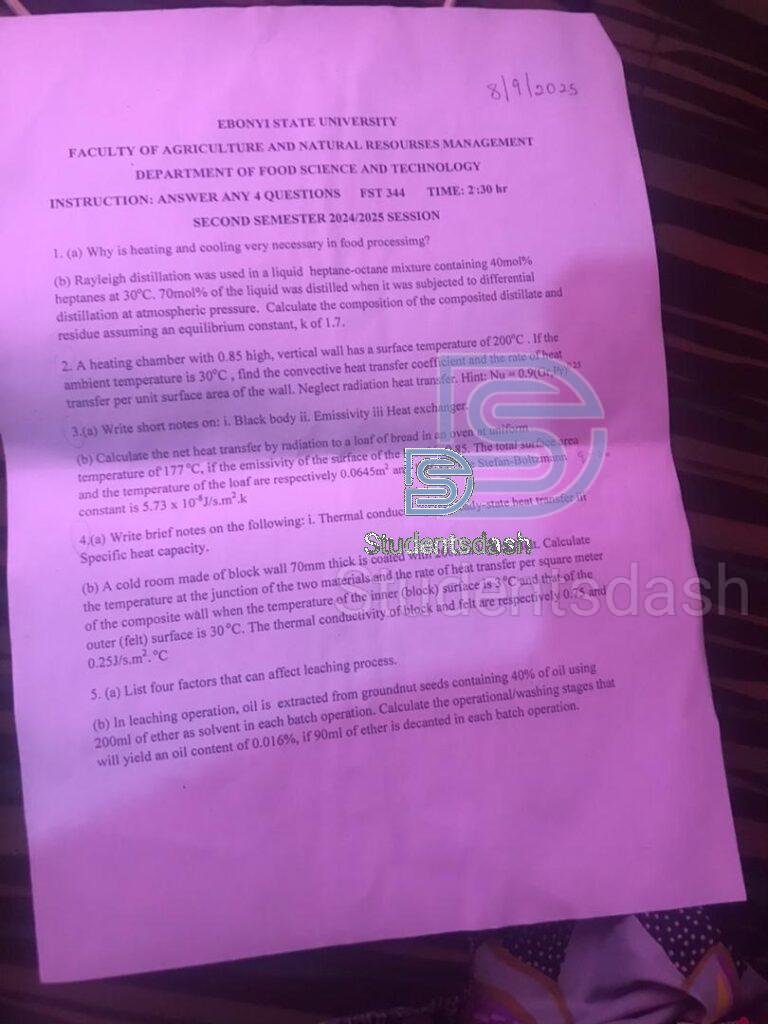
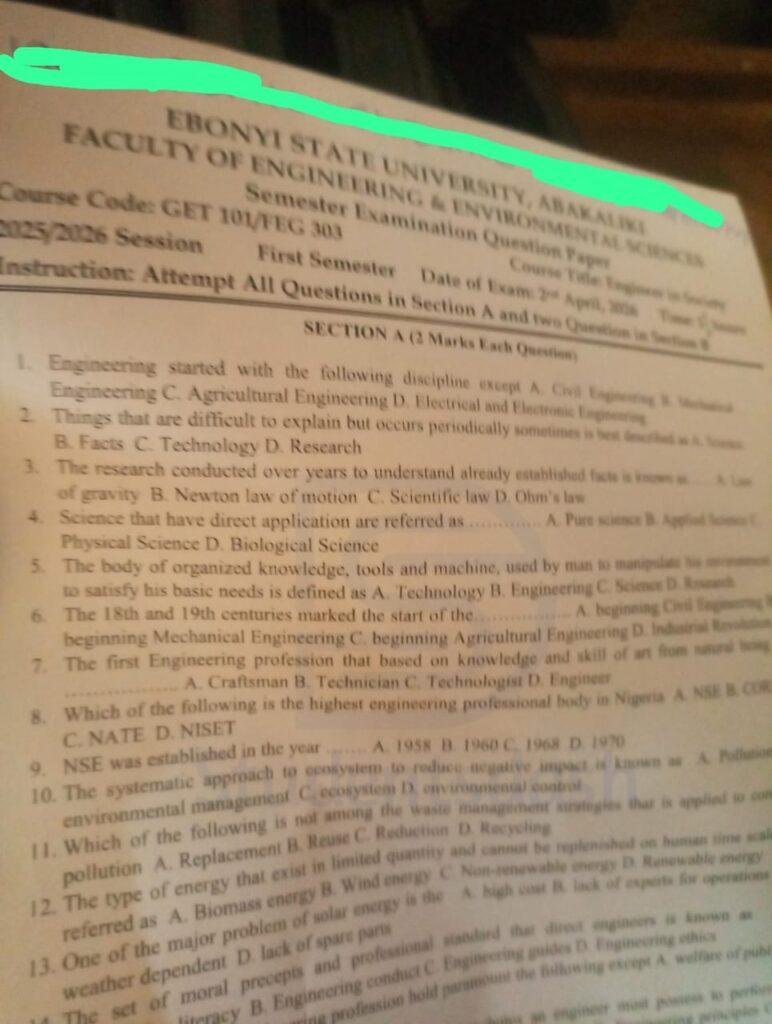
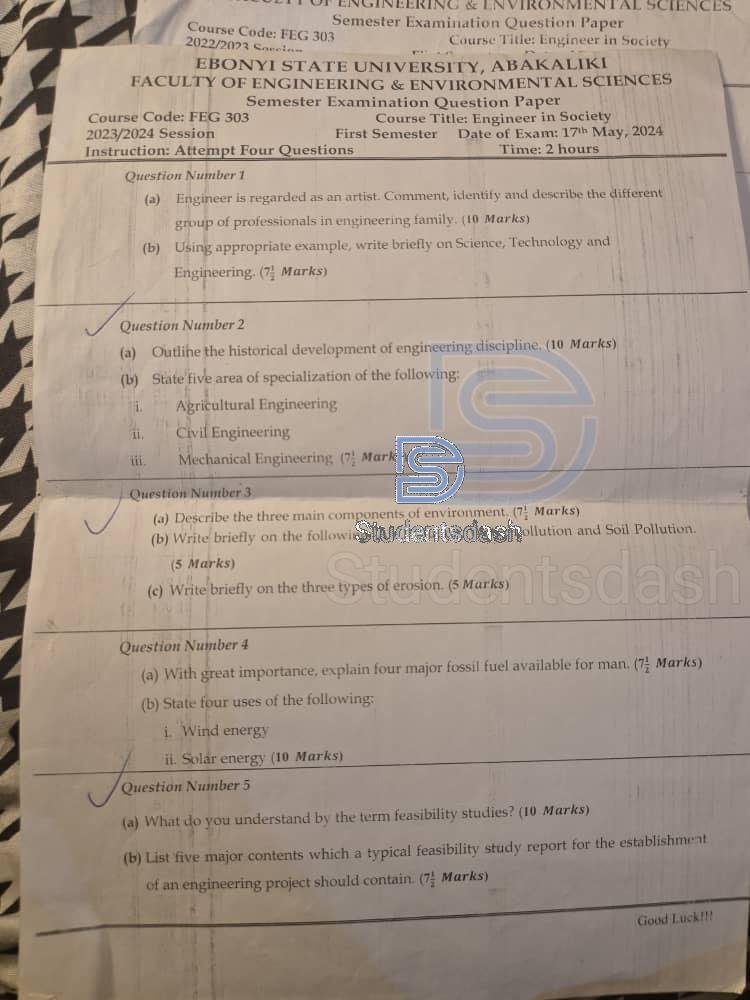
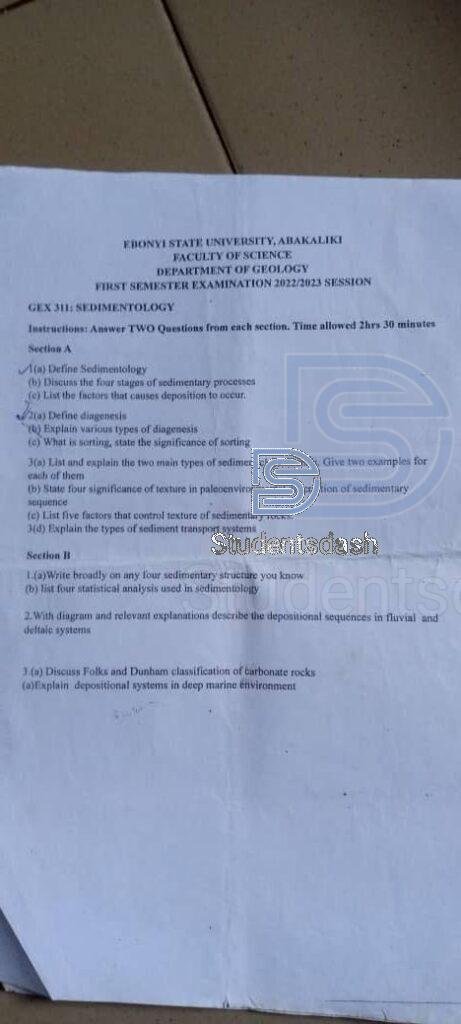
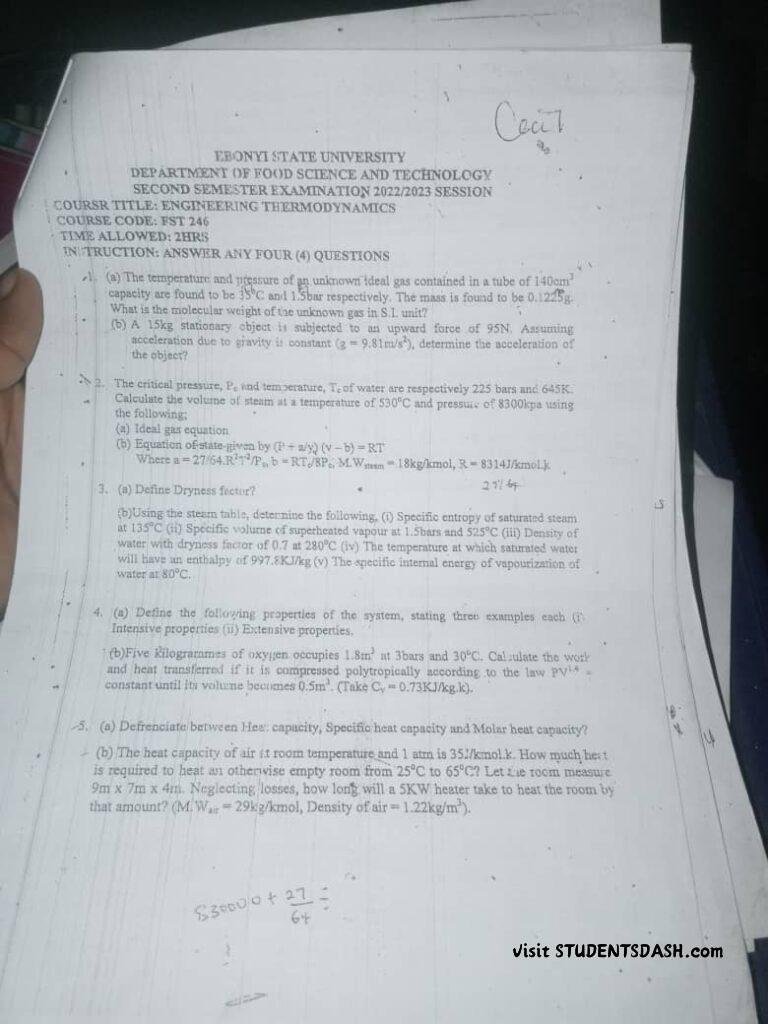
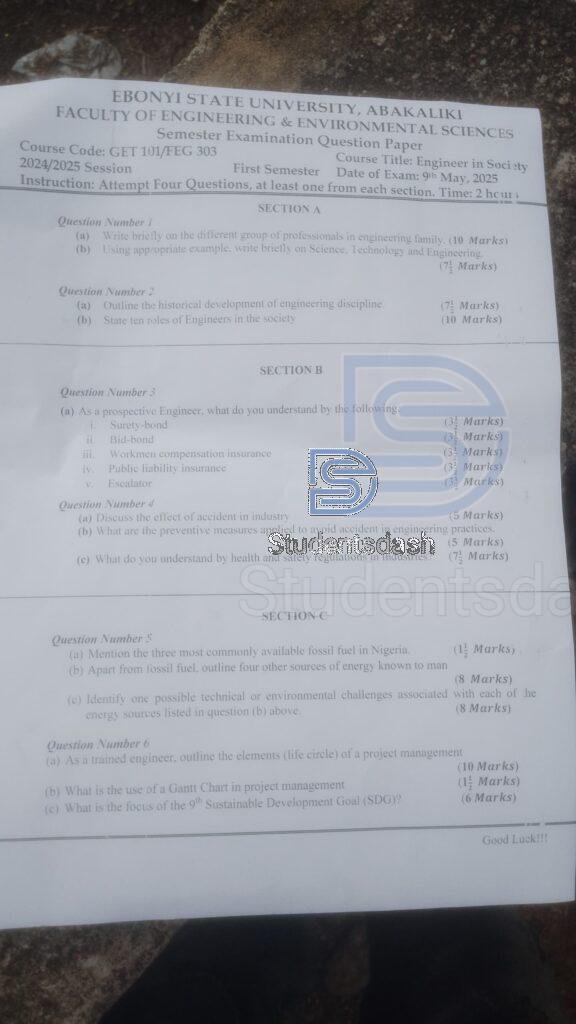
GET 101 _ FEG 303 Past Questions and Answers
Title: GET 101 / FEG 303 Past Questions and Answers URL: https://studentsdash.com/get-101-feg-303-past-questions-and-answers/ -------------------------------------------------- 2023 Paper Solutions Question Number 1 (a) Outline the historical development of engineering and technology. Engineering and technology started from the early days when humans used stones and sticks to make tools for hunting and farming. This was called the Stone Age. Later, during the Bronze Age, people started using metals like bronze to make better tools and weapons. Then came the Iron Age, where iron was used to build stronger tools, which improved farming and construction. As time went on, the Industrial Revolution in the 18th and 19th centuries changed everything. Machines were built, and industries like textile, mining, and transport grew fast. Steam engines, electricity, and railways were all major engineering achievements. In the 20th century, engineering became more advanced with the invention of cars, airplanes, computers, and mobile phones. Now, we are in the digital age, where engineers are using artificial intelligence, robotics, and modern software to solve problems and improve life. So, engineering has moved from using simple tools to building complex machines and systems that shape our modern world. (b) Discuss on the ten roles of engineer in society in general. Problem Solvers – Engineers find solutions to technical and social problems. Designers – They design buildings, roads, machines, and other structures. Innovators – Engineers develop new ideas and technologies to improve life. Planners – They plan how projects like bridges or factories will be built. Builders – Engineers supervise the construction of projects. Maintainers – They help maintain machines, roads, and infrastructure. Economy Boosters – Engineering projects create jobs and support economic growth. Safety Officers – They ensure that structures are safe for use by people. Environmental Protectors – Engineers work on clean energy and waste management. Educators and Researchers – Some engineers teach or research new technologies. Question Number 2 (a) Science, Technology and Engineering are erroneously taken to be the same. Criticize the above stated statement. Science, technology, and engineering are related, but they are not the same. Science is about discovering knowledge and understanding how nature works. Scientists ask questions and carry out experiments to find out the truth. For example, studying how gravity works or how plants grow is science. Technology is the practical use of scientific knowledge. It involves creating tools or machines to solve problems. For example, using scientific knowledge to build a mobile phone or computer is technology. Engineering is the process of designing, building, and maintaining structures, machines, and systems using both science and technology. Engineers take scientific knowledge and turn it into useful products or systems. So, even though they are connected, science discovers, technology applies, and engineering builds. People confuse them because they often work together, but they are different in purpose and process. (b) In engineering family, write briefly on the cadres in the profession. In the engineering profession, there are different levels or cadres . These include: 1. Technician – They handle basic technical tasks like maintenance and support under the supervision of engineers. 2. Technologist – They have more advanced training than technicians and assist engineers in designs, tests, and projects. 3. Graduate Engineer – This is someone who just completed a degree in engineering and is gaining experience. 4. Corporate Engineer – These are experienced engineers who are fully registered with professional bodies like COREN in Nigeria. 5. Senior Engineer – They supervise junior engineers and lead projects. 6. Chief Engineer/Director – They are in top positions, making decisions and overseeing large engineering operations. Each cadre plays an important role in making engineering projects successful. Question Number 3 (a) Outline the historical development of engineering discipline. The engineering discipline developed over a long time. It began in ancient times when early humans used stones, wood, and bones to create tools for survival. As people started building houses and roads, they used simple engineering ideas without knowing it. In ancient Egypt and Mesopotamia, engineers built big structures like pyramids and irrigation systems. Later, the Romans improved engineering by building roads, bridges, and aqueducts. During the Middle Ages, engineering was mostly used for building castles and war machines. In the Renaissance period, engineering became more scientific, with people like Leonardo da Vinci designing machines. The Industrial Revolution in the 18th and 19th centuries changed everything. New machines, factories, and steam engines were built. This led to the creation of different branches like mechanical and civil engineering. In the 20th century, new fields like electrical, computer, and chemical engineering developed. Today, engineering keeps growing with modern fields like software engineering, robotics, and bioengineering. (b) State five area of specialization of the following: i. Agricultural Engineering Farm machinery and mechanization Soil and water engineering Irrigation and drainage systems Food processing and storage Agricultural structures ii. Civil Engineering Structural engineering Transportation engineering Geotechnical engineering Water resources engineering Environmental engineering iii. Mechanical Engineering Thermodynamics Fluid mechanics Heating, ventilation and air conditioning (HVAC) Machine design Manufacturing and production engineering Question Number 4 (a) What do you understand by the term feasibility studies? Feasibility studies are investigations or checks carried out before starting an engineering project to know if the project is possible, realistic, and worth doing. It helps to find out if the project can be completed successfully based on cost, time, location, resources, and other important factors. The main purpose is to reduce risk and make better decisions before spending a lot of money or time on the project. If a project is not feasible, it may be canceled or changed. (b) List five major contents which a typical feasibility study report for the establishment of an engineering project should contain. Technical Feasibility – Checks if the project can be done with the available technology, tools, and skills. Economic/Financial Feasibility – Looks at the cost of the project and if it will be profitable or affordable. Legal Feasibility – Ensures the project follows government laws, building codes, and safety rules. Environmental Feasibility – Studies the effect of the project on the environment (e.g., pollution or land use). Operational Feasibility – Checks if the project Question Number 5 (a) Describe the three main components of environment. The three main components of the environment are: 1. Biotic (Living) Components – These include all living things like humans, animals, plants, and microorganisms. 2. Abiotic (Non-living) Components – These are non-living things like air, water, soil, sunlight, and temperature. 3. Cultural or Human-made Components – These are things made by humans like buildings, roads, vehicles, and industries. All these components work together to support life and shape the world we live in. (b) Write briefly on the following: Air Pollution: This happens when harmful gases, smoke, or dust are released into the air, making it unsafe to breathe. It is caused by things like car fumes, factory smoke, and burning of waste. Water Pollution: It is the contamination of water bodies like rivers, lakes, and oceans. It is caused by dumping of waste, oil spills, or chemicals into the water, which makes it harmful for drinking, farming, or aquatic life. Soil Pollution: This occurs when harmful substances like chemicals, plastics, or waste are dumped on the land. It reduces soil fertility and can affect plants, animals, and humans. (c) Write briefly on the three types of erosion. 1. Sheet Erosion: This is when a thin layer of topsoil is removed evenly from the land surface by rainwater. 2. Rill Erosion: This happens when small channels or rills are formed on the soil surface by running water. 3. Gully Erosion: This is the most serious type. It occurs when water cuts deep and wide channels (gullies) into the soil, damaging land and roads. Studentsdash_FEG303_Exam_Answers Download 2024 Paper Solutions Below 👇 Studentsdash_FEG303_2024_Answers Download
Can You Receive NELFUND Upkeep Payment Without Receiving Your School Fees_
Title: Can You Receive NELFUND Upkeep Payment Without Receiving Your School Fees? URL: https://studentsdash.com/can-you-receive-nelfund-upkeep-payment-without-receiving-your-school-fees/ -------------------------------------------------- Many Nigerian students have been asking whether it’s possible to receive their NELFUND upkeep payment even if their school fees have not yet been paid. If you’re in this situation, you’re not alone. Some students notice that their upkeep allowance arrives first, while others see their tuition paid before their upkeep. This often leads to confusion about how NELFUND processes payments. Here’s what you need to know. How NELFUND Payments Work NELFUND provides financial support in two major ways: Institutional Fee (School Fees): This payment is made directly to your institution. Upkeep Allowance: This payment is sent directly to the bank account you provided during your application. Because these payments are different, they may not always be processed or received at the same time. Can You Receive Upkeep Before Your School Fees? Yes, it is possible. Some students receive their upkeep allowance before their institution confirms the receipt of school fees. Others may have their tuition paid first and wait longer for their upkeep. This difference is usually due to payment processing timelines and verification procedures. Receiving one payment before the other does not automatically indicate a problem with your application. Why Does This Happen? Several factors can affect the order in which payments are received. 1. Different Payment Channels Your upkeep allowance is sent directly to your personal bank account, while your school fees are sent to your institution. Since these payments go through different channels, they may not arrive simultaneously. 2. School Processing Time Even after NELFUND sends institutional fees, some schools may take time before updating students’ payment records. This means your school fees could already have been paid, but your institution has not yet reflected the payment. 3. Batch Processing NELFUND processes thousands of payments across Nigeria. To manage this, payments are often released in batches, meaning different students may receive different payments at different times. What Should You Do? If you’ve received your upkeep but your school hasn’t confirmed your tuition payment: Be patient and allow more time for processing. Confirm with your school’s bursary or accounts department if necessary. Continue checking your NELFUND dashboard for updates. Avoid submitting another application because of the delay. If you’ve received your school fees but your upkeep hasn’t arrived, the same advice applies. Payment timelines are not always identical. Should You Be Worried? In most cases, no. As long as your application remains active and there are no requests for additional information, it’s common for one payment to arrive before the other. However, if a significant amount of time has passed without any update, you may contact NELFUND or your institution for clarification. You may also find these articles helpful: Does Your Bank Affect How Fast You Receive NELFUND Payment? Does Your Bank Affect How Fast You Receive NELFUND Payment? Why Is My NELFUND Upkeep Payment Taking Longer Than Other Students? Why Is My NELFUND Upkeep Payment Taking Longer Than Other Students? Frequently Asked Questions Can I receive only my upkeep payment? Yes. Some students receive their upkeep before their institutional fees are reflected. Can my school fees be paid without me knowing? Yes. Sometimes your institution receives the payment before updating students’ financial records. Will I lose my school fees if I receive my upkeep first? No. Receiving your upkeep first does not mean you have lost your institutional fee payment. Do all students receive both payments on the same day? No. Payment dates vary depending on processing and verification timelines. Final Thoughts Receiving your NELFUND upkeep payment before your school fees—or vice versa—is completely possible. Since the two payments are processed separately, they don’t always arrive at the same time. The best thing to do is remain patient, monitor your NELFUND dashboard, and verify any concerns with your institution or NELFUND before assuming there’s a problem. Stay Updated with Studentsdash Download the Studentsdash app today: www.studentsdash.com.ng/app Studentsdash also provides verified updates on JAMB, Post-UTME, admissions, scholarships, campus news, and educational opportunities across Nigeria. Download Studentsdash now: www.studentsdash.com.ng/app Thousands of Nigerian students trust Studentsdash for fast and reliable education updates. Stay informed with Studentsdash: www.studentsdash.com.ng/app Join our Telegram community: https://t.me/studentsdash Need help? Contact Studentsdash: 07075012541 Download the Studentsdash app: www.studentsdash.com.ng/app Never miss another NELFUND update: www.studentsdash.com.ng/app Stay one step ahead: www.studentsdash.com.ng/app Get verified student news every day: www.studentsdash.com.ng/app