
MCM 110 — Social Media Literacy Assignment Solution
📚 STUDENTSDASH ASSIGNMENT SOLUTION
Course: MCM 110 — Social Media Literacy
Topic: The Internet is not a Mass Media — Argue for or against this Claim with at Least Ten Points
Students can choose any one of the two answers below and copy.
ANSWER ONE: AGAINST THE CLAIM
Position: I disagree with the claim. The Internet is a mass media.
Introduction
Mass media refers to channels of communication used to send information to a large number of people at the same time. Examples include radio, television, newspapers and magazines. In the modern world, the Internet has become one of the most powerful means of mass communication because it allows people, organizations, governments, schools, businesses and media houses to send messages to millions of people across the world. Therefore, the claim that the Internet is not a mass media is not fully correct.
Points
The Internet reaches a large audience
The Internet can reach millions and even billions of users across different countries. Through websites, blogs, social media platforms, emails and online news platforms, information can spread to a very large audience within seconds.The Internet is used for news dissemination
Today, many people get news from online platforms, blogs, digital newspapers, YouTube, Facebook, X, Instagram and other websites. This shows that the Internet performs the same function as traditional mass media.The Internet allows public communication
One post, article, video or livestream can be seen by thousands or millions of people. This makes the Internet a strong mass communication platform.The Internet combines different media forms
The Internet carries text, audio, pictures, video, animation and live broadcasts. It combines the functions of newspapers, radio, television and magazines in one platform.The Internet is used for advertising
Companies and individuals use the Internet to advertise products and services. Online adverts appear on websites, YouTube, Facebook, Instagram, Google and other platforms.The Internet influences public opinion
Trending topics, online campaigns, viral posts and digital news can shape people’s views on politics, entertainment, education, business and social issues.The Internet provides entertainment for the masses
The Internet provides entertainment through movies, music, comedy skits, podcasts, games, livestreams and social media content. These contents are consumed by a large number of people.The Internet is used by media organizations
Television stations, radio stations and newspapers now have websites, mobile apps and social media pages. This proves that the Internet is now part of mass media.The Internet allows fast spread of information
A news story can go viral within minutes. This ability to spread information quickly to many people makes the Internet a powerful mass media.The Internet is accessible to different groups of people
Students, workers, business owners, politicians, religious organizations, schools and the general public all use the Internet. This makes it a public communication channel.The Internet supports education and awareness
The Internet is used for online learning, public health campaigns, government announcements, religious messages and social awareness.The Internet allows global communication
A message posted in Nigeria can be seen in the United States, United Kingdom, Ghana, South Africa and other parts of the world. This global reach makes the Internet even more powerful than many traditional mass media.
Conclusion
In conclusion, I disagree with the claim that the Internet is not a mass media. The Internet reaches a large audience, spreads news, supports advertising, provides entertainment, influences public opinion and allows global communication. Although the Internet also allows private communication, its ability to communicate with the masses makes it a form of mass media.
ANSWER TWO: FOR THE CLAIM
Position: I agree with the claim. The Internet is not strictly a mass media.
Introduction
Mass media refers to traditional channels of communication that send messages from one source to a large and scattered audience. Examples include radio, television, newspapers and magazines. These media usually operate through one-way communication, where the audience only receives information. However, the Internet is different because it allows interaction, personal communication, user-generated content and many-to-many communication. Therefore, the Internet should not be seen strictly as mass media but as a digital communication platform.
Points
The Internet is interactive
Traditional mass media is mostly one-way communication. For example, a television station broadcasts while the audience watches. The Internet is different because users can comment, like, share, reply and create their own content.The Internet allows personal communication
Mass media is meant for public communication, but the Internet also allows private communication through chats, emails, video calls and direct messages.The Internet is not controlled by only media organizations
Traditional mass media is usually controlled by media houses, editors, journalists and broadcasters. On the Internet, anybody can create and publish content.The Internet supports many-to-many communication
Mass media usually follows one-to-many communication. The Internet allows many users to communicate with many other users at the same time.The Internet gives users control over content
In traditional mass media, the audience has little control over what is shown or published. On the Internet, users can choose what to watch, read, download, follow or ignore.The Internet is a network, not just a medium
The Internet is a global network that connects computers, phones, websites, apps and users. It also supports banking, education, gaming, shopping, research and private messaging.The Internet allows user-generated content
In traditional mass media, content is mostly created by professionals. On the Internet, users create their own posts, videos, blogs, podcasts and comments.The Internet is not always meant for mass audiences
Many activities on the Internet are private. For example, WhatsApp chats, emails, Zoom meetings and private messages are meant for selected people.The Internet combines mass communication and interpersonal communication
The Internet can be used like mass media when people post public content, but it can also be used for communication between two people.The Internet allows immediate feedback
Traditional mass media has delayed feedback. On the Internet, people can comment, react, share or criticize immediately.The Internet is decentralized
Traditional mass media is centralized because a few organizations control what is published or broadcast. The Internet is decentralized because millions of users can publish information from different places.The Internet is broader than mass media
Mass media is only one part of communication, but the Internet covers education, entertainment, business, social networking, research, banking, government services and personal communication.
Conclusion
In conclusion, I agree with the claim that the Internet is not strictly a mass media. Although the Internet can perform mass media functions like news sharing, advertising and entertainment, it is more than mass media. It is interactive, personal, decentralized and user-controlled. Therefore, the Internet should be seen as a digital communication network rather than just a mass media platform.
✅ Studentsdash Note:
You can choose either Answer One or Answer Two, depending on the side you want to support.
More in Assignment
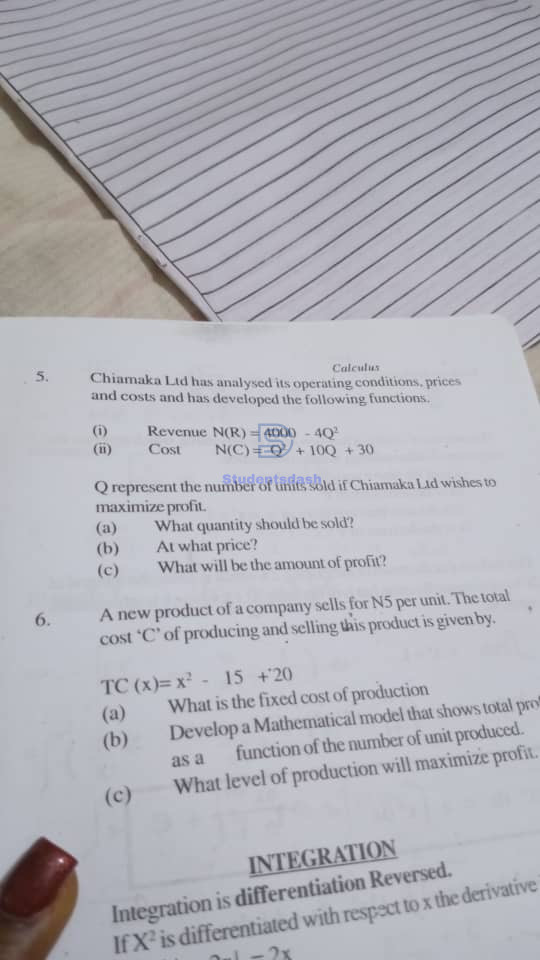
AMS 102 Textbook Assessment Questions and Answers (2026)
AMS 102 Textbook Assessment Questions and Answers (2026) We’ve solved the AMS 102 Business Mathematics Assessment Questions for 2026 to help you study smarter and prepare for your tests and examinations. Share this with your friends so they can benefit too, and view the solved images below.
Discussion
No comments yet. Be the first to start the conversation!